
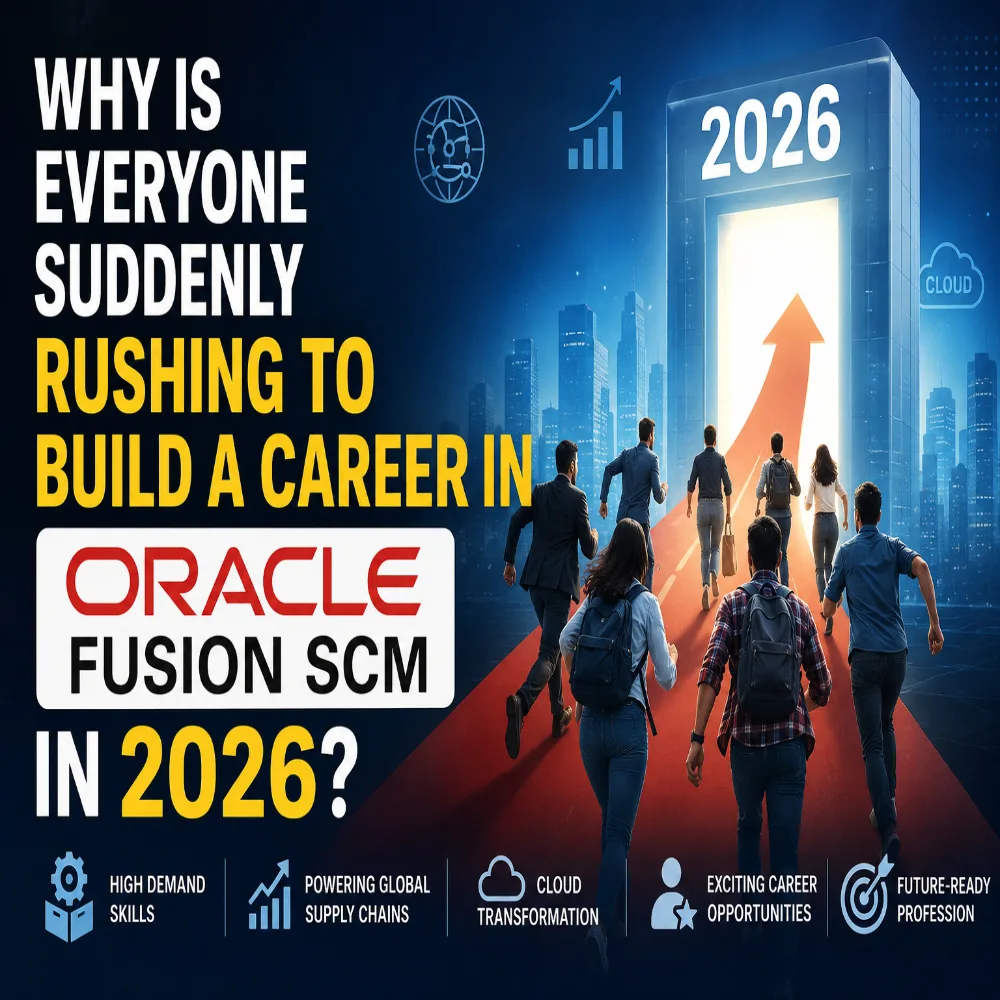
Why Is Everyone Suddenly Rushing to Build a Career in Oracle Fusion SCM in 2026?
Description: Curious why recruiters can't stop hunting for Oracle Fusion SCM professionals right now? This article breaks down the real reason behind the sudden demand spike, and how learners are upskilling with practical, job-focused Fusion SCM Online Training that actually matches what companies are hiring for today.
The Question Nobody Saw Coming: Is Supply Chain Tech the New Hot Career Move?If you scroll through LinkedIn or any tech job board this year, you'll notice something odd. Roles that used to sit quietly in the "operations" category are suddenly getting flooded with applicants and, more importantly, flooded with openings. Oracle Fusion Supply Chain Management (SCM) has gone from a niche ERP module to one of the most searched-for skills among working professionals looking to pivot into cloud-based enterprise systems.
So what's actually going on? Is this a passing trend, or is there something structural happening in how businesses run their supply chains that's pushing this demand? Let's unpack it question by question, the way most people are genuinely asking it online.
Why Are Companies Replacing Their Old ERP Systems Right Now?Supply chains got tested hard over the last few years, disruptions, delays, inventory mismatches, and unpredictable demand forced organizations to rethink how rigid their old on-premise systems were. Legacy ERP tools simply couldn't keep up with real-time visibility needs. Oracle Fusion SCM Cloud solved that gap by offering a unified, cloud-native platform that connects procurement, inventory, manufacturing, order management, and logistics into one live ecosystem.
That single shift, from static systems to dynamic, cloud-first platforms, is the real reason behind the current hiring wave. Companies aren't just adopting new software; they're rebuilding entire operational workflows around it, and that requires people who genuinely understand the platform inside out. Anyone starting with structured Fusion SCM Online Training right now is essentially positioning themselves at the front of that hiring curve instead of catching up to it later.
What Makes Oracle Fusion SCM Different From Traditional Supply Chain Roles?Here's where it gets interesting. Traditional supply chain jobs were process-heavy but tech-light. You needed domain knowledge, sure, but not necessarily technical fluency in configuring modules, building workflows, or managing cloud-based data flows. Fusion SCM flips that expectation.
Today's supply chain professional is expected to understand:
- Procurement and sourcing automation
- Inventory and cost management within a cloud environment
- Order orchestration across multiple channels
- Manufacturing and planning integrations
- Real-time analytics dashboards for decision-making
This blend of functional and technical skill is exactly why mid-career professionals from operations, IT, and even finance backgrounds are pivoting toward this space. It's not just a software skill anymore, it's becoming a core business capability.
Is It Actually Worth Learning Right Now, or Is the Market Getting Saturated?This is probably the most honest question people are asking before committing time to it. And the answer, based on current hiring patterns, is that the market isn't saturated, it's still catching up to demand. Oracle continues to expand Fusion Cloud adoption across industries like manufacturing, retail, healthcare, and logistics, which means the talent pipeline hasn't caught up with how fast companies are migrating.
That gap is precisely why guided, practical learning matters more than random self-study. This is where a properly structured Fusion SCM Cloud Online Training program becomes valuable, not just for theory, but for hands-on exposure to real configurations, business scenarios, and reporting tools that mirror what companies actually use day to day. Learning it in isolation from outdated tutorials or scattered videos usually leaves gaps that show up during interviews or, worse, during actual project work.
How Are People Actually Preparing for This Shift?Most professionals moving into this space aren't starting from scratch. They already understand business processes, they just need a bridge into the Oracle Cloud ecosystem. That bridge typically includes:
- Understanding the Fusion Cloud architecture and navigation
- Learning core SCM modules end-to-end
- Practicing real-time business scenarios and configurations
- Getting exposure to integrations and reporting tools
- Building confidence through mock projects before applying for roles
This step-by-step approach is far more effective than trying to piece together information from forums or outdated documentation. It's also why more learners are choosing mentor-led programs instead of purely self-paced routes.
So, What's the Real Takeaway Here?The demand around Oracle Fusion SCM isn't hype, it's a direct result of how businesses are restructuring their operations for speed, visibility, and resilience. And for professionals watching this shift from the sidelines, the smarter move isn't waiting for the trend to peak, it's getting in early with the right foundation.
That's exactly the gap Tech Leads IT set out to close. Their training approach focuses on real business scenarios rather than theoretical walkthroughs, giving learners actual confidence to walk into interviews and project floors without feeling lost. For anyone serious about making this transition well, and not just quickly, enrolling in a well-structured Fusion SCM Training program is the most practical next step to actually stay ahead of where this industry is heading.
0 comments
Log in to leave a comment.
Be the first to comment.