
Why Healthcare Asset Tracking Is Essential for Modern Hospitals

Healthcare facilities depend on thousands of medical assets every day, including infusion pumps, ventilators, wheelchairs, patient monitors, surgical instruments, hospital beds, and emergency equipment. When these critical assets cannot be located quickly, patient care may be delayed, staff productivity decreases, and hospitals face unnecessary operational costs.
To overcome these challenges, hospitals around the world are adopting Healthcare Asset Tracking Solutions that provide real time visibility into medical equipment and hospital resources. RFID and IoT technologies enable healthcare providers to monitor the location, status, and utilization of assets continuously, helping hospitals operate more efficiently while improving patient outcomes.
One of the biggest advantages of a Healthcare Asset Tracking System is real time equipment visibility. Instead of spending valuable time searching for wheelchairs, infusion pumps, portable ultrasound machines, or ventilators, hospital staff can instantly locate the nearest available equipment. This reduces treatment delays and allows healthcare professionals to focus more on patient care.
Accurate Medical Equipment Tracking also improves asset utilization. Many hospitals purchase additional equipment simply because existing assets cannot be located when needed. Real time tracking helps administrators understand how assets are being used, identify underutilized equipment, and make better purchasing decisions while reducing unnecessary capital expenditure.
Inventory management is another area where healthcare organizations benefit significantly. Medical supplies, pharmaceutical inventory, and emergency equipment require continuous monitoring to ensure availability. RFID based Hospital Asset Management systems automate inventory tracking, reduce manual stock checks, and provide accurate inventory visibility throughout the facility.
Healthcare asset tracking also strengthens preventive maintenance programs. Hospitals can receive automated maintenance reminders based on equipment usage, ensuring devices remain compliant, calibrated, and ready for use. This reduces equipment downtime while extending the lifespan of valuable medical assets.
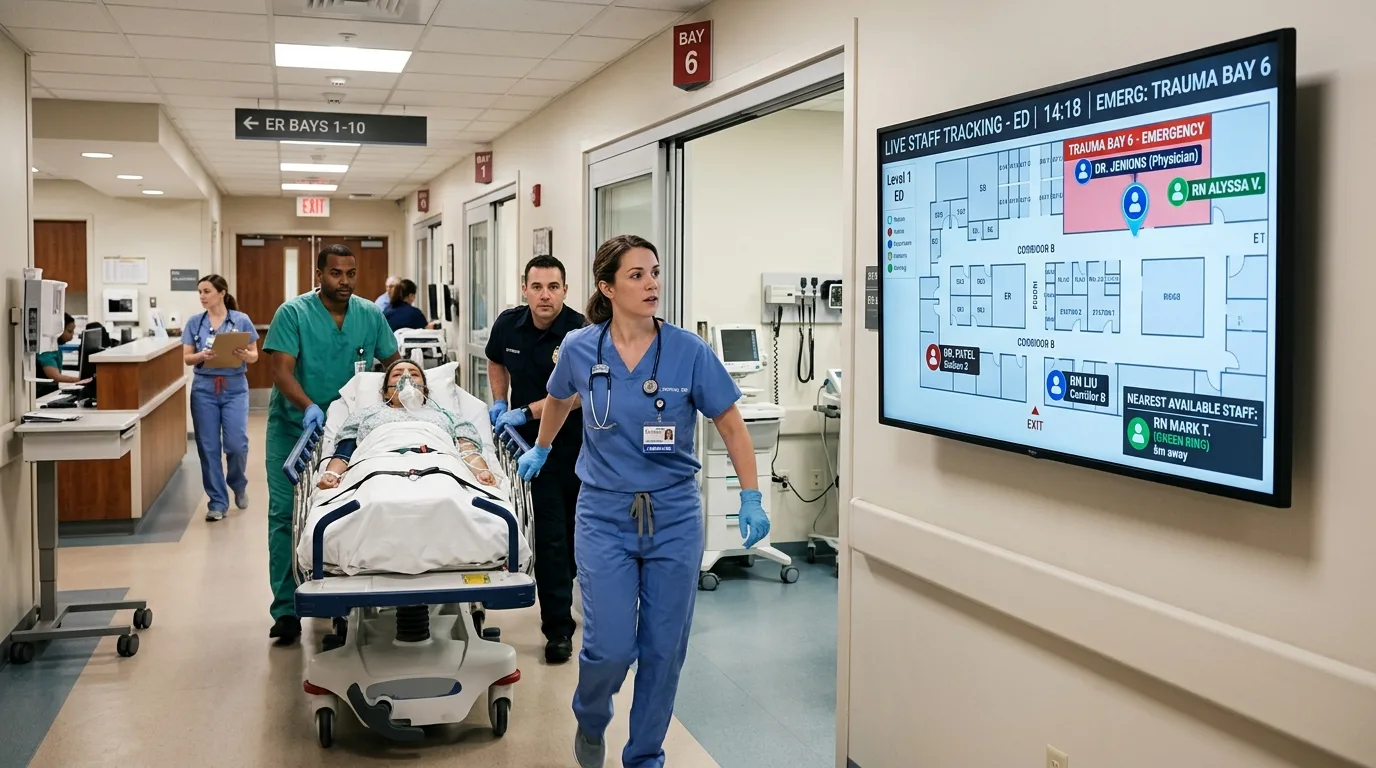
Modern healthcare facilities are also integrating Staff Tracking, Patient Tracking, and surgical instrument traceability into a single platform. Combining these capabilities creates a connected healthcare ecosystem where hospitals can improve emergency response, optimize patient flow, enhance staff safety, and maintain complete operational visibility across departments.
Healthcare providers are increasingly investing in RFID and IoT technologies because they support better decision making through centralized dashboards, automated alerts, utilization reports, and real time analytics. These insights help hospital administrators improve operational efficiency while reducing equipment loss and administrative workload.
Solutions like TracTeck Healthcare Asset Tracking combine RFID, BLE, IoT, and intelligent monitoring into one integrated platform. Hospitals can manage medical equipment, surgical instruments, pharmaceutical inventory, emergency assets, patients, and healthcare staff from a centralized system, improving operational efficiency and supporting better patient care.
As healthcare continues its digital transformation, real time asset visibility is becoming a necessity rather than a competitive advantage. Hospitals that implement Healthcare Asset Tracking Solutions gain better control over medical equipment, improve resource utilization, reduce operational costs, and deliver faster, safer, and more efficient patient care.
0 comments
Log in to leave a comment.
Be the first to comment.