
Wheel Washing & Water Treatment: Keeping Sites Clean and Compliant
Wheel Washing Effective Solutions for Clean and Compliant Sites
Why Wheel Washing and Water Treatment Matter
Every truck that leaves a construction site, quarry or landfill carries mud, dust and debris onto public roads. That dirt creates slippery surfaces, airborne dust and drainage problems, and it can bring fines from local authorities. A reliable wheel washing system stops the problem at the exit gate.
But washing vehicles creates a second challenge: thousands of litres of dirty water. Without proper water treatment, that wastewater ends up in drains or soil, and fresh water costs keep rising. The smart answer is a system that washes and recycles in one loop.
For more than forty years, Tecnoter Group has built environmentally friendly technology for industry. From its base in Milan, Italy, the company designs wheel washing systems and wash racks that keep vehicles clean, roads safe and water in use. This guide explains how they work and how to choose the right one.
How a Wheel Washing System Works
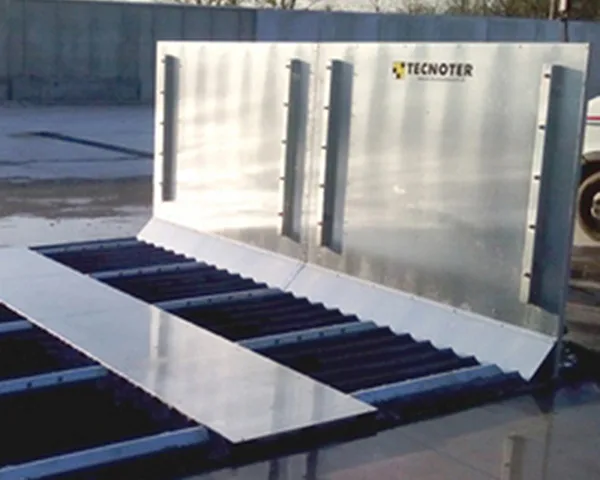
A wheel washing system cleans tyres and undercarriages automatically as a vehicle drives through, usually in about 20 seconds. Sensors detect the truck, high-flow pumps fire water through nozzles at the wheels, and the vehicle rolls out clean without stopping.
Tecnoter's drive-through lines are built from heavy, hot-dip galvanised carbon steel. The typical washing line offers:
- Throughput: low-speed transit with no stop, and an average wash time of 20 seconds
- Load capacity: vehicles up to 20 tonnes per axle
- Washing flow: about 1,500 litres per minute from a single washing pump
- Size: 3.5 m internal width between side panels, 2 or 4 m length
- Activation: automatic, via wind-insensitive sensors
- Installation: above ground or recessed into the site
Tecnoter offers several ranges, including the CLBR, ECO and E series of wheel washers. Each is sized for different traffic volumes and site conditions, from busy quarries to short-term building projects. For sites that move often, portable wheel washers can be relocated as work progresses.
Water Treatment: Filtering and Accumulation Groups
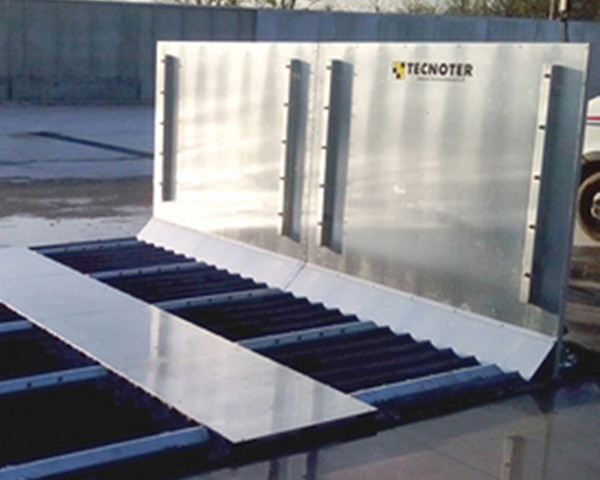
Tecnoter's water treatment works as a closed loop: wash water is collected, filtered, stored and pumped back for the next wash. This is the job of the filtering and accumulation groups that sit beside each wash rack.
The cycle runs in four steps:
- Collect: dirty water drains from the wash platform into a storage unit.
- Separate: a mud extractor (on certain versions) removes heavy sludge, and an integrated oil absorber captures hydrocarbons.
- Filter: water passes through final filtration down to 50 microns.
- Reuse: a pressurisation unit sends the clean water back to the washer.
Filtration tanks range from 200 litres up to 24,000 litres, so the system scales from a small workshop to a fleet depot. Optional extras include an auto-refill kit, anti-frost heating and special filtration for asbestos. Because the same water is used again and again, sites cut fresh water consumption and avoid discharging contaminated runoff.
Modular Wash Racks: Benefits and Applications
Tecnoter's modular wash racks combine a wash platform with closed-loop water recycling, and they sit directly on existing flooring. Modules measure 1.5 x 3 m or 3 x 6 m and are only 16 cm high. A forklift or pallet truck can move them, and they join together without special tools.
Compositions range from 4.5 m² to 240 m² and beyond, so one system can grow with your fleet:
- Lower water costs: recycled water replaces most fresh supply.
- Environmental compliance: oil and sludge stay out of drains and soil.
- Fast setup: no civil works or deep excavation.
- Remote control: the TcConnect platform lets you monitor production and manage rentals from a PC, tablet or smartphone.
Typical users include construction, industry, equipment rental, workshops, agriculture, transport companies and car washes.
How to Choose the Right System
The right choice depends on what you wash, how often, and where. Ask these questions before you buy:
- Vehicle type and weight: heavy trucks need a robust drive-through wheel washer; small machinery may only need a single wash rack module.
- Traffic volume: busy site exits benefit from automatic, sensor-activated washing.
- Site duration: temporary projects suit portable units that can move with the work.
- Water supply and rules: if water is scarce or discharge is restricted, a closed-loop water treatment unit is essential.
- Special risks: sites handling asbestos or oily residues need dedicated filtration.
Tecnoter's team can size a system for your vehicles, space and budget. Explore the wheel washers and wash racks range or request a custom quote for wash racks and water recycling units today.
Frequently Asked Questions
What is a wheel washing system?
It is equipment that automatically cleans vehicle tyres and undercarriages before they leave a site. It keeps mud and dust off public roads and helps sites meet environmental rules.
How long does a wheel wash take?
On Tecnoter's drive-through lines, the average wash takes about 20 seconds. Vehicles pass at low speed without stopping.
How does water treatment work in a wash rack?
Wastewater is collected, separated from mud and oil, filtered to 50 microns and stored. A pressurisation unit then sends it back for the next wash in a closed loop.
Do modular wash racks need civil works?
No. They sit on existing flooring, are 16 cm high and can be moved with a forklift or pallet truck. Installation needs no special tools.
What vehicles can a wash rack clean?
Engines and work tools, cars, forklifts, skid steers, aerial platforms, buses and trucks. Custom layouts are available for special vehicles.
How big are the filtration tanks?
Tanks range from 200 litres to 24,000 litres, chosen to match the platform size and the dirt load.
Can I monitor the system remotely?
Yes. With TcConnect you can check production and system data and manage rentals from a PC, smartphone or tablet.
Which industries use wheel washing and water treatment?
Construction, quarrying, waste management, industry, equipment rental, agriculture, transport and car washes.
0 comments
Log in to leave a comment.
Be the first to comment.