
What Is the Latest ACCA Salary After Completing the Course?

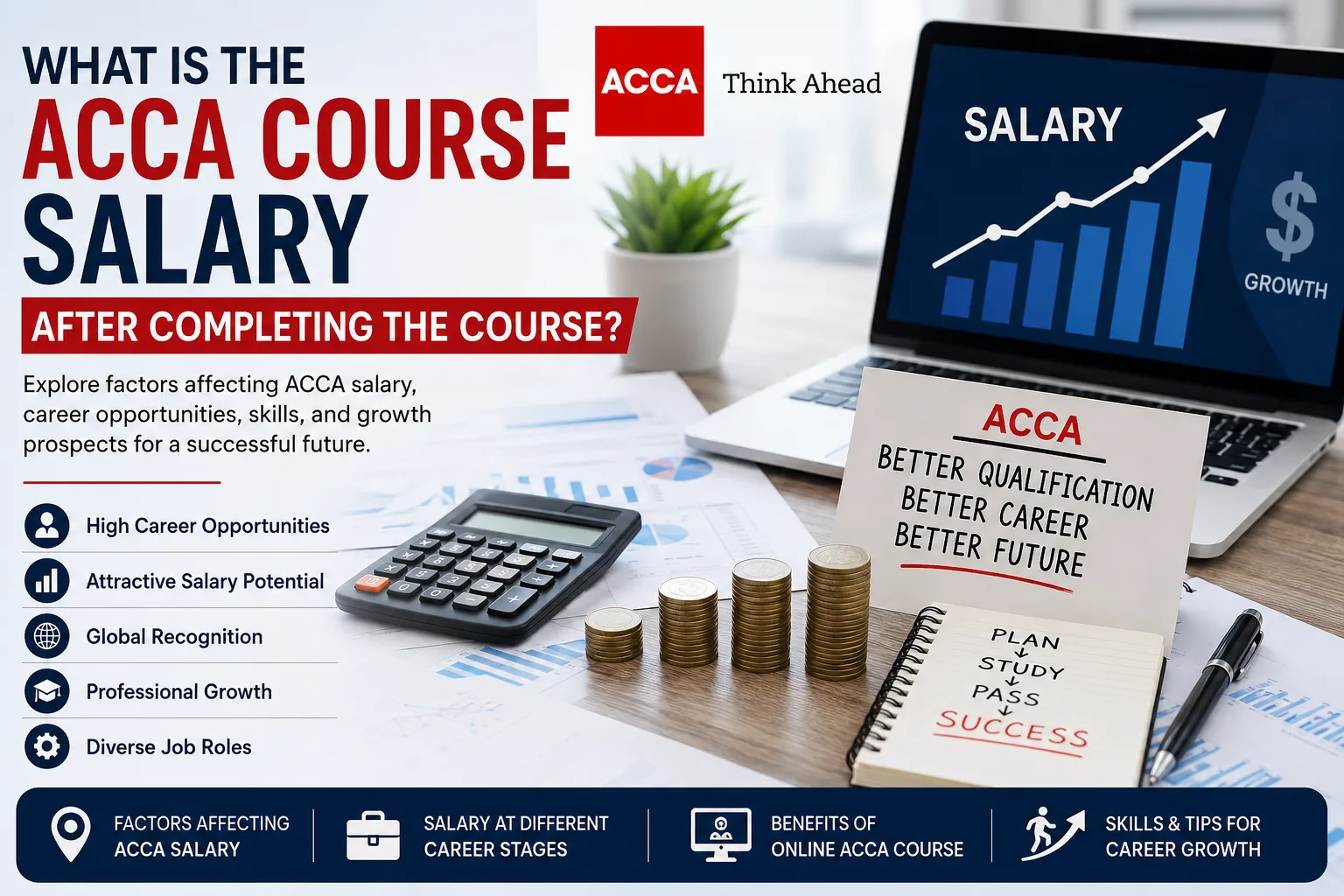
ACCA or the Association of Chartered Certified Accountants is a globally recognized professional qualification for accounting, finance, auditing, taxation and business. Students and working professionals prefer ACCA since it helps one to acquire knowledge of professional accounting as well as financial management.
The most frequently asked question by prospective ACCA students is what will be the salary after the completion of this qualification. Still, due to several factors like experience, job role, location, employer you land up with and industry extra tools & level of ACCA progress or qualification earnings may vary.
In this article, we have mentioned the various factors that affect ACCA salaries, potential job perspective, skills which can help in career growth and tips to be kept on account while a student is planning his or her professional journey.
What Is ACCA?
Four letters that you may know by now are ACCA, which refers to Association of Chartered Certified Accountants. It is a professional accountancy qualification aimed at developing knowledge in the areas of accounting, finance, business and financial management.
Learners may study subjects depending upon the stage of study and professional requirements.
Financial accounting
Management accounting
Financial management
Taxation
Auditing
Business law
Financial reporting
Performance management
Strategic business management
How an individual progresses can influence their learning journey and professional requirements will depend on whatever relevant ACCA structure is in play.
What Factors Affect ACCA Salary?
There is no definite salary for every ACCA professional. There are a few key factors that can cause earnings to vary.
Experience
RESUME: Experience is one of the key factors that can affect your salary.
When we discuss the vertical growth of an organization, freshers might start off with basic tasks while skilled team may progress on to higher responsibility roles.
With years of experience, professionals may become well-acquainted with:
Financial reporting
Auditing
Taxation
Financial analysis
Accounting operations
Risk management
Experience is no guarantee of a certain pay rise, however. Everything of the above depends on the employer, industry, job responsibilities and your performance.
Job Role
Different job roles warrant different salary structures.
The list of possible accounting and finance roles may include:
Accountant
Financial Analyst
Audit Associate
Tax Associate
Management Accountant
Finance Executive
Internal Audit Professional
Financial Reporting Professional
Job description and requirements for these positions can differ from employer.
Location
Salaries can vary from city to city and country to country.
Metros and major business centers might have different pay structures than smaller cities. But the expense of living also differs.
Employer and Industry
Every organization has its own unique salary structure.
Potential employers may include:
Accounting firms
Financial services companies
Multinational corporations
Consulting organizations
Manufacturing companies
Technology companies
Banking organizations
Specialization, size of the organization and role can affect earnings.
How Online ACCA Course Is Useful for Learners?
An Online ACCA Course might be flexible for students and working professionals who are interested in remote learning.
Due to the training provider, online learning may include:
Flexible study schedules
Digital learning materials
Recorded sessions
Online assessments
Practice resources
Access to trainers
Structured study plans
Nevertheless, students must thoroughly vet the syllabus, support in learning, mode of delivery of course etc.
Just like traditional programs, the quality and structure of an online program can differ significantly from one provider to another.
ACCA Salary at Different Stages in Career
Salary may also go up as professionals gain experience, get qualified and acquire skills.
Entry-Level Stage
In the beginning, candidates may take on junior roles in accounting/finance or audit pada.
Common responsibilities may include:
Preparing financial records
Supporting accounting processes
Maintaining documentation
Assisting with reports
Reviewing financial information
Supporting senior professionals
The salary may depend on the qualification of a candidate and his/her employer.
Mid-Level Stage
As you gain professional experience, you will have opportunities to assume greater responsibilities.
They may work with:
Financial reporting
Budgeting
Business analysis
Audit processes
Financial planning
Tax-related activities
Depending on which career path professionals follow, they may obtain specializations at this stage.
Senior-Level Stage
More experienced accountants may work their way towards senior finance or managerial roles.
Possible career paths may include:
Finance Manager
Senior Financial Analyst
Audit Manager
Financial Controller
Risk Management Professional
Senior Accounting Professional
Career progress is a function of work experience, qualifications, management skills and the availability of leadership roles in an organization.
Skills That Can Help Boost Your Career
While a professional qualification will give you subject knowledge, other skills may help in your career.
Accounting Knowledge
Adequate knowledge of accounting principles assists professionals in handling responsibilities related to finance.
Analytical Thinking
As a finance professional, you will frequently use geometric data tabling and forecasting skills.
Attention to Detail
Financial records and reports must be accurate.
Communication Skills
The ability to communicate clearly, effectively and accurately with colleagues
Technical Skills
Familiarity with accounting tools and software may be helpful depending on the position.
Time Management
Working in finance means deadlines, reporting schedules and numerous roles.
Continuous Learning
The accounting standards, regulations on business operations, business practices as well as technology might change through the years. Continuous education can keep professionals more up-to-date.
Career Opportunities After ACCA
People with qualifications and skills relevant to accounting and finance may consider other job opportunities.
Possible career areas may include:
Financial accounting
Management accounting
Auditing
Taxation
Financial analysis
Business consulting
Risk management
Financial planning
Corporate finance
Your chances of landing certain roles depend on a number of factors, including your qualifications and experience as well as what hiring employers are looking for and how the job market is currently.
Acca Career Growth: How to Achieve It
Your course or qualification doesn't mean that your professional development never stops.
Make sure that is out there a handful of steps may help with regard to long-term viably.
Gain Practical Experience
Practical work experience can help professionals relate financial concepts to their real-world business implications.
Develop Technical Skills
It may also be useful for professionals to get hands-on experience using accounting tools, spreadsheets, reporting systems and other technologies used in the industry.
Choose a Career Specialization
As the years go on, some experienced professionals may decide to specialize themselves in fields like:
Audit
Taxation
Financial analysis
Financial reporting
Management accounting
Specialization might work for creating more compassionate and knowledgeable human beings in one direction.
Improve Communication Skills
Finance professionals navigate through various teams and stakeholders. Effective communication can help develop a professional competency.
Continue Learning
Because the finance and accounting environment is constantly changing, professionals can remain attentive to current events through ongoing education.
Government vs Private Sector Opportunities
Students will compare career options across multiple sectors.
Government Sector
Position type All Government positions may have special application procedures, eligibility requirements or pay schedules.
It all depends on the organization and position.
Private Sector
Private companies, however, might provide opportunities across industries.
Salary and career development may be determined to:
Organization size
Industry
Candidate experience
Technical knowledge
Job location
Role responsibilities
They should consider longer-term learning and career development rather than a path merely determined by initial pay.
But Can Working Professionals Study While Also Pursuing an Online ACCA Course?
An Online ACCA Course will come in handy for the learners who might need flexibility with their study schedule.
Still, students need to think about:
Course schedule
Learning methodology
Availability of trainers
Practice resources
Study materials
Assessment methods
Personal study discipline
Time management is imperative in online learning. Learners should check if the format works with their learning style and routine before picking a program.
Things You Are a Student to Plan an ACCA Career
There's more than one way to prepare for a career in accounting and finance.
Understand the Qualification Requirements
Make sure to double-check the official eligibility and qualification details before you begin.
Build a Study Routine
With continuous study and revision, learners can comprehend complex concepts step by step.
Practice Regularly
Revising questions and practicing some exercises might be useful for familiarizing yourself with more concepts!
Improve Professional Skills
Along with high technical knowledge concentrate on covering communication, organizing and analytical skills.
Research Career Roles
Read job advertisements to see what qualifications and skills you will need according to the prospective employer.
Gain Relevant Experience
You could expose yourself to a very real world of finance and accounting jobs through internships and entry-level work.
Common Mistakes Students Should Avoid
Focusing Only on Salary
YES salary is also important, but students must take into account their interests, skills and career goals after a few years.
Ignoring Practical Skills
Professional knowledge must also be backed up by ample contextual understanding and appropriate industry skill.
Not Researching Career Requirements
Various roles have various skill and experience level requirements.
Expecting Guaranteed Employment
Graduating does not mean getting a particular job or a salary.
When it comes to employment opportunities, they may vary based on qualifications, experience, skills, employer requirements and number of jobs available.
Stopping Learning
Continuous Learning & Skill Development Career growth often includes continuous learning and development of new skills.
Frequently Asked Questions
How Much Do ACCA Professionals Get Paid in Salary?
The salary of an ACCA professional also varies according to the level of experience, with respect to profile, location, employer organization, industry and proficiencies. New ACCA professionals do not receive a salary set in stone.
Does Experience Affect ACCA Salary?
Yes, experience can affect job prospects and salary. The more experience professionals have on their CV, the greater responsibility they can take.
Are ACCA Professionals Able to Work in Other Other Sectors?
It might be the industry and fields like accounting, finance, consulting, audit banking or corporate organizations which will now provide ample opportunities for professionals with such relevant qualifications and skills.
Does High Salary Guaranteed With ACCA?
Salary can not be guaranteed with particular qualification. There are many factors that influence earnings such as experience, skills, employer requirements and job responsibilities.
How Important Is Practical Experience After ACCA?
In case of a practical approach, work experience helps professionals learn how accounting and finance concepts function in actual work.
The Answer to the Question of Whether Working Professionals Can Study ACCA Online
The online options are great for working individuals who need some flexibility. However, a learner must check its structure and support of a specific program.
What Are Some Useful Skills for ACCA Professionals?
Some important skills for a career in accounting involve the following: Accounting knowledge — Understanding how accounts work Analytical thinking Attention to detail Communication Technical knowledge Time management Commitment to learning.
Can ACCA Professionals Work Internationally?
Different locations will also offer career opportunities depending on professional requirements, employer expectations, work authorization, and local policies.
Conclusion
Latest ACCA Salary is associated with various factors which generally include Professional Experience, Job Role, Location, Employer, Industry Base, Technical Skills and Career Specialization. Students should focus not just on an initial salary, but rather they should consider the long-term learning and professional development opportunities.
ACCA expands the knowledge of a learner when it comes to accounting, finance, auditing, taxation and business processes. Career outcomes, however, can vary by persons and organizations.
With hands-on experience, consistent learning through relevant courses, development of technical know-how and incremental improvement in their communication skills, workers can enhance their career profile.
Before making any decision regarding the accounting and finance course, students need to conduct a thorough research on qualification requirements or programs & courses available, career roles, professionalism practices in the field.
0 comments
Log in to leave a comment.
Be the first to comment.