
Turnkey Solutions for iGaming: A Complete Guide to Launching an Online Gaming Business

Introduction
Establishing an online gaming business goes beyond just having a good-looking website and some games. Operators require a robust technology stack, secure payments processing, players management tools, game integration, reporting tools, and proper regulation setup.
Developing each piece separately will take considerable resources, technical expertise, and time to develop. This is the reason why turnkey solutions for iGaming have become a relevant option for companies wishing to get into online casinos and sports betting industries.
The turnkey solution represents a pre-built technology stack which can be configured for the company's needs. Rather than building everything from the ground up, a company may partner with a platform supplier which will provide necessary infrastructure and integrations. This will ease the process of launch and allow the team to focus on brand-building, marketing, client retention, and revenue generation. Yet again, the outcome will depend on the provider, the chosen package, and the company's business management skills.
What Are Turnkey Solutions for iGaming?
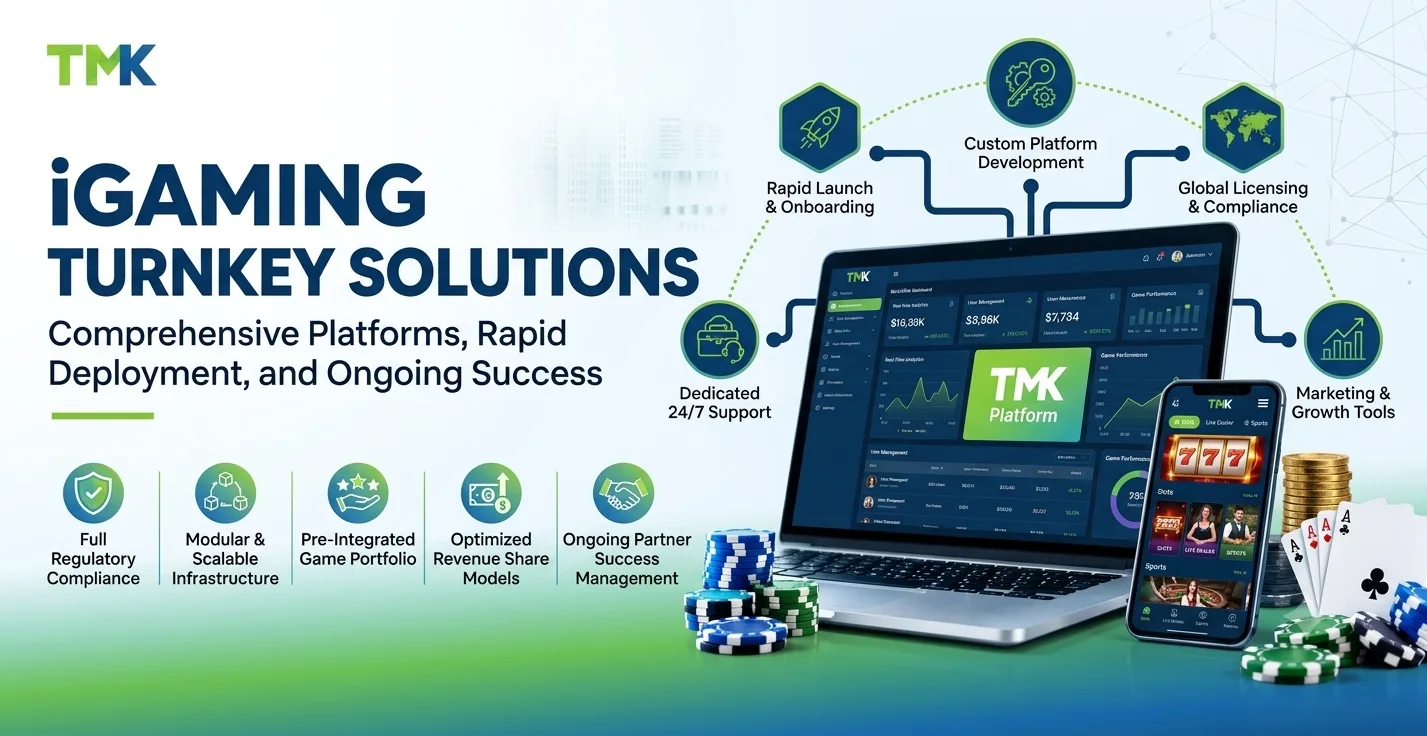
Turnkey solutions for iGaming are technological bundles which serve to help operators to launch and run their online gaming platforms. Depending on the particular vendor and agreement, a bundle might include website interface, game content integration, player account system, payment integration, reporting and administration dashboards.
The basic concept of turnkey solution is the combination of several important components within one platform. Instead of hiring different developers for each technical need, the operator obtains a ready-to-use platform which needs to be configured according to the business model.
For instance, an operator who is going to launch an online casino will need such components as account registration, game categories, wallet management, transaction history, promotions and customer support. Such components could be provided by a turnkey provider, but some of the integrations and services might still be contracted separately.
It should be noted that turnkey does not mean that all business requirements are included automatically. Licensing, legal advice, payment provider approval, local regulations, marketing and customer operations could still be the operator's responsibility.
Why Do iGaming Businesses Consider Turnkey Platforms?
Reduced Development Requirements
Creating an entire gaming platform from scratch requires software engineering, testing, infrastructure management, security and maintenance. Turnkey platform will help to cut down the level of custom development required before launching the product.
It is especially useful for startups and companies that want to enter a new market without having a big in-house development team. All the operator needs to do is to configure the platform.
More Coordinated Technology
When each vendor is responsible for the website, the gaming integration, the wallet, and reporting, there will be more than one relationship that the technical team will have to handle. The integrated platform can help make the process simpler by having a single technical platform.
The important thing is that operators need to know which platforms are truly integrated.
Greater Focus on Commercial Growth
The platform itself is merely one element of a successful online gambling venture. Operators need to know their customers, build their unique brands, attract the right players, and implement successful retention methods.
The use of an already established technology base will free up more time for focusing on the business aspects.
Essential Features of a Turnkey iGaming Platform
1. Website and Player Interface
The front end is where the users interact with the brand. The software should offer navigable interfaces, good responsiveness, user account functionality, which would be easily reachable, and the experience for both mobile and desktop users.
For the operators, it is vital to evaluate the convenience of customization options, game categorization, content creation, and page promotion. That is necessary since having a recognizable brand helps differentiate one operator from others that use the same technology.
2. Game Content Integration
Games can be anything from online casino games to live dealer games, slots, table games, sports betting services, and other products, depending on the platform scope.
Vendors could help the operator to work directly with game studios or with the content aggregators. Before signing up for a package, the business needs to analyze the game catalog, its integration, the jurisdictions in which it works, terms of the deal, and further content management.
Game numbers are far from being the only criteria of platform quality.
3. Payment Systems and Wallet Management
Payment capability enables gamers to deposit money, withdraw their eligible balance, and check transaction history. The payment systems will differ depending on the market that is targeted by the operators.
The ideal platform for this purpose should offer payment system integration, transaction management, good status reporting, and proper reconciliation services. The payment processes will have to satisfy the terms of both service providers and jurisdictional regulators.
It is important to establish whether payment system integration, transaction fees, chargebacks, and withdrawals are included in the offered solution.
4. Player Account Management
Player management systems provide the possibility of sorting out accounts, tracking their activity, processing their support requests, and analyzing their behavior.
The following can be useful features: registration procedures, verification of accounts, segmenting, settings, and restriction options. This type of software has to be developed taking into account security and privacy concerns as well as data protection requirements and safe gambling.
5. Reporting and Business Analytics
Good reporting assists in gaining clarity on registrations, deposits, withdrawals, campaign results, and customer behavior. According to the specific system used, dashboards might contain metrics on revenue, retention, and acquisition costs.
There are some questions that need to be raised by operators regarding the way metrics are generated, how often data gets refreshed, as well as export capabilities and integrations.
How to Launch an Online Gaming Business Using a Turnkey Solution
Step 1: Define the Business Model
Next, figure out what kind of gambling that your website will be able to allow users to participate in such as casino games on the Internet or betting on sports events. Figure out who the target audience is and where they live.
Step 2: Review Legal and Regulatory Requirements
Before accepting any players, make sure that you understand all the licenses, approvals, technical requirements, bans on advertising and other protections for consumers that apply to your intended operation and jurisdiction.
The platform provider does not automatically turn the operator legal. The businesses have to get their own legal advice.
Step 3: Evaluate Platform Providers
Comparisons among the service providers must be done based on product capabilities, technical infrastructure, integration options, quality of service, security, pricing, and liability. It will be helpful to ask for a demonstration and also for recommendations when you can. There are some aspects in the contract that you need to check such as data ownership, service availability, service support, and lock-in.
Step 4: Configure the Platform
Now that you have picked your service provider, you can design the brand identity, site pages, user journey, portfolio of games, payment integrations, and reporting. The operator must come up with an implementation strategy and define who is going to be responsible for what. Early agreement is necessary in case of the customizations and third-party integration.
Step 5: Test the Complete User Journey
The tests should encompass registration, verification, login, payment options, withdrawals, game access, account limitations, support, and mobile usability.
The security tests, integration tests, performance tests, and compliance tests should all be done before the software is launched. There should also be test scenarios for failed transactions and interrupted sessions.
Step 6: Prepare Launch Operations
Before implementing the product, make sure that you have all your customer support, escalation procedures, monitoring, marketing, and responsible gambling controls in place.
Your implementation plan should contain clear objectives and budget estimates, along with an after-release issue resolution procedure.
Key Benefits and Limitations
Using turnkey solutions will enable you to cut costs on development, centralize all the technical functions, and have a more formal approach to the entrance in the market. Turnkey solutions also help you gain access to the integrated systems and tools for management.
Nevertheless, there are also disadvantages to this approach. Limited opportunity for customization, additional fees for integration or advanced functionality, and dependence on the infrastructure and business policies of those who develop these platforms may be among such shortcomings.
In any case, you should focus not only on the speed of the very first launch but on the long-term perspective too. Data portability, documentation, technical access, and exit strategy will play an essential role in that regard.
How the Marketing King Supports iGaming Business Growth
Technology is the core of an online gaming company; however, for a successful expansion, one needs visibility, quality traffic, and an effective acquisition strategy.
The Marketing King (TMK) offers digital marketing solutions for iGaming businesses that include SEO, PPC, content marketing, technical optimization, link building, and player acquisition techniques. All these solutions may be helpful in improving the SEO, creating valuable content, and finding the ways to reach the target audience.
For companies that plan to launch a new platform, marketing planning should start simultaneously with the development process. Keyword research, competition research, website structure, and conversion tracking may help create a clear path from launch to growth.
All marketing operations should follow the legislation, advertising platform policies, age limits, and responsible gambling rules. The availability of campaigns and allowed promotion methods depend on the jurisdiction.
Conclusion
Turnkey solutions for iGaming provide companies with pre-existing technological infrastructure that will be used for creation of their gaming platforms. The use of website features, game integration, payments, accounts, and reports could help in making such a system so that there will be no need to develop separate components.
The choice of providers must be made taking into account their technological possibilities, security, scalability, liabilities, and price. Such things as licensing, operability, consumer protection, and marketing must also be sorted out by operators. Properly coordinated technology choice will give a strong foundation for starting the business.
0 comments
Log in to leave a comment.
Be the first to comment.