
Trusted Furnace Refractory Lining Materials Supplier in India
Refractory Lining Materials
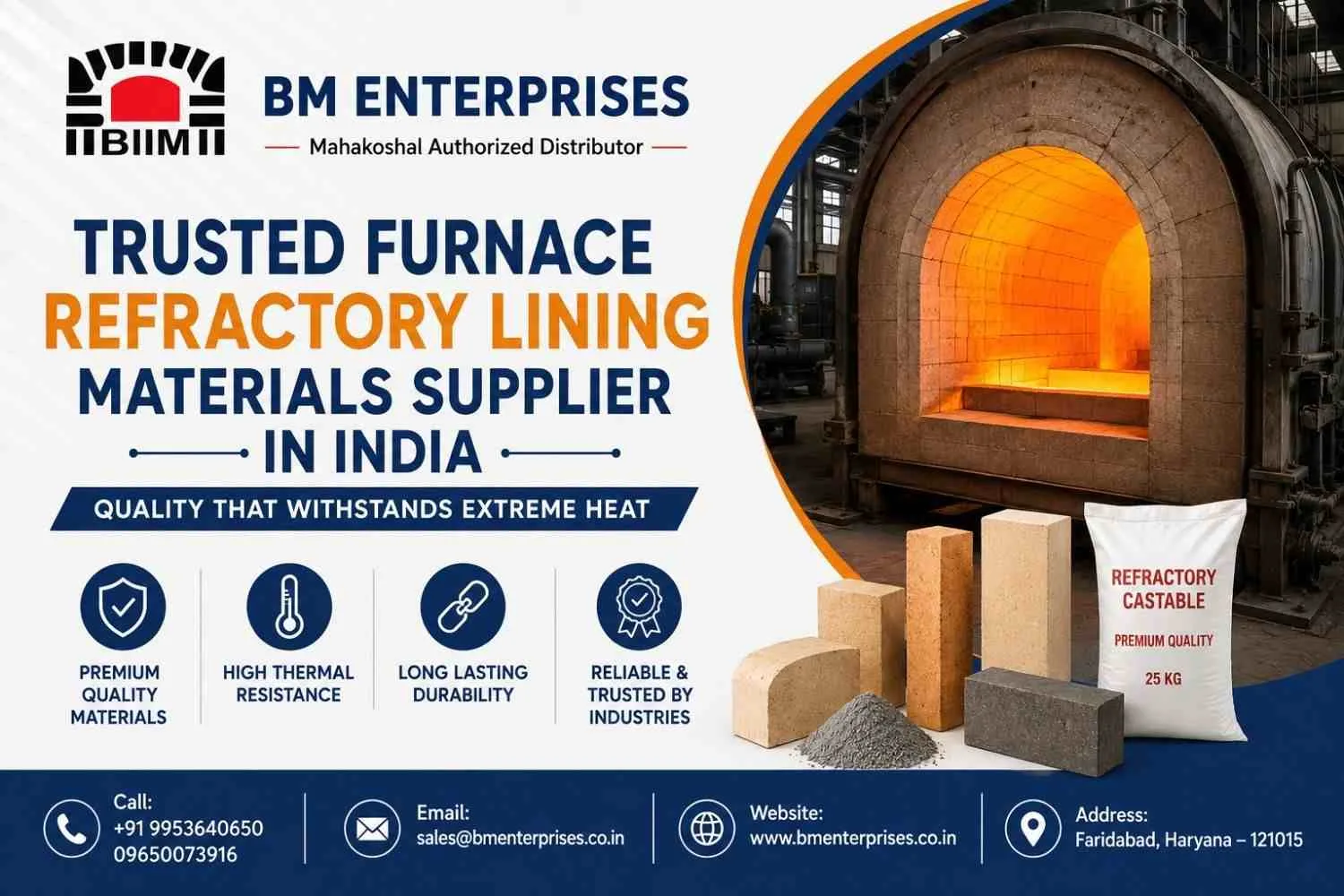
The materials used for refractory lining are those that are responsible for protecting the structural integrity of the industrial furnace from extreme temperatures, liquid materials, gases, fire, chemical reactions, and mechanical erosion. The right choice of refractory lining materials is essential in controlling the temperature in the process and reducing heat losses. Selecting a dependable refractory lining material supplier in India is thus one of the important steps in maintaining the furnace. BM Enterprises manufactures and supplies refractory lining materials such as Fire Clay Bricks, High Alumina Bricks, Silica Bricks, and Magnesia Bricks.
What Is Refractory Lining Material?
Refractory lining materials are a type of heat-resistant materials that provide protection to the inner surfaces of furnaces, kilns, boilers, reactors, and other high-temperature equipment. While ordinary brick is made by burning clay or fireclay, refractory brick is produced in such a way that its physical and chemical properties remain stable under high temperatures. Based on specific requirements, refractory lining may consist of brick, castable, mortar, ceramic fiber, or insulating material. Refractory material is chosen based not only on temperature but on other conditions such as molten metal, slag, abrasion, and chemical exposure as well.
Why Refractory Lining Is Essential
The lining material serves as an insulating layer on the inside of the furnace, protecting the metal shell from high temperatures, flames, corrosive action, and wear. Proper selection and installation of the lining will help decrease heat loss, increase the efficiency of the furnace, and increase the service life of the equipment. The lining should be able to resist frequent heating and cooling without cracking or deterioration. Selection of the appropriate refractory material is critical to prevent failures.
Main Functions of Refractory Lining
The primary role of a refractory lining is to insulate the furnace against excessive heat, chemical reactions, abrasive attacks, and mechanical stresses while ensuring that the right operating temperature is maintained. The properties of refractories include insulation of heat, insulation of the furnace shell, and resistance to hot materials. The properties of the refractory depend on its alumina or magnesia content, strength, density, thermal shock resistance, and chemical compatibility. Thus, the refractory must be selected based on the type of furnace and its operating conditions, and not merely by the temperature.
Heat Resistance and Thermal Protection
For effective operation, the refractory lining should have the ability to resist very high temperatures without losing its strength or form. It acts as an insulating material by retaining the heat in the furnace process and minimizing the loss of heat to the outer furnace shell. Various furnace sections may use various materials, for instance, Fire clay bricks, high alumina bricks, silica bricks, or magnesia bricks.
Chemical, Abrasion, and Mechanical Resistance
However, heat is not the sole problem that a furnace faces. There is also the need for the refractory lining material to withstand any form of chemical corrosion, wear, mechanical impact, and thermal shock. Molten slag, ash, gases, and raw materials may slowly degrade the refractory materials that cannot withstand these problems. High alumina refractories are ideal for use in demanding high-temperature operations, whereas magnesia refractories are frequently employed in basic furnaces and steel manufacturing. Silica refractories are ideal for special high-temperature applications.
Types of Furnace Refractory Materials
There cannot be one type of refractory brick that can suit all furnaces. Depending upon the temperature, atmosphere, mechanical strength, and furnace location, different bricks are required. BM Enterprises manufactures Fire Clay Bricks, High Alumina Bricks, Silica Bricks and Magnesia Bricks for different purposes. Different bricks can be used for different locations inside the furnace.
Fire Clay Bricks
High Alumina Bricks contain more alumina as compared to conventional fireclay bricks. High Alumina Bricks have been developed for tough high-temperature applications. High Alumina Bricks provide refractoriness, high strength, and resistance against thermal and chemical environments. High Alumina Bricks are used extensively in furnaces, kilns, reheating furnaces, and high-temperature zones.
High Alumina Bricks
High Alumina Bricks have more alumina content than conventional fireclay bricks. They are suitable for tough applications at high temperatures. This brick has good refractoriness, strength, and resistance to thermal and chemical attack. Alumina bricks are used in furnaces, kilns, reheating furnaces, and other applications in high temperatures.
Silica Bricks
Silica bricks are high-silica refractories that are used for special high-temperature applications. They are mainly used in coke ovens, glass furnaces, and other appropriate furnace conditions. The choice of these bricks is based on several aspects like furnace chemistry, temperature, thermal expansion, and strength.
Magnesia Bricks
Magnesia Bricks consist mainly of magnesium oxide, and they have the ability to resist basic slags and high temperatures. Their uses include applications within the steelmaking and other metallurgical processes. Magnesia Bricks by BM Enterprises are suitable for industrial use where there is a need for basic refractories.
Choosing the Right Bricks for Furnace Applications
The selection of bricks for furnace applications is dependent on temperature, the nature of the furnace, chemical reactions, abrasion, and operating conditions. Location in the furnace is also very important since different parts of the furnace, such as the floor, walls, burners, and roofs, may require different refractories.
Temperature and Furnace Atmosphere
Temperature alone is not sufficient when choosing refractory bricks. Other factors that influence the choice of materials are the furnace atmosphere, slag, gas, flame, and heating cycles. The characteristics of Fire Clay Bricks, High Alumina Bricks, Silica Bricks, and Magnesia Bricks vary and thus require appropriate selection depending on the working conditions.
Matching Brick Chemistry to Service Conditions
The chemical composition of refractories greatly influences the efficiency of the furnace. High Alumina Bricks can be used in extremely high-temperature applications, whereas Silica and Magnesia Bricks are used under special chemical and temperature requirements. Fire Clay Bricks are widely used in general refractory applications.
Refractory Bricks for Kilns and Industrial Furnaces
Industrial furnaces and kilns require refractory bricks capable of surviving extreme temperatures, extreme thermal shock, and extreme wear. In each zone of the kiln, appropriate fire bricks will be chosen depending on the temperatures and conditions of operation. BM Enterprises supplies refractories for furnaces, kilns, boilers and other industrial applications.
Burner Bricks and High-Temperature Zones
Burner bricks have to survive under the influence of flames and extreme temperatures. Proper choice of material is essential to achieve this goal. High alumina or other refractories can be considered depending on the furnace construction. Proper sizing and installation properly done can also make a great impact on burner area performance.
Why Choose BM Enterprises?
BM Enterprises supplies industrial refractories such as Furnaces, Kilns, boilers, and other high-temperature applications. Our product line includes Fire Clay Bricks, High Alumina Bricks, Silica Bricks, and Magnesia Bricks, which allow customers to choose suitable refractories depending on the conditions of operation.
Quality, Availability, and Industrial Supply
Purchasing refractory requires considering many factors, including not only price but also quality, specifications, and suitability of the material for specific application. BM Enterprises concentrates on supplying refractory bricks and industrial refractories meeting specific requirements.
Conclusion
Properly chosen furnace linings help in safeguarding equipment against heat, chemical, mechanical action, and wear. BM Enterprises provides Fire Clay Bricks, High Alumina Bricks, Silica Bricks, and Magnesia Bricks for diverse industrial applications. BM Enterprises provides Fire Resistant Brick, Kiln Fire Brick, Burner Brick, Alumina Bricks, and Furnace Bricks for refractories in India.
FAQs
1. Where are refractory lining materials used?
Refractory lining materials help in protecting furnaces, kilns, and boilers against extremely high temperatures, chemical attacks, abrasions, and mechanical stresses.
2. Which refractory bricks are manufactured by BM Enterprises?
BM Enterprises manufactures Fire Clay Bricks, High Alumina Bricks, Silica Bricks, and Magnesia Bricks for industrial purposes.
3. What is the application of High Alumina Bricks?
High Alumina Bricks are used in furnaces and kilns where very high temperatures exist because of their good resistance to heat and wear.
4. What are the differences between Fire Clay and High Alumina Bricks?
Fire Clay Bricks can be used for general refractory applications, but high-alumina bricks can be used for very high temperatures.
5. How can I choose my furnace refractory brick?
Furnace refractory brick choice depends on the temperature of the furnace, atmosphere, chemistry, abrasion, and zone of application.
0 comments
Log in to leave a comment.
Be the first to comment.