
Transport Corridor Boundary Engineering: Mechanical Performance, Aerodynamics, and Environmental Resilience in Commercial Chain-Link Infrastructure
This guest post examines the engineering principles behind durable chain-link fencing for railway corridors, highways, and utility infrastructure. It highlights high-tensile mesh performance, corrosion-resistant coatings, wind-load management, stable foundations, and safe install
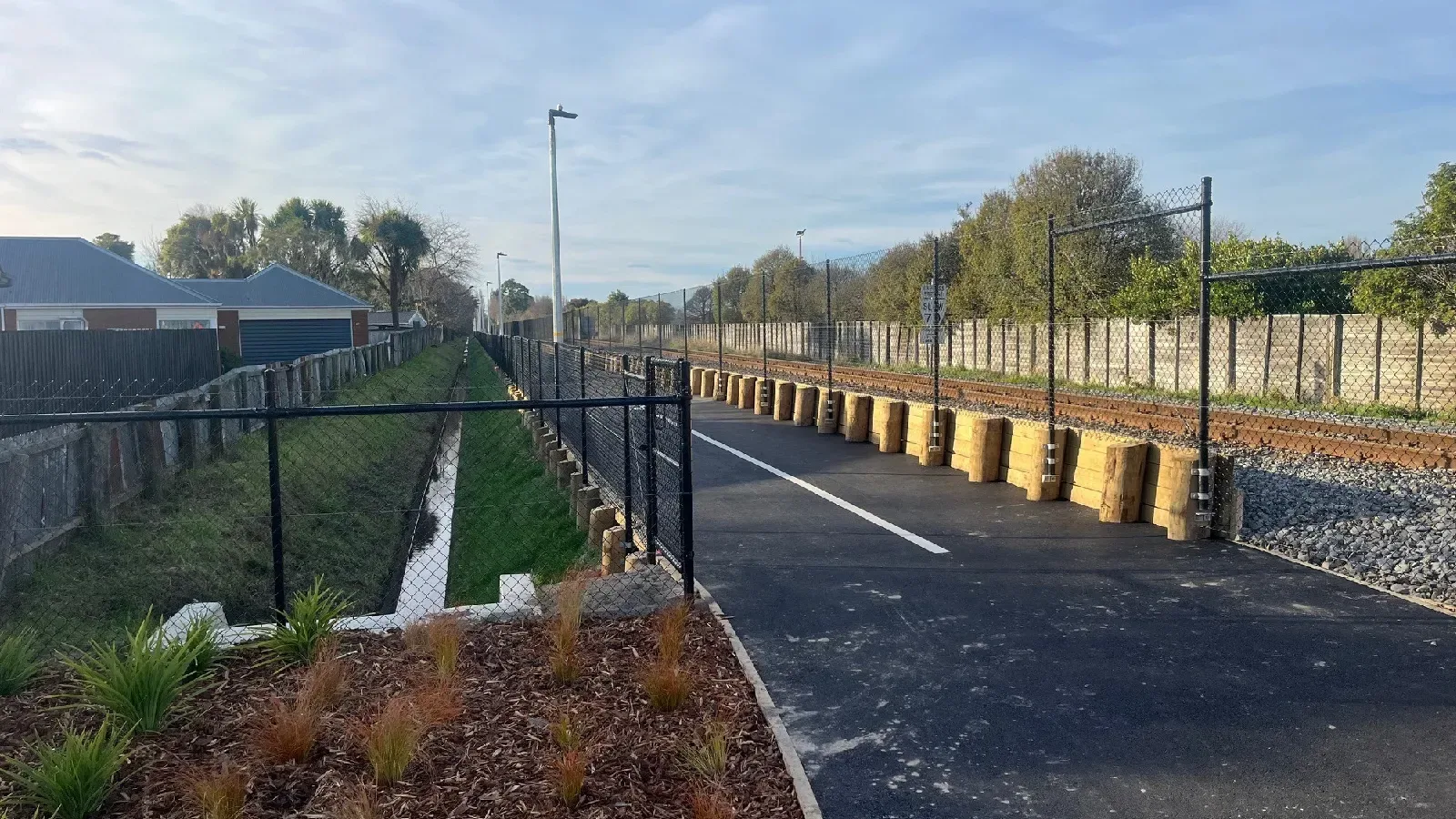
Securing active railway corridors, regional highway reserves, and high-voltage utility easements presents demanding civil engineering challenges. Unlike compact commercial building perimeters, linear infrastructure corridors extend over thousands of metres, crossing diverse geotechnical topographies, alluvial soil strata, and microclimatic zones. A corridor perimeter must satisfy multiple critical objectives simultaneously. It must exclude unauthorised pedestrians from active rail tracks, deter trespass and copper theft, prevent wildlife from entering transit zones, and maintain continuous physical integrity under extreme aerodynamic forces.
When corridor security enclosures fail, the operational consequences are severe. A compromised railway boundary risks train strikes, catastrophic signal cable sabotage, and emergency network shutdowns that trigger severe financial penalties. Building resilient perimeter barriers along active transit corridors requires a systematic engineering methodology encompassing metallurgy, aerodynamic permeability, ground mechanics, and rigorous health and safety execution.
The Mechanical Architecture of High-Tensile Chain-Link Mesh
For expansive linear perimeters, woven steel chain-link fencing remains the premier engineering solution globally. The structural effectiveness of chain link stems from its continuous diamond-mesh matrix. Formed by interlinking adjacent helical wire coils, the woven geometry provides mechanical flexibility that rigid welded panels cannot replicate across undulating ground.
When subjected to dynamic kinetic impact, such as a falling tree branch, animal contact, or intentional vandalism, the woven matrix distributes kinetic energy across multiple adjacent wire spirals. Rather than concentrating stress at a rigid weld joint, the load transfers smoothly into intermediate line posts and horizontal high-tensile strainer wires. This mechanical flexibility prevents sudden fracture and enables the fence line to absorb physical shock without catastrophic failure.
Specifying certified Chain Link Fencing Canterbury provides transport authorities and civil infrastructure projects with precision-manufactured steel mesh systems built to rigorous industrial specifications. Commercial installations specify heavy wire diameters, typically ranging from 2.5 to 3.55 millimetres, woven with calibrated aperture sizes. Furthermore, specifying knuckled selvages along the bottom edge prevents pedestrian snagging, while barbed twisted selvages along the top rail present an effective climbing deterrent.
Thermal Fusion-Bonded Coatings and Corrosion Protection
Perimeter infrastructure along transport corridors is subject to continuous atmospheric exposure. Rail corridors endure airborne brake dust, iron particulates, industrial sulfur deposits, and heavy seasonal moisture. Concurrently, regional coastal environments subject metal infrastructure to airborne marine chlorides that accelerate galvanic corrosion.
To achieve an extended design life exceeding twenty-five years without structural degradation, modern chain-link systems employ advanced duplex surface protection:
- Heavy Hot-Dip Galvanised Core: The structural steel wire core receives a dense coating of high-purity zinc applied via continuous hot-dip immersion. The zinc layer establishes both a physical seal and sacrificial galvanic protection, sacrificing itself electrochemically to protect the underlying steel core if the outer layer is breached.
- Thermal Fusion-Bonded PVC Cladding: An architectural-grade polyvinyl chloride (PVC) layer is thermally extruded and molecularly bonded over the galvanised steel core. Unlike inferior slip-on plastic sleeves that crack and peel when exposed to ultraviolet radiation, fusion-bonded PVC remains permanently adhered to the zinc substrate. The polymer coating resists intense summer UV exposure, winter frost cycles, and airborne corrosive agents.
This robust multi-layer barrier preserves the structural wire gauge, preventing corrosion-induced cross-sectional loss and ensuring long-term aesthetic integration with surrounding landscapes.
Aerodynamic Permeability and Dynamic Wind Load Calculations
A critical advantage of woven chain-link mesh in exposed environments is its low aerodynamic drag coefficient. Open plains regions, particularly across Canterbury, regularly endure severe north-westerly gale events where localised wind gusts can exceed 130 kilometres per hour. Solid timber fences, corrugated acoustic walls, and dense solid sheet barriers act as massive wind sails, generating intense aerodynamic stagnation pressure that frequently snaps supporting posts or uproots foundations.
In contrast, woven chain-link mesh offers superior aerodynamic porosity. The diamond apertures allow turbulent wind currents to flow freely through the fence line with minimal aerodynamic resistance. This transparency drastically reduces the dynamic overturning moment exerted on upright line posts, straining posts, and concrete footings.
Engineers calculate post diameters, wall thicknesses, and embedment depths to ensure the structural skeleton easily withstands peak gust loads. Utilising heavy-wall circular hollow section (CHS) structural steel posts ensures high torsional resistance while eliminating sharp structural corners that could collect debris or create stress concentrations.
Foundation Mechanics in Alluvial Gravels and Subterranean Protection
The stability of any linear barrier depends directly on the ground mechanics anchoring its upright posts. Geological profiles across Canterbury comprise extensive alluvial gravel terraces interspersed with silt lenses and varying water tables. These soil conditions require tailored post foundation engineering:
- Mechanically Bored Pile Footings: Strainer posts, end assemblies, and corner posts absorb the full horizontal tension of the high-tensile wire system. These key structural components require oversized bored concrete piles cast into consolidated alluvial gravel strata.
- Continuous Bottom Strainer Integration: To prevent burrowing animals or unauthorised intruders from lifting the bottom mesh edge, heavy-gauge bottom strainer wires or embedded steel bottom rails are tensioned tightly along the ground plane.
- Concrete Anti-Burrow Ground Sills: In high-risk infrastructure zones, the lower section of the chain-link mesh is embedded directly into continuous poured-concrete ground nibs, eliminating gaps caused by surface stormwater erosion.
Implementing calculated geotechnical designs prevents post leaning, tension loss, and bottom-edge lifting across decades of environmental weathering.
Complex Site Logistics and Certified Health and Safety Execution
Installing kilometres of security fencing alongside active transport corridors demands rigorous operational coordination and safety compliance. Working within railway corridors or near high-voltage energy easements requires specialised safety qualifications, verified track-protection personnel, and strict adherence to WorkSafe regulations.
Engaging certified fence contractors nz guarantees that major linear infrastructure projects are executed with absolute safety, structural precision, and zero disruption to active transit operations. Experienced contractor crews hold comprehensive SiteWise Gold safety accreditation, allowing seamless prequalification for sensitive government and Tier-1 civil infrastructure tenders. From multi-stage project planning and precision workshop fabrication to mechanised on-site installation, qualified trade teams ensure that infrastructure boundaries stand as enduring assets of public safety and asset security.
Conclusion
Securing vital commercial and transport corridors requires a balanced integration of structural metallurgy, aerodynamic engineering, and specialised installation capability. Commercial chain-link fencing delivers an unmatched combination of tensile strength, optical transparency, aerodynamic resilience, and cost efficiency across extensive boundary runs. By investing in heavy-gauge fusion-bonded materials, engineered concrete foundations, and certified regional installation expertise, infrastructure operators achieve reliable, long-term boundary security that protects critical public assets for future generations.
0 comments
Log in to leave a comment.
Be the first to comment.