
The Case for Choosing a Wall-Mounted Hood for Your Kitchen
For kitchens designed around a wall-facing cooktop, wall-mount range hoods remain one of the more practical and visually adaptable ventilation choices available, combining reliable performance with substantial design flexibility.

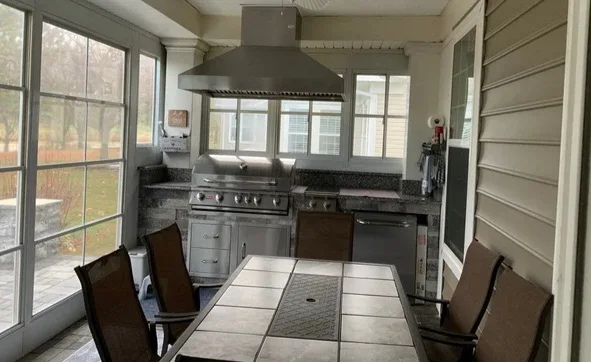
Kitchen layout has a significant influence on which ventilation style makes the most practical sense, and for cooktops positioned against an exterior or interior wall, wall-mounted range hoods are often the most straightforward solution available. Mounted directly above the cooking surface and secured to the wall rather than suspended from the ceiling, this style combines strong ventilation performance with a design that tends to serve as a visual centerpiece in kitchens built around a wall-facing range.
How This Style Differs From Island or Under-Cabinet Options
Unlike island hoods, which require ceiling-mounted support since there's no adjacent wall for anchoring, wall-mounted range hoods attach directly to the wall above the cooktop, offering a more secure and often simpler installation process. This also differs from under-cabinet hoods, which are typically smaller and designed to tuck beneath existing cabinetry rather than stand as a prominent design feature. The wall-mounted approach tends to accommodate larger, more visually substantial hood designs since there's less concern about matching cabinet dimensions precisely.
Ventilation Performance and Capture Area
Because these hoods are positioned directly above the cooktop and often extend outward from the wall, they generally provide strong capture area for rising smoke, steam, and grease particles. Range hoods wall-mounted in this configuration benefit from proximity to the heat source, which helps improve capture efficiency compared to hoods mounted farther away or at awkward angles. Proper sizing still matters significantly here, with the hood generally needing to match or slightly exceed the width of the cooktop below for optimal performance.
Design Flexibility and Material Options
One of the more appealing aspects of this hood style is the range of design options available, from sleek stainless steel finishes to custom-clad designs incorporating wood, copper, or other decorative materials. Because wall-mounted range hoods serve as a visible focal point in many kitchen layouts, homeowners often treat them as a design opportunity rather than a purely functional appliance, selecting finishes and shapes that complement the broader kitchen aesthetic rather than simply blending into the background.
Installation Requirements to Keep in Mind
Installing this type of hood typically requires secure wall anchoring capable of supporting the unit's weight, along with properly routed ductwork if venting to the exterior. Because the hood is affixed directly to the wall rather than suspended from ceiling joists, structural requirements differ somewhat from island installations, though professional installation is still generally recommended to ensure both secure mounting and effective ductwork routing for optimal ventilation performance.
Height and Clearance Considerations
Mounting height plays a meaningful role in how effectively range hoods wall-mounted above a cooktop capture cooking byproducts. Positioned too high, the hood loses some of its capture efficiency as smoke and steam disperse before reaching the intake area; positioned too low, it can interfere with cooking clearance or become a safety concern near an active cooktop. Manufacturer guidelines typically specify a recommended height range, and following these specifications closely helps balance both safety and ventilation performance.
Noise and Fan Speed Settings
Fan performance varies across models, with most units offering multiple speed settings to accommodate different cooking intensities. Lower settings are generally sufficient for simmering or light cooking, while higher settings become necessary during high-heat searing or frying, when smoke and grease production increase significantly. Homeowners sensitive to kitchen noise should compare decibel ratings across models, since fan strength and noise output don't always scale in the same proportion across different manufacturers.
Conclusion
For kitchens designed around a wall-facing cooktop, wall-mount range hoods remain one of the more practical and visually adaptable ventilation choices available, combining reliable performance with substantial design flexibility. Careful attention to sizing, mounting height, and installation requirements helps ensure the finished result performs as effectively as it looks within the broader kitchen layout.
0 comments
Log in to leave a comment.
Be the first to comment.