
TESA, PESA & Micro-TESE for Male Infertility

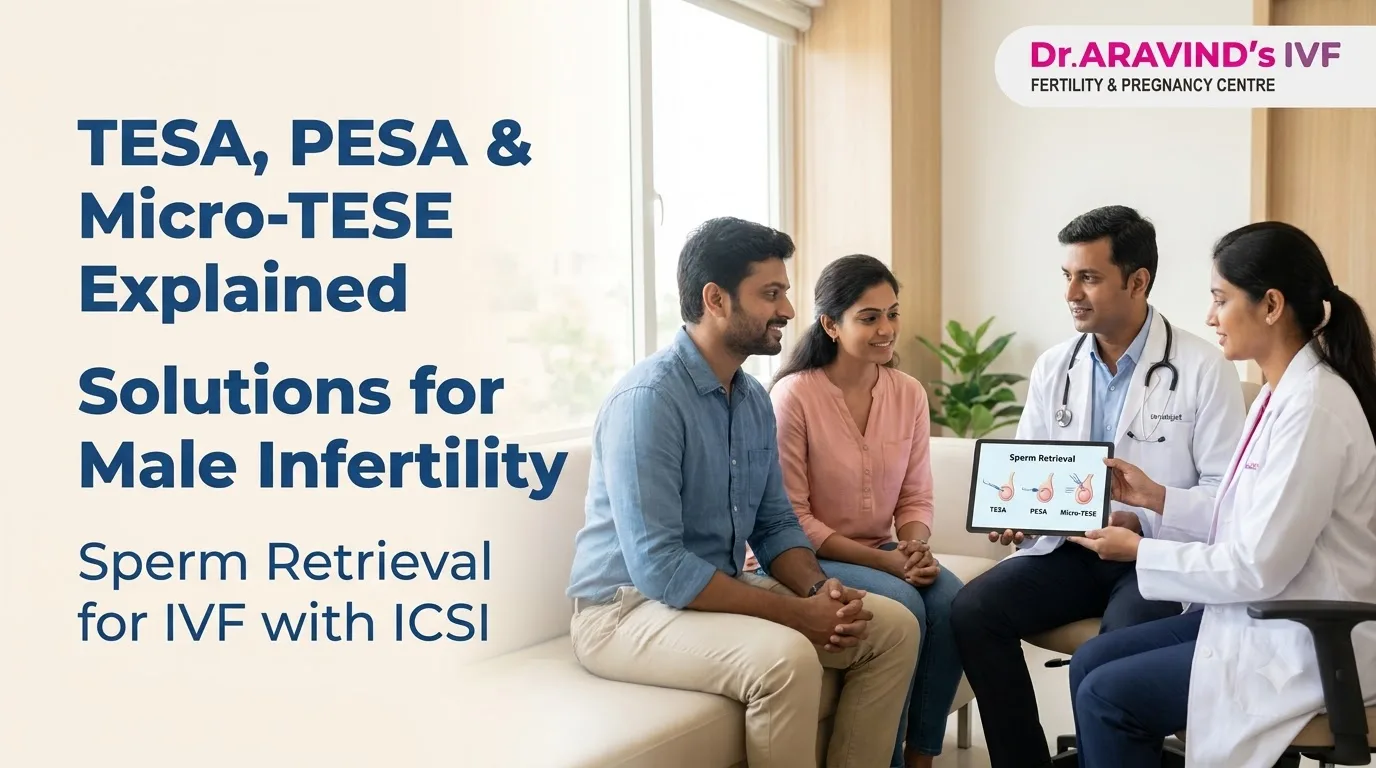
Male factor infertility affects nearly half of all couples struggling to conceive. When semen analysis shows very low or zero sperm, surgical sperm retrieval techniques like TESA, PESA, and Micro-TESE can help retrieve sperm directly from the testes or epididymis for use in IVF with ICSI. These procedures offer hope even in cases of obstructive or non-obstructive azoospermia. A consultation with the best IVF centre in Karur can help determine the most suitable option for your situation.
What Are TESA, PESA and Micro-TESE?
These are minor surgical procedures used to retrieve sperm when it is not present in the ejaculate.
TESA — Testicular Sperm Aspiration
A fine needle is inserted into the testis to aspirate sperm-containing tissue.
Usually performed under local or light sedation.
Commonly used for obstructive azoospermia (blockage preventing sperm release).
Less invasive but may retrieve fewer sperm compared to open biopsy.
PESA — Percutaneous Epididymal Sperm Aspiration
A needle is used to aspirate fluid directly from the epididymis, where mature sperm are stored.
Performed under local anaesthesia.
Ideal for men with obstructive causes, such as prior vasectomy or congenital absence of the vas deferens.
Sperm retrieved are typically mature and suitable for ICSI.
Micro-TESE — Microsurgical Testicular Sperm Extraction
A small incision is made in the testis, and seminiferous tubules are examined under a high-powered microscope.
Only tubules likely to contain sperm are selected and extracted.
Performed under general or regional anaesthesia.
Preferred for non-obstructive azoospermia, where sperm production is impaired but may still exist in focal areas.
Higher sperm retrieval rates compared to blind biopsy techniques.
When Are These Procedures Recommended?
Surgical sperm retrieval is considered when:
Semen analysis shows azoospermia (no sperm in ejaculate).
There is a history of vasectomy or congenital absence of the vas deferens.
Previous IVF cycles failed due to poor sperm quality or retrieval issues.
Ejaculatory dysfunction prevents normal sperm collection.
Genetic conditions affect sperm transport or production.
In some cases, sperm may be retrieved and frozen for future IVF cycles.
How Do These Procedures Support IVF?
Retrieved sperm are used in IVF with intracytoplasmic sperm injection (ICSI), where a single sperm is injected directly into each mature egg.
Key advantages:
Enables biological parenthood even with very low or zero ejaculated sperm.
Reduces the need for donor sperm in many cases.
Sperm can be retrieved fresh on the day of egg collection or frozen in advance.
Success depends on sperm quality, egg quality, and female factors such as ovarian reserve.
Even when female partners have low amh levels, combining surgical sperm retrieval with tailored IVF protocols can improve overall outcomes.
Differences Between TESA, PESA and Micro-TESE
Your urologist and fertility specialist will recommend the most appropriate method based on diagnosis.
Success Rates and Considerations
Success depends on:
The underlying cause of azoospermia.
Sperm retrieval rates — highest with Micro-TESE in non-obstructive cases.
Female partner’s age and ovarian reserve.
Embryo quality and laboratory expertise.
At the best IVF centre in India, these procedures are performed in coordination with the IVF team to ensure optimal timing and sperm handling.
Risks and Recovery
These are generally safe procedures with minimal complications.
Possible risks include:
Mild pain, swelling, or bruising at the site.
Rare risk of infection or bleeding.
Temporary discomfort managed with pain relief.
Most men resume normal activities within a few days.
Why Choose the Right Centre?
Surgical sperm retrieval requires:
Experienced urologists skilled in microsurgical techniques.
Advanced embryology labs for immediate sperm processing.
Seamless coordination between urology and IVF teams.
Personalised planning based on male and female factors.
Even when female partners face challenges such as pesa tesa ivf, a well-coordinated approach can maximise the chances of success.
Frequently Asked Questions
1. What is the difference between TESA and PESA?
TESA retrieves sperm from the testis, while PESA aspirates sperm from the epididymis. Both are used mainly for obstructive azoospermia, but PESA targets mature sperm stored in the epididymis.
2. Is Micro-TESE better for non-obstructive azoospermia?
Yes. Micro-TESE allows targeted extraction of sperm-containing tubules under a microscope, offering higher retrieval rates in non-obstructive cases compared to blind biopsy.
3. Can sperm be frozen after retrieval?
Yes. Retrieved sperm can be frozen for future IVF cycles, reducing the need for repeat procedures.
4. Are these procedures painful?
Most men experience mild discomfort, swelling, or bruising, which is manageable with pain relief. Recovery is usually quick.
5. When should we consider surgical sperm retrieval?
If semen analysis shows azoospermia, or if prior IVF cycles failed due to male factor issues, consult the best IVF centre in Karur to evaluate TESA, PESA, or Micro-TESE options.
Surgical Sperm Retrieval Can Make Biological Parenthood Possible Even With Azoospermia
Speak with a fertility specialist to understand which procedure suits your case and how it integrates with your IVF plan.
0 comments
Log in to leave a comment.
Be the first to comment.