
Sewage Treatment Plant Manufacturer in Gurgaon With Expert Technical Support

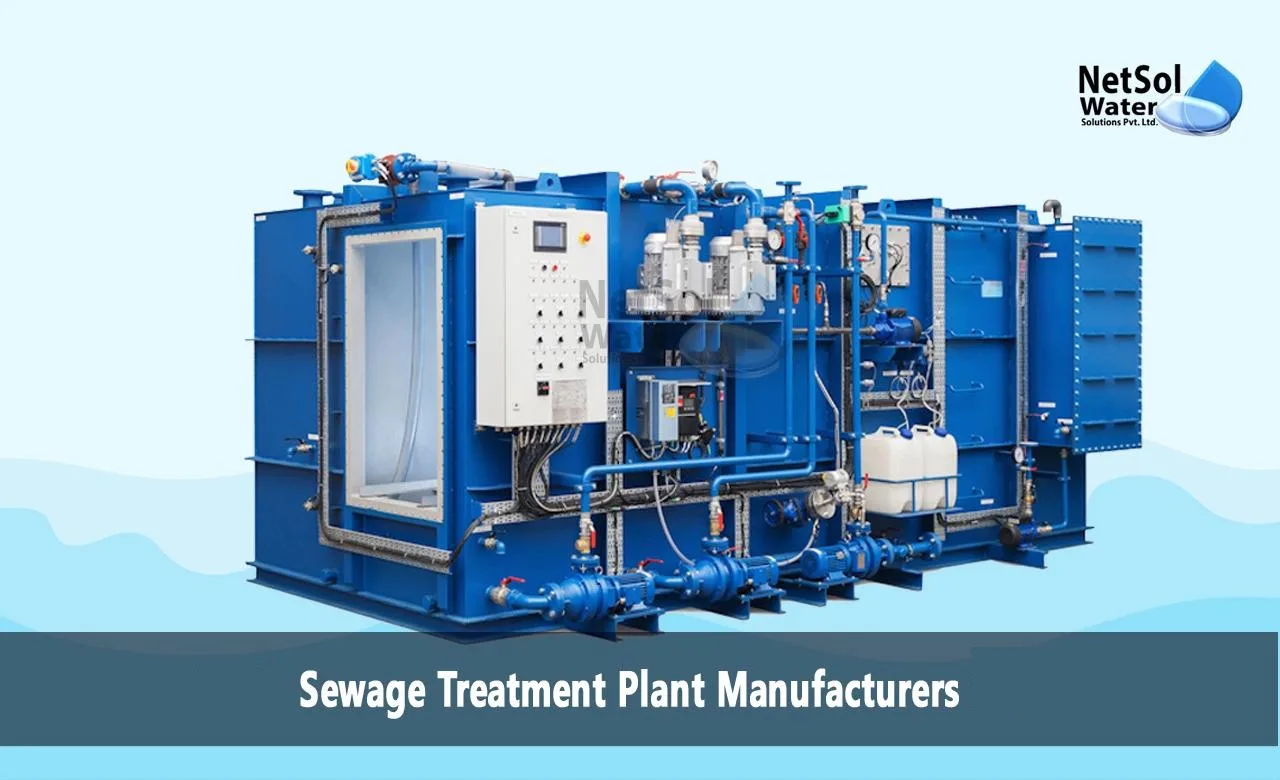
Gurgaon, now widely known as Gurugram, has grown into one of the busiest commercial and residential hubs in the Delhi NCR region. From modern housing societies and corporate offices to hotels, hospitals and industrial facilities, the city continues to expand. However, this growth also brings a major responsibility: managing wastewater safely and efficiently.
Every day, buildings generate sewage from bathrooms, kitchens, washrooms and other daily activities. If facilities release this wastewater without proper treatment, it can pollute the environment and put pressure on local water resources. Therefore, installing a reliable sewage treatment plant has become an important part of responsible property and business management.
If you are searching for a sewage treatment plant manufacturer in Gurgaon with expert technical support, Netsol Water offers water and wastewater treatment solutions for different applications. The right treatment system can help your facility manage sewage, reuse treated water for suitable purposes and maintain a more sustainable approach to water consumption.
However, choosing an STP involves more than selecting a machine. You also need the right technology, suitable treatment capacity, professional installation and dependable after-sales assistance. In this article, we will explore how sewage treatment plants work, why technical support matters and how to choose a solution that meets your facility’s needs.
Why Is a Sewage Treatment Plant Important in Gurgaon?
Gurgaon has a diverse mix of residential developments, IT parks, shopping centres, manufacturing units and commercial establishments. Each facility generates wastewater in different quantities and with different characteristics.
For example, a residential society produces sewage throughout the day. An office building may experience higher wastewater flow during working hours. Meanwhile, a hotel can experience significant changes depending on occupancy.
A properly designed sewage treatment plant helps manage these variations and improves wastewater quality before reuse or discharge.
Here are some important benefits of installing an STP.
1. Protects the Environment
Untreated sewage contains organic matter, suspended solids and microorganisms. If it enters the environment without adequate treatment, it can contribute to pollution and create sanitation concerns.
An STP reduces these pollutants through suitable physical, biological and disinfection processes. Consequently, it helps facilities manage wastewater more responsibly.
2. Supports Water Recycling
Freshwater conservation has become increasingly important for businesses and residential communities. Instead of treating all wastewater as waste, facilities can recover and reuse treated water for suitable non-potable applications.
For instance, treated water may support toilet flushing, gardening and landscaping when it meets the relevant quality requirements.
3. Helps Facilities Meet Environmental Requirements
Businesses and property managers must understand the wastewater treatment and discharge requirements applicable to their premises.
A suitable STP can help a facility work towards the required standards. However, the final results depend on correct plant design, proper operation, regular monitoring and compliance with applicable regulations.
4. Improves Wastewater Management
A well-planned treatment system provides a more organised way to collect, process and reuse sewage. It also helps facility managers monitor equipment performance and plan maintenance activities.
Therefore, investing in the right STP can support both environmental responsibility and efficient building operations.
What Is a Sewage Treatment Plant?
A sewage treatment plant is a system that removes pollutants from domestic wastewater through a series of treatment processes. Depending on the design, it may use screening, settling, biological treatment, filtration and disinfection to improve the quality of the water.
The purpose is to reduce contamination and prepare the treated water for its intended reuse or approved discharge.
Netsol Water provides sewage treatment solutions for different capacities and applications. Its official website highlights compact STP systems and wastewater treatment technologies designed to address different project requirements.
However, every site has its own needs. A small commercial property may require a compact system, while a large residential complex may need a higher-capacity plant with additional treatment stages.
That is why professional assessment matters. The manufacturer should evaluate the expected sewage flow, available space, wastewater characteristics and intended reuse before recommending a system.
How Does a Sewage Treatment Plant Work?
Although treatment processes vary, most sewage treatment plants follow a series of stages. Each stage performs a specific function to improve wastewater quality.
1. Preliminary Treatment
First, sewage passes through screens that remove larger materials such as plastic pieces, paper, cloth and other debris.
This stage protects pumps and downstream equipment from blockages. Depending on the wastewater characteristics, the plant may also include grit removal or other preliminary treatment arrangements.
2. Primary Treatment
Next, the wastewater enters a settling tank or another suitable separation unit. Heavier suspended solids settle at the bottom, while lighter materials may separate from the water.
This process reduces part of the solids load before biological treatment begins.
3. Biological Treatment
Biological treatment plays a central role in most STPs. It uses microorganisms to break down biodegradable organic matter in sewage.
Depending on the selected technology, the system may provide oxygen through blowers and aeration equipment. The microorganisms then help reduce the organic pollution present in the wastewater.
MBBR, SBR and MBR are examples of technologies used in suitable sewage treatment applications.
4. Secondary Separation and Filtration
After biological treatment, the system separates the treated water from remaining solids. Depending on the plant design, it may use a settling tank, membranes or another separation method.
Additional filtration can improve water clarity and prepare the water for the next stage.
5. Disinfection
Finally, the system may use ultraviolet treatment, chlorination or another appropriate disinfection method to reduce harmful microorganisms.
The required process depends on the intended use of the treated water and the applicable standards. Before reuse or discharge, the facility should verify that the water meets the relevant quality requirements.
Advanced Sewage Treatment Technologies Available
A reliable sewage treatment plant manufacturer does not recommend the same technology for every facility. Instead, the engineering team considers the expected sewage load, available space, treatment objectives and operating budget.
Let’s look at three commonly used technologies.
1. Moving Bed Biofilm Reactor (MBBR)
MBBR technology uses specially designed plastic carriers that provide a surface for microorganisms to grow. These carriers remain inside the biological treatment tank while wastewater passes through the system.
The microorganisms attached to the carriers help break down organic pollutants.
Benefits of MBBR technology include:
- Efficient biological treatment when correctly designed and operated.
- Flexible layouts for suitable projects.
- Potentially compact equipment arrangements.
- Applications in residential and commercial wastewater treatment.
- Possibility of upgrading certain existing treatment systems.
MBBR may suit housing societies, hotels, office buildings and commercial properties that need a practical wastewater treatment solution.
2. Sequential Batch Reactor (SBR)
SBR technology treats wastewater in a series of controlled stages within a tank. The operating cycle generally includes filling, biological treatment, settling and treated-water withdrawal.
Automation helps control the different stages and maintain consistent operation.
Key benefits include:
- Flexible treatment cycles.
- Effective biological treatment under suitable operating conditions.
- Potentially fewer separate process tanks.
- Automated operation options.
SBR can work well for facilities whose wastewater flow and operating requirements match the system’s design.
3. Membrane Bioreactor (MBR)
MBR technology combines biological treatment with membrane filtration. The membranes retain suspended solids while allowing treated water to pass through.
This approach can produce relatively clear treated water and may be useful when space is limited or the project requires a higher treatment level.
Key benefits include:
- Effective separation of suspended solids.
- Potential for high-quality treated water.
- Compact layouts in suitable applications.
- Support for selected water recycling projects.
However, membrane systems require careful monitoring and cleaning. Before choosing MBR, discuss membrane replacement, cleaning procedures, energy use and maintenance costs with the manufacturer.
The best technology is the one that meets your actual treatment requirements without creating unnecessary operating difficulties.
Why Choose Netsol Water as Your STP Manufacturer in Gurgaon?
Selecting an STP manufacturer is an important business decision. The company should understand your requirements and provide clear guidance throughout the project.
Netsol Water specialises in water and wastewater treatment solutions. Its published information covers sewage treatment plants, compact systems, equipment manufacturing and related services. The company also lists Gurgaon among the locations it serves.
Here are several factors to consider when evaluating Netsol Water for your project.
1. Solutions for Different Applications
Every building has different wastewater management needs. A residential society may require continuous sewage treatment, while a hotel may experience changing loads throughout the week.
The manufacturer should consider these differences when recommending the plant capacity and treatment process.
This helps you select a system that suits your facility instead of paying for unnecessary equipment or choosing an undersized plant.
2. Technology Selection and Design Guidance
Different treatment technologies offer different advantages. Therefore, your engineering team should explain the proposed process and why it suits your application.
Ask for details about expected treatment performance, energy consumption, sludge handling, maintenance requirements and the quality of the final treated water.
This information makes it easier to compare solutions and understand the long-term operating requirements.
3. Installation and Commissioning Support
Installing an STP involves several activities, including equipment placement, piping, electrical connections and process setup.
Professional coordination helps ensure that the system is installed according to the agreed design. Commissioning also helps verify equipment operation and identify issues before the facility begins routine use.
Before signing a contract, confirm whether installation, commissioning, testing and operator training are included in the quoted price.
4. Focus on Water Reuse
A well-designed STP can help businesses and residential communities make better use of their water resources.
Depending on the treatment quality, facilities may reuse treated water for toilet flushing, gardening, landscaping and selected utility applications.
Netsol Water’s website also discusses wastewater recycling as part of its water management solutions.
Nevertheless, every reuse application requires appropriate treatment and water-quality checks. The system must match the intended use rather than simply produce visually clear water.
5. After-Sales Service and Technical Assistance
A treatment plant needs regular inspections and timely maintenance to perform reliably. Pumps, blowers, filters, sensors and electrical panels all require attention.
When evaluating a manufacturer, ask about service coverage in Gurgaon, spare-part availability, preventive maintenance and emergency troubleshooting.
A clearly defined support arrangement can help your facility team respond to problems before they lead to extended downtime.
Expert Technical Support: A Key Part of Reliable STP Operation
Technical support is particularly important because wastewater treatment depends on several connected processes. Even a good plant may experience operational problems if staff overlook maintenance or if the wastewater load changes unexpectedly.
For example, a blower failure can reduce oxygen supply to the biological process. Poor sludge management can affect settling, while a blocked filter can restrict water flow.
Expert assistance can help identify these problems and guide your team towards suitable corrective action.
1. Equipment Troubleshooting
Technical personnel can help investigate pump failures, unusual equipment noise, low flow rates, electrical faults and control-panel alarms.
Timely diagnosis can prevent minor faults from developing into more serious operational problems.
2. Process Monitoring
A treatment plant needs more than mechanical maintenance. Operators must also monitor important process conditions, such as dissolved oxygen where relevant, sludge characteristics and treated-water quality.
Technical guidance can help your team understand these readings and respond when the process moves outside its expected operating range.
3. Operator Training
Your maintenance staff should know how to start and stop equipment safely, inspect critical components and follow routine operating procedures.
Training can also help staff recognise warning signs and maintain useful operating records.
4. Preventive Maintenance Planning
Regular inspections help identify worn parts, leaks, blocked lines and other developing issues.
A preventive maintenance schedule also allows facility managers to plan servicing rather than waiting for equipment to fail.
5. Support for Plant Upgrades
If your building expands or wastewater generation increases, the existing STP may need a technical review.
The manufacturer can assess whether the plant has sufficient capacity or whether process improvements and additional equipment are necessary.
When discussing technical support, ask for clear service terms, including response arrangements, service visits, exclusions and additional charges.
Which Industries Need Sewage Treatment Plants in Gurgaon?
Several types of establishments can benefit from an appropriately designed sewage treatment system.
1. Residential Societies and Apartments
Housing complexes generate wastewater from bathrooms, kitchens, washrooms and other domestic activities.
An STP helps manage this sewage and may provide treated water for toilet flushing and landscaping. Regular maintenance is essential because residents depend on reliable sanitation and building services.
2. Corporate Offices and IT Parks
Commercial buildings generate wastewater from employee washrooms, cafeterias and housekeeping activities.
A suitable STP can help facility managers handle this wastewater while supporting water reuse for appropriate non-potable purposes.
3. Hotels and Restaurants
Hotels may experience significant changes in wastewater generation depending on occupancy.
Restaurants also produce kitchen wastewater that may contain grease and food particles. Therefore, the treatment design should account for suitable grease management and changing sewage loads.
4. Hospitals and Healthcare Facilities
Healthcare establishments need careful wastewater management because their wastewater characteristics may differ from those of ordinary residential buildings.
The design should account for applicable healthcare wastewater requirements and any necessary pretreatment or disinfection measures.
5. Industrial Campuses
Factories often generate domestic sewage from washrooms and administrative buildings. However, industrial production can also create process wastewater containing specific chemicals or contaminants.
These streams should not automatically enter the same treatment system. Domestic sewage generally requires an STP, while industrial process effluent may require an effluent treatment plant (ETP) designed for its particular characteristics.
6. Schools and Educational Institutions
Schools, colleges and hostels generate wastewater from washrooms, kitchens and other facilities.
An appropriately sized STP can support responsible campus water management and reduce the demand for fresh water in suitable applications.
How to Select the Right STP Capacity
Choosing the correct plant capacity is essential for reliable operation. An undersized system may struggle during peak flow, while an oversized plant may increase the initial investment and operate inefficiently under low loads.
Manufacturers usually express STP capacity in KLD, which stands for kilolitres per day.
For example, a 100 KLD plant is designed around a nominal treatment flow of 100,000 litres per day under its specified design conditions.
Before selecting a plant, consider the following factors:
- Number of residents, employees, visitors or occupants.
- Estimated daily sewage generation.
- Peak flow and variations throughout the day.
- Wastewater characteristics and expected solids load.
- Available installation space.
- Required treated-water quality.
- Future expansion plans.
A professional site assessment helps establish the right capacity. Where necessary, engineers may also recommend wastewater sampling and flow measurements.
Ask the manufacturer to explain its capacity calculations and design assumptions. This gives you a clearer understanding of how the plant will handle your facility’s wastewater.
STP Installation and Commissioning in Gurgaon
A successful installation starts with proper planning. The manufacturer or engineering team should review the site conditions before finalising the plant layout.
This assessment generally covers the available area, drainage connections, inlet and outlet levels, electrical supply, access for maintenance and equipment placement.
Next, the project team prepares the design and identifies the required components. The installation stage may include civil work, tank placement, piping, pumps, blowers and electrical connections.
After installation, commissioning checks whether the equipment operates according to the agreed design. Depending on the system, the team may test pumps, verify aeration, check control panels and stabilise the biological process.
The facility should also receive the necessary operating instructions and maintenance documentation.
Before accepting the plant, confirm that the agreed performance tests have been completed. You should also understand the expected treatment results and the conditions required to achieve them.
STP Maintenance and Annual Maintenance Contracts
Regular maintenance helps protect your investment and supports consistent treatment performance.
A typical maintenance plan may include:
- Inspecting pumps, motors and blowers.
- Checking aeration equipment and diffusers.
- Monitoring sludge levels and arranging removal when required.
- Cleaning filters and membranes according to the manufacturer’s instructions.
- Checking sensors, alarms and electrical connections.
- Monitoring treated-water quality.
- Maintaining operating and service records.
An Annual Maintenance Contract (AMC) can help organise these activities throughout the year.
Depending on the agreement, an AMC may include scheduled inspections, preventive servicing, troubleshooting and technical guidance.
However, contract terms can differ. Some agreements exclude replacement parts, consumables, laboratory testing and major repairs.
Therefore, review the service schedule and exclusions before signing. Confirm how the manufacturer handles urgent faults and whether the agreement specifies response times.
A clear AMC can help facility managers plan maintenance expenses and reduce avoidable interruptions.
What Determines the Cost of a Sewage Treatment Plant in Gurgaon?
The price of an STP depends on the project requirements rather than a single standard rate.
Several factors influence the total investment.
Treatment capacity: Larger plants generally need more equipment and infrastructure.
Technology selection: MBBR, SBR and MBR systems differ in design, equipment and maintenance requirements.
Civil work: Underground tanks, foundations, drainage modifications and site preparation can affect the project cost.
Automation: Advanced controls, sensors and monitoring features may increase the initial investment but can help manage operation.
Water reuse requirements: Additional filtration, disinfection, storage and distribution arrangements may be necessary.
After-sales support: AMC coverage, spare parts and maintenance services contribute to long-term ownership costs.
When comparing quotations, check whether the price includes design, manufacturing, installation, commissioning, testing and operator training.
You should also consider electricity, labour, consumables and sludge disposal when estimating ongoing expenses.
Instead of choosing a plant solely because it has the lowest purchase price, compare the complete scope and expected operating costs. This approach helps you make a more informed investment.
Environmental Compliance and Water Recycling
Environmental compliance should remain a priority throughout the design and operation of an STP.
The requirements applicable to your facility may depend on its location, size, wastewater source, discharge destination and reuse plans. Relevant authorities may include the Haryana State Pollution Control Board (HSPCB), along with applicable CPCB standards and directions.
Before finalising the project, confirm the applicable permissions, discharge limits, testing requirements and monitoring obligations.
A treatment plant should be designed around the required water quality rather than a general claim that it meets every environmental standard.
Water recycling also requires proper planning. Treated water may support flushing, gardening and other approved non-potable uses when it meets the necessary quality requirements.
By recovering water for suitable applications, facilities can reduce freshwater demand and improve resource management.
Why Local Technical Assistance Matters
When a facility operates in Gurgaon, access to regional technical support can simplify project coordination and maintenance planning.
A service team familiar with the area may help arrange site inspections, installation discussions and routine servicing more conveniently. However, you should confirm actual service coverage and response arrangements rather than assume that a nearby location guarantees immediate assistance.
Netsol Water lists its operations in Greater Noida and identifies Gurgaon among the locations it serves. The company provides water and wastewater treatment solutions for residential, commercial and industrial applications.
Before placing an order, discuss the service arrangements with its team. Ask about on-site support, remote troubleshooting, spare-part availability and the process for reporting urgent problems.
This clarity helps your facility prepare for both routine maintenance and unexpected equipment faults.
Conclusion
Choosing the right Sewage Treatment Plant Manufacturer in Gurgaon with Expert Technical Support can make wastewater management easier and more dependable for your facility.
A suitable STP helps reduce wastewater pollution and can support water recycling for appropriate applications. However, its long-term performance depends on several factors, including correct capacity selection, suitable technology, professional installation and regular maintenance.
Netsol Water offers sewage treatment and wastewater management solutions for different project requirements. By discussing your site conditions, expected sewage flow, reuse objectives and service expectations with its technical team, you can identify a system that fits your needs.
Before making a final decision, request a clear quotation and review the proposed treatment process. Also, confirm the installation scope, expected performance, maintenance requirements and after-sales support.
Looking for a reliable sewage treatment solution in Gurgaon?
Contact Netsol Water to discuss your requirements and explore suitable STP options.
Contact Details
- Phone: +91 9650608473 / +91 9650795306
- Email: [email protected]
- Website: https://www.netsolwater.com/
- Location: Plot No. 164, Udyog Vihar Extension, Surajpur, Greater Noida, Uttar Pradesh 201306
With the right treatment system and dependable technical guidance, your facility can manage sewage more responsibly while supporting long-term water conservation.
0 comments
Log in to leave a comment.
Be the first to comment.