
Real Estate Tokenization Development: Building Investor Infrastructure for the Next Property Cycle
Real estate tokenization development is reshaping investor infrastructure, creating new models for property ownership, access, trading, and portfolio participation.

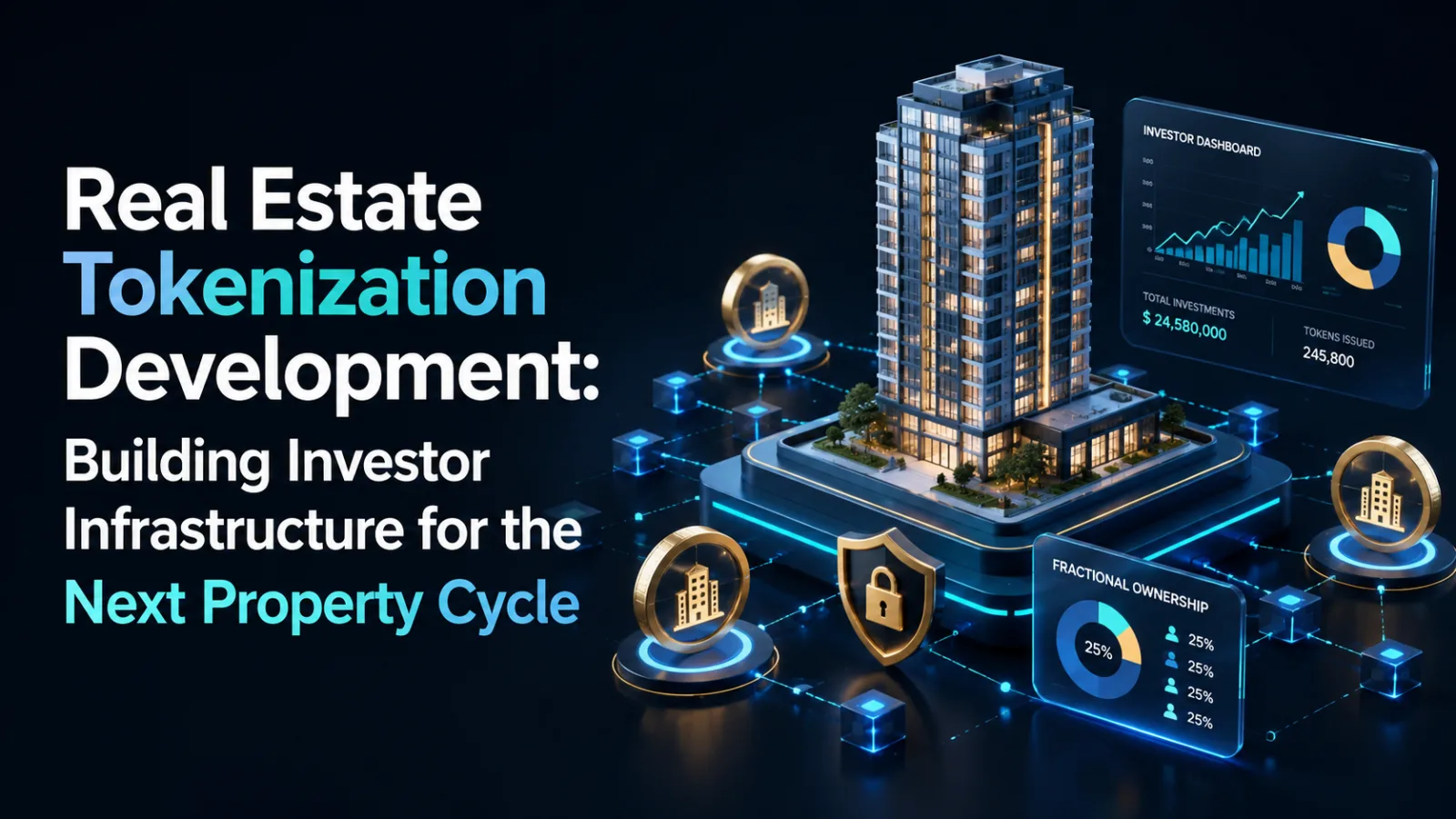
Real estate markets are entering a period where investors are looking for more flexible ways to access property opportunities. High entry costs, lengthy transaction procedures, limited liquidity, and complex ownership structures can make conventional property investment difficult for smaller investors and even institutional participants managing diversified portfolios. Real estate tokenization offers another approach by representing property ownership, economic interests, or related rights through blockchain-based tokens.
Real estate tokenization development is therefore becoming more focused on investor infrastructure rather than simply creating digital representations of properties. A practical platform needs to connect property sourcing, legal structures, asset valuation, token issuance, investor onboarding, payments, portfolio management, compliance, and secondary trading. When these components work together, property investment can become easier to manage across different asset categories and investor groups.
The next property cycle may also bring greater interest in fractional ownership. Investors could seek exposure to residential buildings, commercial properties, hospitality assets, warehouses, student housing, healthcare facilities, and development projects without purchasing an entire property. This shift creates an opportunity for businesses to develop platforms that support a wider range of investment models while maintaining appropriate legal and operational controls.
Why Investor Infrastructure Matters in the Next Property Cycle
Property investment depends on more than acquiring an asset. Investors need information about the property, ownership structure, expected income, valuation, fees, legal rights, reporting procedures, and exit options. Traditional processes often distribute this information across multiple parties and systems. A tokenization platform can bring many of these functions into one digital environment.
The purpose is not simply to place property details on a blockchain. The platform needs to create an investment process that users can understand and operate. Investors should be able to review an opportunity, complete required verification, purchase eligible tokens, monitor holdings, receive distributions, and access transaction records from a single interface.
Method: Start with an investor journey map. Document every stage from property discovery to investment exit. Identify which activities require manual intervention and which can be handled through software. This helps determine the platform functions that matter most before development begins.
Property Onboarding as the Starting Point
Every tokenized property begins with asset selection and due diligence. A platform may support different property types, but each asset requires information that can support investment decisions. This can include valuation reports, ownership records, rental information, financial statements, property condition reports, insurance information, tax details, and relevant legal documents.
A real estate asset tokenization company may also need a structured process for assessing whether a property is appropriate for tokenization. The process can consider ownership arrangements, jurisdiction, expected income, investor eligibility, financing obligations, and the rights that will be represented by tokens.
Method: Create a property onboarding workflow with document collection, legal review, valuation checks, financial analysis, risk assessment, approval, and tokenization preparation. Each stage should have defined records and responsible parties so that property onboarding does not depend on scattered spreadsheets and emails.
Choosing the Right Tokenization Structure
Tokenization does not automatically mean that a token represents direct ownership of a property. Depending on the jurisdiction and legal structure, a token may represent shares in a legal entity that owns the property, a beneficial interest, a debt instrument, revenue participation, or another contractual right.
This makes legal architecture an important part of real estate tokenization development. The software should reflect the legal relationship between the investor, token issuer, property-owning entity, and other parties involved in the transaction.
Method: Define the legal structure before finalizing token functions. Work with qualified legal professionals to establish investor rights, transfer restrictions, distribution rules, ownership records, and compliance requirements. Then map those requirements into the platform and smart contracts.
Investor Onboarding and Verification
Investor infrastructure must account for who can participate in each offering. Depending on the market and offering structure, investors may need identity verification, accreditation checks, jurisdiction screening, sanctions screening, source-of-funds checks, or other compliance procedures.
A real estate tokenization platform development project should therefore include an onboarding layer that collects required information and assigns investor permissions. Different investors may have access to different offerings based on location, investor category, or regulatory requirements.
Method: Create investor profiles containing verification status, eligibility information, wallet details, investment history, and transaction records. Connect the platform with appropriate compliance services where required. Establish rules that prevent ineligible accounts from purchasing restricted tokens.
Token Issuance and Ownership Management
After an asset has passed the required checks, tokens can be issued according to the selected legal and economic structure. The token system may define supply, ownership limits, transfer conditions, distribution rights, voting rights, and other characteristics.
Real estate token development should consider what happens after issuance. Tokens may need restrictions based on investor eligibility or holding periods. The system may also need mechanisms for freezing transfers, updating investor status, processing corporate actions, and maintaining accurate ownership records.
Method: Define token rules before smart contract development. Specify supply, transfer permissions, investor restrictions, distribution logic, administrative roles, and emergency procedures. Test the contracts extensively before they are used with real investor funds.
Payments and Distribution Infrastructure
Investors need reliable methods for purchasing tokens and receiving income. Depending on the platform model, payments may involve bank transfers, stablecoins, or other approved payment methods. Distribution systems can then allocate rental income, interest, dividends, or other proceeds according to token ownership.
This area is particularly important for income-producing properties. Investors may expect regular reporting and predictable distribution schedules. The platform needs records showing how much was received, what expenses were deducted, and how the remaining amount was allocated.
Method: Connect payment processing with the investment ledger. Record deposits, token purchases, fees, distributions, refunds, and withdrawals. Use automated calculations where appropriate, while maintaining administrative controls for corrections and exceptional cases.
Investor Dashboard and Portfolio Management
A tokenization platform becomes more useful when investors can monitor their holdings without depending on separate systems. The dashboard can display property details, token balances, purchase history, income received, current valuations, documents, upcoming distributions, and transaction activity.
For investors holding interests in several properties, portfolio management becomes particularly useful. Instead of tracking individual investments manually, users can view their overall exposure by property type, geography, income category, or investment structure.
Method: Design the dashboard around investor decisions rather than technical blockchain information. Show financial data first, provide supporting property documents, and make transaction history easy to access. Keep blockchain transaction details available without making them the main interface.
Secondary Trading and Liquidity
One of the frequently discussed benefits of tokenized property is the possibility of secondary transactions. However, tokenization itself does not guarantee liquidity. A functioning secondary market requires eligible buyers, sellers, regulatory permissions, suitable market infrastructure, and sufficient participation.
A real estate tokenization platform development company may therefore consider marketplace functions as part of the broader system. Investors could potentially list eligible tokens, review offers, and complete approved transfers within the platform.
Method: Treat secondary trading as a separate market layer. Establish investor eligibility rules, transfer restrictions, pricing mechanisms, transaction settlement procedures, and dispute processes. Launching secondary trading only makes sense when the legal and market conditions support it.
Data, Valuation, and Reporting
Property values change over time. Rental income can rise or fall, occupancy can change, interest rates can affect financing costs, and market conditions can influence asset valuations. Investors therefore need updated information rather than a static token balance.
Platforms can incorporate valuation updates, financial statements, rental information, property performance metrics, and relevant market data. These records can help investors understand how an asset is performing after the initial purchase.
Method: Establish a scheduled reporting process. Define when valuations are updated, who supplies the information, how financial data is reviewed, and how changes are reflected on the platform. Keep historical records so investors can compare current figures with previous reporting periods.
Security and Administrative Controls
A property investment platform handles valuable assets, investor information, payment records, and ownership data. Security must therefore be considered throughout the system rather than added near the end of development.
Smart contracts require testing, wallet interactions need safeguards, administrative permissions should be restricted, and sensitive investor information should receive appropriate protection. Backup procedures and recovery plans also matter because platform interruptions can affect transactions and investor access.
Method: Conduct smart contract audits, access-control reviews, infrastructure testing, wallet security assessments, and incident-response exercises. Use role-based permissions for administrative functions and maintain logs for important system actions.
Working With a Real Estate Tokenization Development Company
Companies planning a tokenization project often work with specialists that understand blockchain development as well as property investment workflows. A real estate tokenization company can assist with platform architecture, token contracts, investor interfaces, wallet integration, payment systems, and administrative tools.
When evaluating a real estate tokenization development company, businesses should look beyond technical demonstrations. Experience with compliance workflows, asset onboarding, investor management, smart contracts, marketplace functions, and reporting can have a major effect on the final platform.
The market also contains different types of providers. Businesses researching the Top real estate tokenization companies or Best real estate tokenization companies should compare development capabilities, supported blockchain networks, security practices, token standards, integration options, previous project experience, and post-launch support.
Method: Prepare a vendor evaluation checklist before selecting a development partner. Compare architecture, development methodology, security practices, integration capabilities, estimated development stages, maintenance arrangements, and experience with real estate use cases.
Designing for Different Property Investment Models
The next property cycle may involve several tokenization models rather than one standard approach. A platform could support fractional ownership, rental income participation, property-backed debt, development financing, portfolio funds, or other investment structures.
This makes flexibility important at the product level. A platform designed around one property type may require substantial changes when the business expands into another category. At the same time, excessive complexity during the first release can increase development costs and operational difficulty.
Method: Start with one or two clearly defined property models. Validate investor demand and operational processes before adding additional asset classes. Keep the platform architecture modular so new investment structures can be introduced when there is a genuine business requirement.
What the Next Property Cycle Could Look Like
The future of property investment may involve a closer relationship between real estate databases, blockchain networks, digital payments, compliance systems, and investor applications. Tokenized ownership records could become one component within a broader digital property infrastructure.
Investors may increasingly expect faster access to information, digital documentation, automated distributions, portfolio visibility, and more flexible participation models. Property owners and investment managers may also look for systems that reduce administrative workload and support broader investor participation where regulations permit.
Real estate tokenization is unlikely to remove every challenge associated with property investment. Legal ownership, valuation, property management, taxation, market demand, and regulatory obligations will continue to matter. The technology becomes useful when it supports these real-world processes rather than attempting to replace them.
Conclusion
Real estate tokenization development is moving toward the creation of complete investor infrastructure rather than simple property token issuance. A successful platform needs property onboarding, legal structuring, investor verification, token management, payment processing, reporting, portfolio tools, security controls, and suitable market functions. Businesses entering this field should begin with a defined property model, understand the regulatory environment, and select technology partners with relevant real estate experience. As digital investment practices develop, platforms that connect property assets with organized investor workflows may have a meaningful role in the next property cycle. Blockchain App Factory provides Real estate tokenization development services, supporting businesses that want to create property-focused tokenization platforms with investor management, token issuance, marketplace, payment, and administrative capabilities.
FAQs
1. What Is Real Estate Tokenization Development?
Real estate tokenization development involves creating software and blockchain infrastructure that represents property ownership, investment interests, debt, revenue rights, or other property-related interests through digital tokens.
2. How Does Real Estate Tokenization Work?
A property is first assessed and placed within an appropriate legal structure. Digital tokens are then issued according to the rights defined by that structure. Eligible investors can purchase or hold the tokens through a platform.
3. What Features Should a Real Estate Tokenization Platform Include?
Common features include property onboarding, investor verification, token issuance, wallet management, payment processing, portfolio dashboards, document management, distribution processing, compliance controls, reporting, and secondary-market functions where permitted.
4. Why Is Investor Verification Important?
Investor verification helps a platform determine whether a person is eligible to participate in a particular offering. Requirements can vary based on the property, offering structure, jurisdiction, and applicable regulations.
5. Can Tokenized Real Estate Be Traded?
It can be possible when the legal structure, regulations, platform rules, and market conditions permit secondary transactions. Tokenization by itself does not guarantee a liquid market.
6. What Does a Real Estate Tokenization Company Provide?
A real estate tokenization company may provide services covering platform architecture, smart contract development, investor applications, wallet integration, payment systems, compliance workflows, property management interfaces, and marketplace functions.
7. What Is the Role of a Real Estate Asset Tokenization Company?
A real estate asset tokenization company focuses on converting property-related investment interests into digital token structures while connecting those tokens with supporting legal, financial, and technical systems.
8. What Is the Difference Between Real Estate Tokenization and Real Estate Token Development?
Real estate tokenization refers to the broader process of structuring and representing property-related interests digitally. Real estate token development focuses more specifically on creating the token and its associated smart contract functions.
9. How Should a Business Select a Real Estate Tokenization Platform Development Company?
Businesses should evaluate blockchain experience, real estate use cases, smart contract security, compliance workflows, payment integrations, investor management features, platform architecture, support arrangements, and previous project experience.
10. Is Real Estate Tokenization Suitable for Every Property?
No. Suitability depends on factors such as the property's legal ownership structure, jurisdiction, financial characteristics, regulatory requirements, investor demand, and the intended investment model.
0 comments
Log in to leave a comment.
Be the first to comment.