
Learn AI Powered Video Editing Course in Telugu: Step-by-Step Learning Roadmap
A Learn AI Powered Video Editing Course in Telugu can help learners understand both traditional video editing fundamentals and modern AI-powered tools.

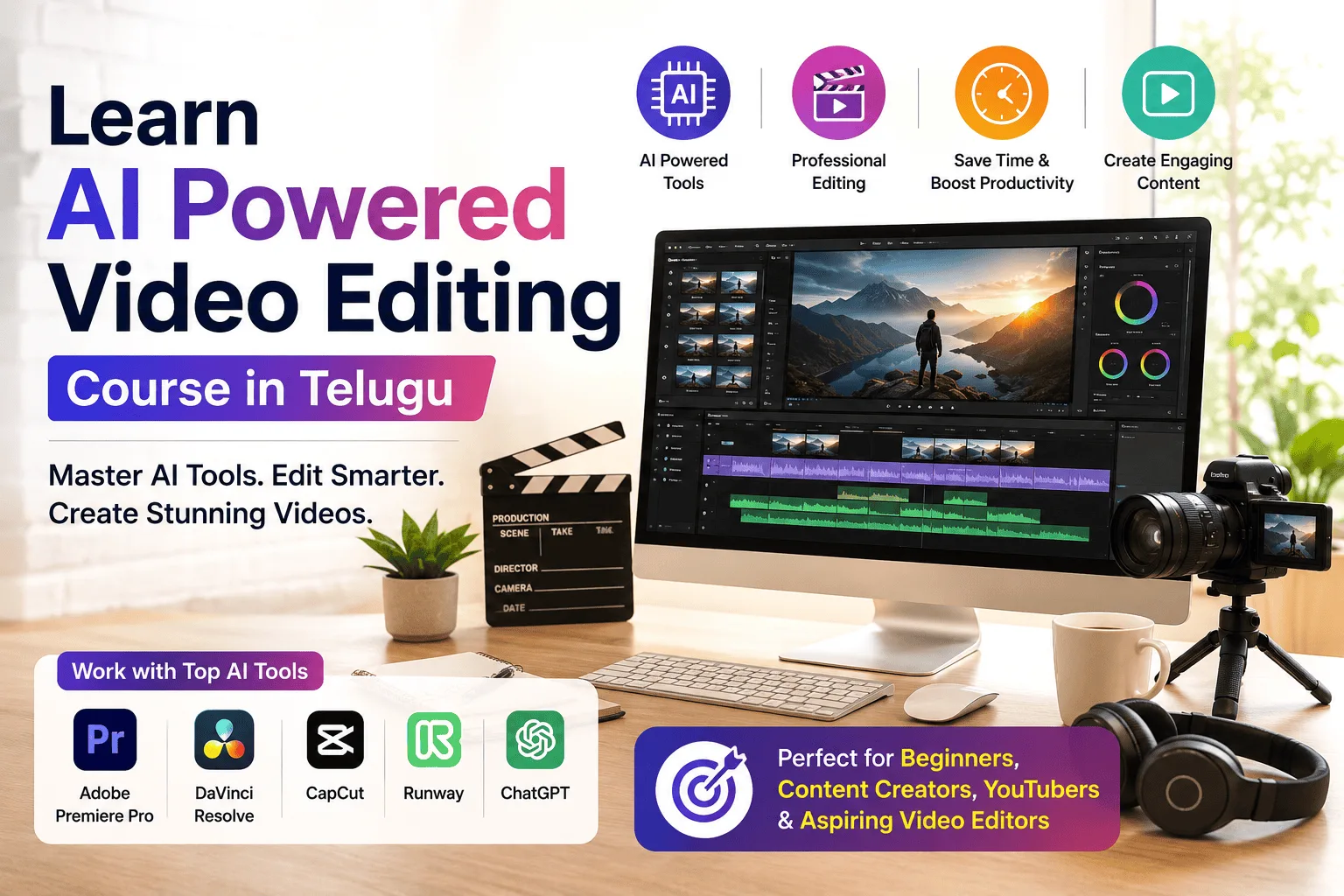
Video content has become an important part of digital communication. Businesses, content creators, educators, and marketers use videos to connect with their audiences. With the growth of artificial intelligence, video editing is becoming faster, smarter, and more accessible for beginners.
A Learn AI Powered Video Editing Course in Telugu can help learners understand both traditional video editing fundamentals and modern AI-powered tools. However, becoming skilled in video editing requires a clear learning roadmap. Beginners should follow a step-by-step approach to develop technical knowledge, creativity, and practical experience.
Step 1: Understand the Basics of Video Editing
The first step is learning the basic concepts of video editing. Before using advanced AI tools, beginners should understand how video editing software works.
Important fundamentals include:
Understanding video timelines
Importing and organizing media files
Cutting and trimming clips
Adding transitions
Using text and titles
Adding background music
Synchronizing audio and video
Exporting videos
These basic skills provide a strong foundation for advanced editing techniques.
Step 2: Learn Video Formats and File Management
A professional video editor should understand different video formats and file types. Video projects may include multiple clips, images, audio files, graphics, and effects.
Proper file organization helps editors work efficiently. Beginners should learn how to create project folders and manage their media files.
Understanding resolution, frame rate, aspect ratio, and video quality is also important. These technical concepts help editors create videos suitable for different platforms.
For example, a video created for social media may require a different aspect ratio than a video created for YouTube.
Step 3: Explore Basic Editing Tools
After understanding the fundamentals, learners can begin practicing with video editing software. The goal should be to become comfortable using the editing interface and important tools.
Beginners should practice:
Cutting unnecessary clips
Rearranging scenes
Adding transitions
Creating simple titles
Adjusting video speed
Adding music
Improving audio quality
Regular practice helps learners understand how different editing techniques affect the final video.
Step 4: Learn Storytelling Through Video
Video editing is not only about cutting and combining clips. A good video should tell a clear story.
Editors need to understand how to organize scenes in a way that keeps viewers interested. Timing, music, visuals, and transitions can influence how audiences experience a video.
A Learn AI Powered Video Editing Course in Telugu can help learners understand the importance of storytelling while developing technical editing skills.
Students can practice storytelling by creating short videos with a beginning, middle, and conclusion.
Step 5: Start Learning AI-Powered Video Editing Tools
Once the basics are clear, learners can explore AI-powered editing features. Artificial intelligence can assist with several repetitive and time-consuming tasks.
AI-powered tools can help with:
Automatic subtitle generation
Background removal
Audio enhancement
Noise reduction
Smart video trimming
Scene detection
Automatic content suggestions
Video enhancement
Learning these tools can help editors improve their productivity and speed.
Step 6: Practice With Real Projects
Practical projects are essential for developing editing skills. Learners should create different types of videos to understand how editing techniques change depending on the purpose.
Some useful projects include:
Social media reels
Promotional videos
Educational content
Product videos
YouTube videos
Event highlights
Working on multiple projects helps students build confidence and develop a professional portfolio.
Step 7: Learn Advanced Editing Techniques
After gaining confidence with basic editing, learners can explore more advanced techniques.
Advanced skills may include:
Color correction
Audio editing
Motion graphics basics
Advanced transitions
Visual effects
Video compositing
Creative storytelling
AI tools can also support advanced workflows by simplifying certain technical tasks.
Step 8: Build a Professional Portfolio
A portfolio is important for anyone planning to work as a video editor or freelancer. Employers and clients often want to see practical examples of completed work.
Students should include different types of projects in their portfolio. This can demonstrate versatility and creativity.
A strong portfolio may include:
Short-form videos
Promotional content
Educational videos
Social media campaigns
Before-and-after editing examples
Step 9: Keep Learning New AI Tools
Artificial intelligence is continuously changing. New video editing tools and features are regularly introduced.
Successful video editors should develop a habit of learning and experimenting with new technology. Staying updated can help professionals improve their workflow and remain competitive.
Conclusion
Following a structured roadmap can make the learning journey easier for beginners. Starting with video editing fundamentals and gradually exploring AI-powered tools allows learners to develop skills step by step.
A Learn AI Powered Video Editing Course in Telugu can provide learners with the knowledge needed to understand modern video editing workflows. With consistent practice, real projects, creativity, and knowledge of AI tools, beginners can progress toward becoming confident video editing professionals.
0 comments
Log in to leave a comment.
Be the first to comment.