
How to Tokenize Real-World Assets on Blockchain: A Step-by-Step Guide

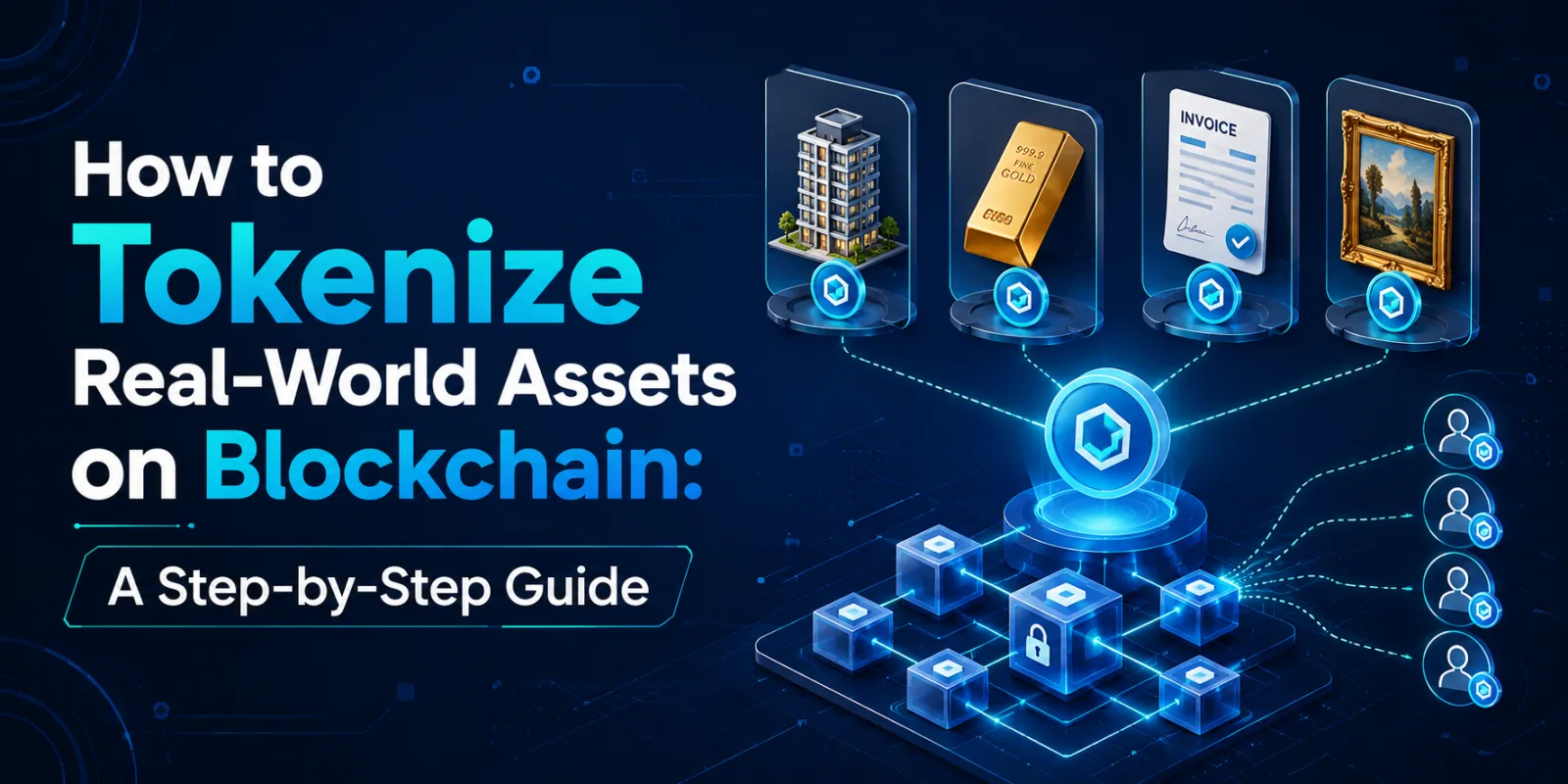
Real-world asset (RWA) tokenization is emerging as one of the most significant applications of blockchain technology beyond cryptocurrencies. It involves creating blockchain-based digital representations of ownership, claims, or economic interests in assets that exist in the physical or traditional financial world. These can include real estate, government bonds, private credit, commodities, artwork, funds, and other financial instruments.
The concept is attracting attention because tokenization can combine traditional assets with programmable digital infrastructure. The Bank for International Settlements (BIS) describes tokenization as recording claims on real or financial assets onto a programmable platform, allowing information, asset transfer, and rules governing transactions to become more closely integrated.
However, tokenizing an asset is not simply a matter of creating a blockchain token. The difficult part is establishing a legally enforceable connection between the token and the underlying asset, designing appropriate ownership rights, complying with regulations, securing the smart contracts, and creating reliable mechanisms for issuance, custody, valuation, and transfer.
This guide explains how to tokenize real-world assets on blockchain, from selecting an asset to launching and managing a tokenized ecosystem.
What Is Real-World Asset Tokenization?
RWA tokenization is the process of representing an asset or a legally enforceable claim to an asset through blockchain-based tokens. Depending on the structure, one token might represent direct ownership, a beneficial interest, a debt claim, a fund unit, or another contractual right.
For example, consider a commercial property valued at $10 million. Instead of maintaining ownership exclusively through traditional records, a legally structured entity could issue 1 million digital tokens representing defined economic interests in that property. Each token could therefore correspond to a fraction of the overall investment, subject to the legal and contractual structure.
The blockchain itself does not magically transfer ownership of a physical property. Rather, the tokenization structure must connect the blockchain record with legal agreements, registries, custodians, special-purpose vehicles, or other mechanisms that establish what the token holder actually owns.
This distinction is increasingly important. In January 2026, the U.S. Securities and Exchange Commission described a tokenized security as a financial instrument that qualifies as a security but is represented as a crypto asset, with ownership records maintained in whole or in part through crypto networks.
Therefore, successful tokenization requires technology, legal infrastructure, financial structuring, and asset management to work together.
Why Are Businesses Tokenizing Real-World Assets?
Traditional assets often have characteristics that make them difficult to access and transfer. Real estate, private credit, infrastructure, and other alternative investments can involve high minimum investments, lengthy settlement procedures, fragmented records, and significant administrative costs.
Blockchain-based tokenization attempts to address some of these limitations.
One major advantage is fractionalization. A large asset can potentially be divided into smaller investment interests, allowing qualified participants to gain exposure without purchasing the entire asset. BIS research on tokenized real estate found evidence that tokenization can help address liquidity and access gaps, although the research also highlights important risks associated with liquidity mechanisms such as platform buybacks.
Tokenization can also improve transparency because transactions and ownership movements can be recorded on a shared ledger. Smart contracts can automate activities such as transfer restrictions, distributions, coupon payments, or compliance checks.
The potential benefits include:
- Fractional ownership
- Faster settlement
- Programmable transactions
- Greater transparency
- Automated compliance rules
- Broader distribution opportunities
- Improved recordkeeping
- Potentially greater liquidity
- Integration with digital financial infrastructure
Nevertheless, these are potential benefits rather than guaranteed outcomes. BIS has specifically noted that many claimed benefits remain unproven at scale and can involve trade-offs such as operational complexity, liquidity pressures, and regulatory uncertainty.
Step 1: Select the Real-World Asset
The first stage is determining what asset should be tokenized and why blockchain provides a meaningful advantage for that asset.
Potential candidates include:
Real estate: Residential properties, commercial buildings, hotels, warehouses, and development projects.
Financial assets: Bonds, private credit, fund interests, invoices, and other financial claims.
Commodities: Gold, agricultural commodities, energy-related assets, and other physical resources.
Collectibles: Art, luxury goods, rare collectibles, and other high-value assets.
Infrastructure: Renewable energy projects, transportation infrastructure, and other investment projects.
The asset should have clearly identifiable ownership, reliable valuation methods, appropriate documentation, and sufficient economic value to justify the technology and compliance infrastructure.
For example, tokenizing a $10 million income-producing property may make more commercial sense than tokenizing a low-value asset because the project has sufficient value to support legal structuring, auditing, custody, technology development, and ongoing administration.
Step 2: Establish Legal Ownership and Asset Structure
This is arguably the most important stage of the entire process.
Before creating tokens, the project needs to establish exactly what the tokens represent. A token might represent ownership in a legal entity that owns the asset rather than direct ownership of the physical asset itself.
A common structure can involve a special-purpose vehicle (SPV). The SPV holds the underlying asset, while investors receive tokens representing defined interests in the SPV or associated economic rights.
The legal structure should answer questions such as:
- Who legally owns the underlying asset?
- What rights does each token provide?
- Are token holders entitled to income?
- Can tokens be transferred freely?
- Who maintains custody of the physical asset?
- What happens if the underlying asset is sold?
- How are disputes handled?
- Which jurisdiction governs the arrangement?
These questions cannot be solved by smart contracts alone.
For tokenized securities in particular, regulatory treatment is critical. The SEC has emphasized that putting a traditional security into tokenized form does not remove it from securities laws.
Consequently, businesses should obtain appropriate legal and regulatory advice before designing the token.
Step 3: Conduct Asset Due Diligence and Valuation
Once the legal structure is established, the underlying asset should undergo comprehensive due diligence.
For real estate, this could include title verification, property valuation, ownership records, leases, mortgages, insurance, tax obligations, environmental assessments, and other relevant documentation.
For financial assets, due diligence may involve reviewing the issuer, credit quality, contractual obligations, maturity, cash flows, collateral, and historical performance.
Independent valuation is also important because the blockchain can provide a transparent record of tokens without guaranteeing that the underlying asset has the value claimed by the issuer.
This creates a fundamental principle of RWA tokenization:
Blockchain can improve the digital record, but it cannot independently verify the physical world's truth.
Reliable oracles, auditors, custodians, appraisers, registries, and other trusted participants may therefore remain necessary.
Step 4: Design the Token Economics
The next step is deciding how the asset will be represented digitally.
Suppose a property worth $5 million is structured into 500,000 tokens. The project could theoretically establish a reference value of $10 per token at issuance. But the actual rights associated with each token depend on the legal structure.
Token economics should define:
- Total token supply
- Initial token price
- Ownership or economic rights
- Income distribution
- Transferability
- Redemption mechanisms
- Lock-up periods
- Voting rights
- Investor eligibility
- Fees
- Secondary-market rules
The project should avoid creating tokenomics merely to generate speculative demand. The token should have a clear relationship with the underlying asset and the rights granted to its holder.
Step 5: Choose the Blockchain Infrastructure
The next decision is selecting the blockchain network on which the tokens will be issued.
Projects can consider public blockchains, permissioned networks, or hybrid architectures depending on their regulatory and business requirements.
A public blockchain can provide broad network accessibility and transparent transaction records. A permissioned network can offer stronger control over participants, identity, transaction permissions, and institutional compliance.
The choice should consider:
- Transaction costs
- Network security
- Scalability
- Smart-contract capabilities
- Wallet compatibility
- Institutional adoption
- Regulatory requirements
- Privacy requirements
- Interoperability
- Long-term ecosystem support
BIS research highlights that tokenization can bring messaging, reconciliation, and asset transfer closer together through shared programmable infrastructure, potentially reducing friction in financial transactions.
Step 6: Develop the Token and Smart Contracts
After selecting the infrastructure, developers can create the token and supporting smart contracts.
The token contract manages the digital representation of the asset, while additional contracts can manage transfers, distributions, access controls, compliance restrictions, voting, or redemption.
For regulated assets, unrestricted transfers may not be appropriate. A tokenized security may need mechanisms that prevent transfers to unauthorized wallets or jurisdictions.
Smart contracts can therefore incorporate functions such as:
- Whitelisted wallet management
- Investor verification
- Transfer restrictions
- Automated distributions
- Ownership tracking
- Voting
- Minting and burning
- Pause and emergency controls
- Redemption mechanisms
The technical design should reflect the legal rights established earlier rather than creating a token first and attempting to define its legal meaning afterward.
Step 7: Integrate KYC, AML, and Compliance
One of the biggest differences between ordinary cryptocurrencies and many RWA projects is the importance of regulatory compliance.
Depending on the asset, jurisdiction, investor type, and structure, the platform may need Know Your Customer (KYC), Anti-Money Laundering (AML), investor accreditation or suitability checks, sanctions screening, transaction monitoring, tax reporting, and other compliance controls.
For example, a platform issuing tokenized securities may restrict transfers to verified participants. This can be implemented through compliance-aware smart contracts and approved wallet lists.
The SEC's current framework reinforces the principle that tokenized securities remain subject to applicable securities requirements.
Therefore, compliance should be incorporated into the platform architecture from the beginning rather than added immediately before launch.
Step 8: Connect the Token to the Underlying Asset
This is where the real-world and blockchain systems must interact.
An RWA platform needs reliable mechanisms for maintaining the relationship between the physical or traditional asset and its digital representation.
For example, if tokens represent interests in a property, the system may need:
- A legally established ownership structure.
- A custodian or asset manager.
- Independent valuation.
- Legal agreements defining token-holder rights.
- Blockchain records showing token ownership.
- Reliable reporting on the underlying asset.
- Procedures for asset sales, refinancing, or other corporate actions.
Oracles can provide selected external information to smart contracts, but they should not be treated as a replacement for legal ownership or independent verification.
Step 9: Audit the Smart Contracts and Platform
Security should be treated as a core component rather than a final checklist.
Smart-contract vulnerabilities can result in unauthorized transfers, incorrect distributions, locked assets, or loss of funds. A professional audit should therefore examine the contract logic, access controls, upgrade mechanisms, token issuance functions, transfer restrictions, and integration points.
The broader platform should also undergo security testing covering wallets, APIs, authentication, databases, administrative dashboards, and infrastructure.
For high-value assets, multiple layers of controls may be appropriate, including multisignature authorization, role-based permissions, monitoring systems, emergency procedures, and independent audits.
Step 10: Launch, Distribute, and Manage the Tokens
After legal, technical, compliance, and security requirements are addressed, the token can be issued.
Distribution can occur through a regulated platform, investment portal, private offering, institutional network, or another compliant channel depending on the project.
But token issuance is not the end of tokenization.
The asset needs continuous management. Investors may require financial statements, asset valuations, distribution reports, governance updates, tax documentation, and information about significant changes to the underlying asset.
Secondary trading also needs careful consideration. A token may technically be transferable on blockchain while still being legally restricted from unrestricted trading.
Real-World Example: Tokenized Real Estate
Real estate demonstrates both the opportunity and complexity of RWA tokenization.
Imagine a developer owns a $20 million office building producing rental income. Instead of relying exclusively on a traditional investment structure, the developer establishes a legal entity holding the property and creates 2 million tokens representing defined economic interests.
Investors complete the required verification process and purchase tokens. Rental income can then potentially be distributed according to the terms governing the tokens.
If the legal and technical infrastructure supports it, investors could potentially transfer their interests through an approved secondary market.
This illustrates why tokenization is more than "putting property on blockchain." The technology represents only one part of a larger ecosystem involving legal ownership, asset management, investor onboarding, compliance, custody, valuation, smart contracts, and market infrastructure.
BIS research published in 2025 and revised in 2026 found that tokenized real estate can exhibit increased trading activity during certain liquidity shocks, while also warning that buyback mechanisms used to support liquidity can create additional insolvency risks.
Key Challenges to Consider
Despite its potential, RWA tokenization has several challenges.
Regulatory uncertainty: Rules differ across jurisdictions and asset classes.
Legal enforceability: A token must have clearly defined rights connected to the underlying asset.
Liquidity: Fractionalization does not automatically create buyers and sellers. A secondary market still requires sufficient demand.
Oracle and data risk: Blockchain systems depend on reliable information about off-chain assets.
Custody: Physical assets and traditional financial instruments require appropriate custody arrangements.
Smart-contract risk: Coding errors can create significant financial consequences.
Interoperability: Different blockchain networks may use different standards and infrastructure.
Investor protection: Greater digital accessibility must not come at the expense of disclosure, suitability, custody, or other protections.
These challenges explain why institutional tokenization increasingly focuses on the entire market architecture rather than simply issuing tokens. Recent SEC materials similarly emphasize legal enforceability, custody, authoritative ownership records, and operational resilience when considering institutional tokenization.
The Future of RWA Tokenization
The long-term significance of RWA tokenization may extend beyond fractional ownership. Tokenized assets can potentially become components of programmable financial markets where assets, money, compliance rules, and settlement processes interact through digital infrastructure.
BIS has argued that tokenization could support a more integrated financial system in which tokenized assets and forms of money operate on programmable platforms.
This could enable applications such as automated collateral management, programmable bond payments, faster settlement, tokenized funds, cross-border transactions, and more efficient financial-market infrastructure.
The most successful projects, however, are unlikely to be those that simply tokenize assets for marketing purposes. They will be projects that solve genuine problems around access, settlement, transparency, liquidity, compliance, or operational efficiency.
Conclusion
Real-world asset tokenization is a multidisciplinary process that combines blockchain technology with legal structuring, asset verification, financial engineering, compliance, smart contracts, custody, and ongoing asset management. From selecting the right asset and establishing enforceable ownership rights to developing secure contracts and managing compliant token distribution, every stage determines whether the token actually provides meaningful value. As institutional adoption continues to develop, businesses need experienced technology partners capable of building secure, scalable, and compliance-conscious infrastructure. Blockchain App Factory provides best-in-class RWA tokenization development services and RWA tokenization services, helping businesses transform eligible real-world assets into professionally structured blockchain-based ecosystems with the technology, security, and scalability needed for modern digital asset markets.
0 comments
Log in to leave a comment.
Be the first to comment.