
How Super Apps Are Transforming Digital Services for Modern Businesses

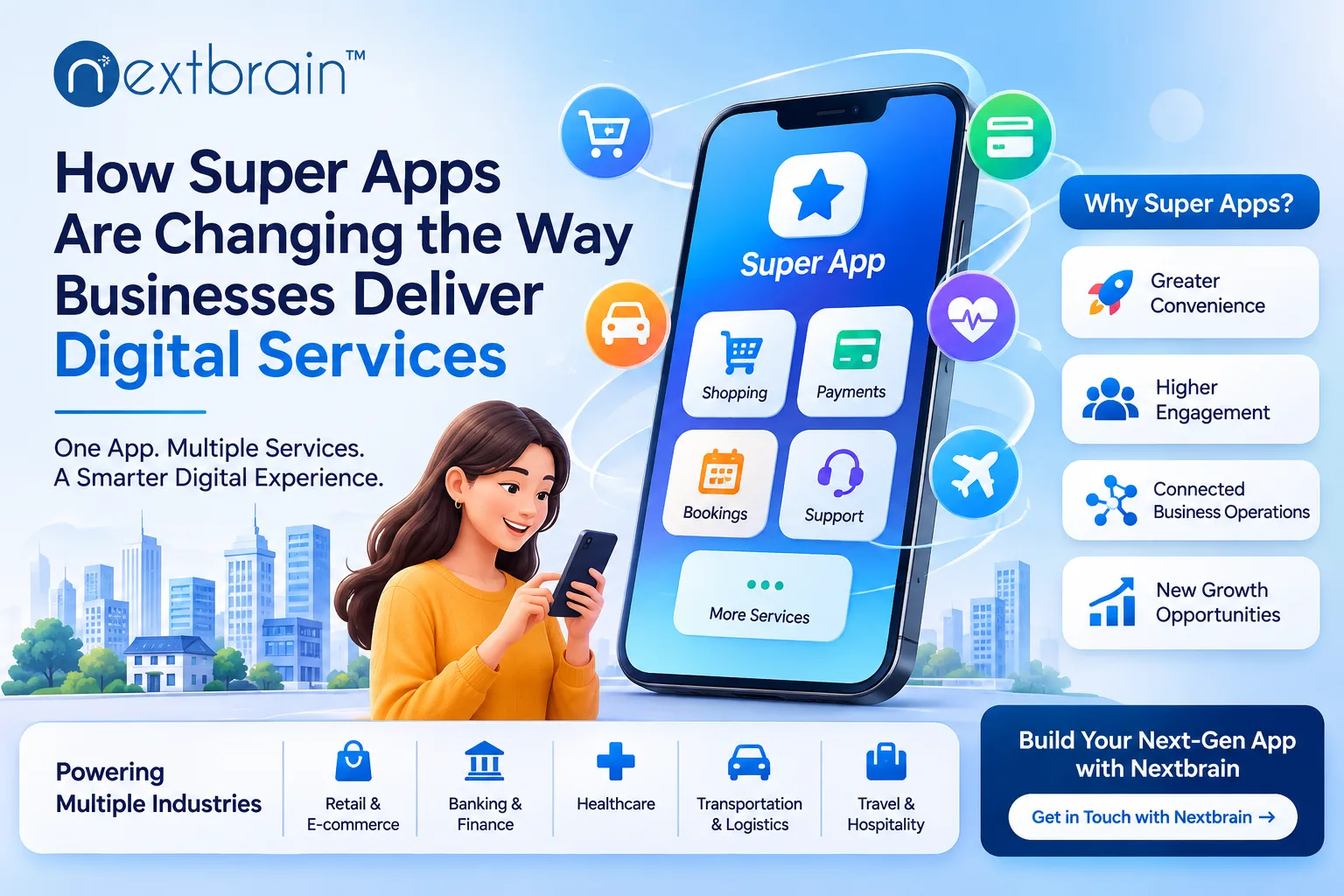
Think about how many applications people use throughout a normal day. One app might be used to order groceries, another to transfer money, another to book a cab and yet another to manage appointments. Although each application serves a purpose, constantly switching between platforms can make everyday digital activities less convenient.
This has created an opportunity for businesses to rethink how they deliver online services. With support from an experienced mobile app development company, organisations can explore integrated applications that bring multiple services together and offer customers a more connected digital experience.
This approach is commonly known as the super app model. Instead of focusing on a single function, super apps create an environment where users can access several related services through one application.
Understanding the Concept of Super Apps
A super app is a multifunctional mobile platform that combines different digital services within a shared application environment. Users can access several features without installing separate applications or repeatedly switching between platforms.
For example, a super app might allow someone to book transportation, make payments, order food, manage reservations and communicate with customer support.
Well-known platforms such as WeChat, Grab and Alipay demonstrate how different services can operate within a connected digital ecosystem.
However, combining multiple features does not automatically make an application successful. The services must work together smoothly, with consistent navigation, secure transactions and reliable information exchange.
The main objective is to reduce friction in the customer journey while providing useful services through a familiar interface.
Why Are Businesses Paying Attention to Super Apps?
Customer expectations are changing as digital services become part of everyday business interactions. People increasingly value convenience, accessibility and the ability to complete different activities without unnecessary steps.
For businesses, maintaining several independent applications can also introduce additional development, maintenance and integration challenges.
A connected platform offers an alternative approach.
1. Simplifying Customer Interactions
One of the biggest advantages of super apps is the ability to bring related services into one place.
Consider an e-commerce business that offers product browsing, digital payments, order tracking, loyalty rewards and customer assistance.
Rather than asking customers to use different platforms for these activities, the business can organise them within one application.
This creates a more consistent experience and makes it easier for users to find the services they need.
2. Creating More Engagement Opportunities
A platform that supports multiple customer activities can create more opportunities for meaningful engagement.
For example, a travel application could offer hotel bookings, transportation reservations, itinerary management and travel notifications.
Customers can return to the same platform for different requirements instead of interacting with several unrelated services.
Businesses can also use relevant recommendations and personalised offers to improve the experience, provided these features respect customer preferences and privacy.
3. Connecting Different Business Operations
Super apps can connect customer-facing services with internal business systems.
For instance, an order placed through an application can communicate with inventory management, payment processing and delivery tracking systems.
Application Programming Interfaces (APIs) help these systems exchange information and support coordinated workflows.
This can reduce manual processes and improve the availability of operational information across departments.
4. Supporting Business Expansion
Businesses do not need to introduce every possible feature when launching a super app.
They can begin with a primary service and gradually introduce additional capabilities based on customer requirements.
A retail application might initially support shopping and payments. Later, the business could introduce loyalty programmes, seller services, delivery management and customer assistance.
This gradual approach helps organisations evaluate demand before investing in additional functionality.
Industries Where Super Apps Can Make a Difference
The super app model can be applied across several industries, although the features and integrations will vary.
Retail and e-commerce: Businesses can combine shopping, payments, order tracking, product recommendations and customer support.
Banking and financial services: Financial platforms can integrate account management, money transfers, bill payments and transaction monitoring.
Healthcare: Healthcare applications can bring appointment scheduling, patient registration, prescription management and consultation bookings together.
Transportation and logistics: Connected platforms can support vehicle bookings, delivery tracking, route management and communication between drivers and customers.
Travel and hospitality: Travellers can manage hotel reservations, transportation, itineraries and payments through one digital platform.
The common factor across these industries is the need to make related services accessible through a consistent digital experience.
Technologies That Support Modern Super Apps
Developing a multifunctional application requires careful technology planning. Its architecture must support different services while maintaining performance, security and flexibility.
Some important technologies and considerations include:
API Integration
APIs allow applications to communicate with external platforms and backend systems. RESTful APIs and GraphQL can support connections with payment gateways, booking platforms, customer management systems and other services.
Cloud Computing
Cloud infrastructure helps businesses manage application data, backend workloads and changing traffic requirements. It also provides flexibility as the application expands.
Modular Architecture
A modular structure separates application functions into manageable components. Payment processing, user accounts, booking management and notifications can be developed and maintained as separate modules.
This makes future updates easier and reduces unnecessary dependencies between features.
Cross-Platform Development
Businesses may need their applications to support both Android and iOS users.
Technologies such as Flutter and React Native allow developers to create applications for multiple platforms using shared codebases. Native development with Kotlin or Swift may also be suitable depending on performance and device-specific requirements.
Application Security
Super apps may handle personal information, financial details and transaction records. Secure authentication, encrypted communication, access controls and API protection are therefore essential.
Businesses should also consider data privacy requirements when designing their applications.
Challenges to Consider Before Building a Super App
Although the concept offers several advantages, businesses should understand the challenges before investing in development.
Application complexity: Adding multiple services can make maintenance difficult without a properly planned architecture.
Performance management: More features and integrations can increase backend workloads. Performance testing and infrastructure planning are important.
Data protection: A connected application creates multiple points where information is exchanged. Security controls must be consistently implemented.
User experience: Too many features can make navigation confusing. Services should be organised into clear categories with simple navigation.
Long-term maintenance: Businesses must consider how new features, integrations and platform updates will affect the application over time.
Addressing these concerns during the planning stage can help organisations avoid unnecessary development complications.
How Businesses Can Start Building a Super App
A successful super app should be built around actual business and customer requirements rather than simply trying to include as many features as possible.
A practical development process generally involves the following steps:
Understand customer needs: Identify the problems customers experience when accessing existing services.
Define the core features: Select the essential functions that should be available in the first release.
Plan integrations: Determine which existing systems, payment services and external platforms need to communicate with the application.
Choose suitable technologies: Evaluate native development or cross-platform frameworks based on application requirements.
Design the interface: Create an intuitive experience that makes different services easy to discover and use.
Test before launch: Check application functionality, security, performance and compatibility across supported devices.
Improve through feedback: Monitor user behaviour and introduce additional services when there is a genuine requirement.
Working with a capable software development company can help organisations assess their technical requirements and plan digital platforms that support future business needs.
What Does the Future Hold for Super Apps?
Super apps are likely to continue evolving as businesses explore more connected digital experiences.
Integration with digital payments, location-based services, connected devices and third-party platforms may create additional opportunities for organisations to simplify customer interactions.
However, a super app is not necessarily the right solution for every business. Some organisations may achieve better results with a focused application that performs a smaller number of functions exceptionally well.
The decision should depend on customer demand, operational requirements, development costs and long-term business objectives.
Conclusion
Super apps represent an evolving approach to digital service delivery. By combining related services within a single platform, businesses can create more convenient customer experiences and improve communication between different operational systems.
The real value comes from choosing the right features, designing a reliable architecture and ensuring that every service provides a clear benefit to users.
For organisations considering their next digital initiative, exploring integrated mobile application solutions can be a useful starting point. Businesses can also connect with experienced development professionals to evaluate their ideas and identify a suitable implementation strategy.
Frequently Asked Questions
1. What Is the Main Purpose of a Super App?
The main purpose of a super app is to bring multiple related digital services together within one application. It allows users to access different functions without switching between several independent platforms.
2. How Are Super Apps Different From Regular Mobile Applications?
A regular mobile application generally focuses on one primary service or a limited set of related features. A super app provides access to multiple services, often through integrated modules, shared accounts and connected systems.
3. Can Small Businesses Develop Their Own Super Apps?
Yes. Small businesses can start with a focused application that addresses their primary customer requirements and gradually introduce additional services. The development scope should match their budget, resources and business objectives.
4. Which Technologies Are Commonly Used for Super App Development?
Super apps may use Flutter, React Native, Kotlin, Swift, RESTful APIs, GraphQL, cloud infrastructure and modular backend technologies. The final technology selection depends on the application's complexity, integration needs and performance expectations.
5. Are Super Apps Suitable for Every Industry?
Not necessarily. Industries such as retail, banking, healthcare, transportation and travel can benefit from integrated digital platforms. However, businesses should evaluate whether customers genuinely need multiple services within one application before choosing this approach.
Ready to Plan Your Mobile App?
Whether you are starting with a single mobile application or planning a platform that connects multiple digital services, the right development strategy makes a difference. Get in touch with Nextbrain to discuss your business requirements and explore an approach for your next mobile application.
0 comments
Log in to leave a comment.
Be the first to comment.