
How Packaging Design Shapes Brand Recognition and Customer Perception
A practical guide for US and Canadian businesses on turning packaging into a recognizable brand asset
On a crowded retail shelf, packaging is often the first thing a customer notices. Before they read a description or learn anything about your company, they have already formed an impression.
For businesses in the United States and Canada, good packaging does more than look appealing. It communicates brand identity, protects the product, and makes the customer’s experience a positive one.
Why Does Packaging Matter for Brand Recognition?
Brand recognition is how easily customers identify a product through its visual identity. Packaging builds that recognition by repeating the same visual cues: colors, logos, typography, and style. Over time, customers link those cues to a specific brand.
Strong packaging helps a business:
- Stand out among competing products
- Build a recognizable visual identity
- Communicate key product information clearly
- Earn customer trust
- Improve the shopping experience
A well-designed package can be spotted in seconds, even by someone browsing quickly.
How Do Colors Influence Customer Perception?
Color is the most immediately noticeable element of packaging, and different colors carry different associations:
- Green: nature, freshness, environmental awareness
- Blue: reliability, confidence, professionalism
- Black: premium, sophisticated
- Brown and kraft tones: simplicity, natural materials, understated style
These associations are not universal. Their effect depends on the product category, the audience, culture, and the design as a whole. Choose colors that fit your brand identity, not colors that are simply trending.
Does Packaging Shape Affect Recognition?
Yes. A distinctive bottle, box, carton, or multipack carrier can become part of a brand’s identity.
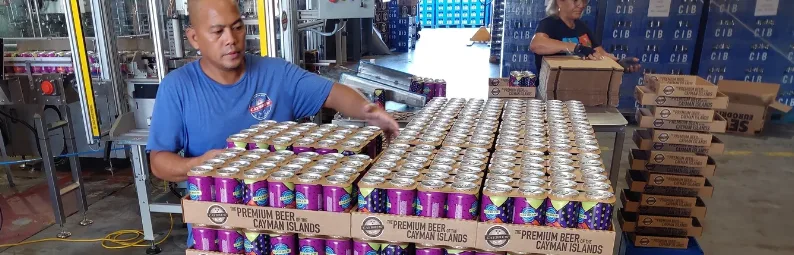
Structure also affects usability. A beverage multipack, for example, should be easy to carry, store, and display. A design that looks great but is awkward to handle creates a poor experience, so aim for both visual appeal and practical function.
How Does Material Influence Brand Image?
Material says something about your brand before anyone reads the label:
- 1. Plastic: flexible and durable, with many design possibilities
- 2. Glass: often associated with premium products and visibility
- 3. Metal: a common choice for durable food and beverage containers
- 4. Paper and cardboard: suggests simplicity and offers opportunities for recyclable designs
The right choice depends on the product’s requirements and how the brand wants to be positioned. A craft brewery looking to reduce plastic, for example, can explore fiber-based multipack options such as Earthrings cardboard can carriers, which group and carry multiple cans without plastic rings.
Why Is Consistency Important?
Imagine buying a product that arrives with different colors, fonts, and packaging every time. It would be hard to recognize. Consistency connects individual products to one business.
Keep these elements consistent:
- Logo placement
- Brand colors
- Typography
- Product information
- Packaging structure
- Overall visual style
This matters most for companies with many variations. A brewery might release core beers, seasonals, and limited editions. Shared design elements let customers recognize the brewery at a glance, while each product keeps its own personality.
Can Sustainable Packaging Strengthen Brand Identity?
It can, as long as the claims are accurate and clearly communicated. Recyclable, reusable, or compostable packaging can become part of your brand story.
Be precise, though. Recyclable is not the same as compostable, and compostable packaging may need specific conditions to break down. Avoid vague claims, and explain the actual material and how to dispose of it. For beverage businesses, switching from plastic multipack rings to cardboard carriers is one practical step. You can learn more about Earthrings’ plastic-free packaging and its material characteristics.
How Can Small Businesses Improve Their Packaging?
You don’t need complicated packaging to build a recognizable brand. Start here:
- 1. Understand your customers. A craft beer buyer responds to different cues than someone shopping for household cleaners.
- 2. Keep it simple. A clear logo, readable type, and a consistent palette beat a crowded design.
- 3. Prioritize function. Packaging should be easy to open, carry, store, and transport.
- 4. Choose suitable materials. Weigh protection, durability, cost, and disposal before you decide.
- 5. Test before launch. Get feedback from customers and employees to catch issues with readability, handling, and presentation.
Final Thoughts
Colors, shapes, typography, materials, and functionality all shape the impression a product makes. The goal is packaging that is visually consistent, practical, and aligned with what customers expect.
As competition grows in retail and beverage markets, packaging becomes a real point of differentiation. A successful design does more than attract attention. It helps customers remember your product and recognize your brand the next time they see it.
0 comments
Log in to leave a comment.
Be the first to comment.