
How Do Plumbing Contractors Identify Hidden Leaks Behind Bathroom Walls?
This guest post will focus on how plumbing specialists diagnose leaks in bathrooms that are not visible, what causes these leaks, and how to avoid any structural damage caused by them.

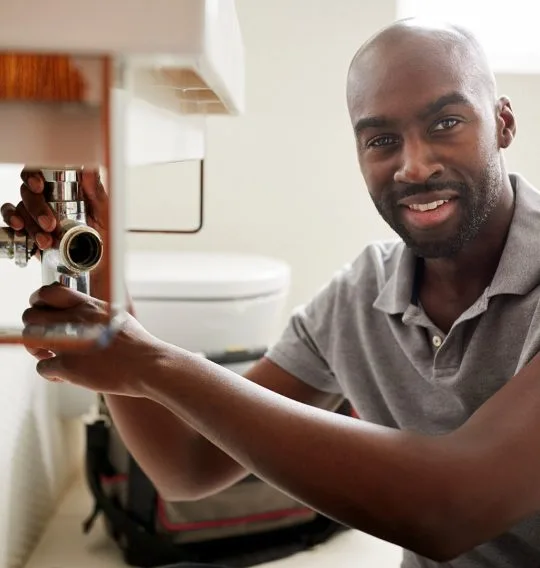
The hidden leaks in the bathroom walls are very hazardous for both you and your home if you do not detect them for some time. The hidden leaks are different from the normal leaks, which occur in the faucets or pipes, because they usually occur behind the tiles or behind other installations in the bathroom.
Locating a hidden leak is not as simple as inspecting the spot visually. Professional plumbers have some special equipment and techniques that help them determine the origin of such a leak without damaging your wall. Plumbing Contractors Lorton VA have a good understanding of the functioning of your bathroom water supply and drainage pipes.
Signs of Concealed Bathrooms Plumbing Leak Behind Walls
Without removing a wall or carrying out any tests, plumbers search for some signals that will show whether there is moisture accumulation behind bathroom walls.
They include:
Discoloration or wet stains on bathroom walls.
Bubbling or cracking of paint, or its peeling off.
Damaged or loose bathroom tiles.
Musty odor in bathrooms.
Mold around bathroom corners and fixtures.
Unusual increase in water bills.
Soft or swollen drywall areas.
It should be noted that this list of signs does not necessarily mean that there is a plumbing leak. These signs are only signals for further investigation.
1. Performing a Careful Visual Inspection
In most cases, the initial stage in the process of detecting a hidden leakage is the thorough inspection of the bathroom by a plumber. Such an inspection involves looking for places where pipes that provide water supply and drainage connections can be found.
Among other things, plumbers inspect the following areas in the bathroom:
Connections of showers and bathtubs.
Places around bathroom sinks.
Water lines of toilets and nearby walls.
Connection points of pipes behind fixtures.
Shower valve areas.
Locations on walls that are close to the water heater or plumbing access locations.
One must also take into account the position where the damage occurs. For instance, moisture near the shower valve is an indication of potential leakage, while moisture near the ceiling indicates that there are issues with plumbing at the upper level of the bathroom.
2. Utilization of Moisture Meters to Find Trapped Water
In some cases, water may get stuck inside the walls but does not drip. That’s where moisture meters come in handy for plumbers in locating hidden moisture pockets.
These moisture meters can be used to determine the moisture content in construction elements like drywall, wood, and plaster.
A plumber can examine various points of the wall and compare the results obtained. Unusual amounts of moisture can suggest that the water is being collected beneath the surface.
Moisture meters come in various forms such as:
Pin meters, which use pins to measure moisture.
Non-penetrating meters, which do not involve penetration of the surface when measuring moisture.
These tools assist in localizing the affected area and minimize the requirement for drilling holes in the wall.
Importance of Professional Plumbing Repair Work
Determining the cause of the leak has only been half the battle won. It is just as crucial that proper repairs must be done in order to avoid any further water damage.
Professional Plumbing Repair Lorton VA works include pipe or joint repairs which may either be leaking or in need of tightening.
Repairing without determining the actual cause of the leak can only result in further damages. For example, trying to cover up a wet wall or tile replacements.
Importance of Detecting Leakage at an Early Stage to Save Time and Money
The leakages of water from the bathrooms may eventually result in damage of drywall, wood structures, floors, and other surrounding facilities.
The accumulated water may further lead to the development of mold in the house.
Through early detection, the homeowner can fix minor plumbing problems that could turn out to be costly.
This also reduces the chances of construction since leak detection can determine exactly where the leakage is taking place without the need to tear down large parts of the bathroom wall.
How a Plumbing Company Can Help Prevent Future Leakage
A good Plumbing Company Chantilly can also assist in reducing the possibility of future problems arising from such situations.
Preventive measures in plumbing could entail:
Inspection of old pipes and connections.
Examination of water pressure for any abnormal changes.
Inspection of toilet hardware to detect leakage.
Replacement of faulty valves and fittings.
Inspection of drainage connections.
Suggestion of appropriate pipe materials during renovation works.
Inspections are particularly useful in cases where the houses are relatively old and the plumbing parts have undergone much wear and tear.
FAQs
1. Is there any way to detect signs indicating the existence of leaks behind the bathroom walls?
There are quite a few indicators, for instance, damp spots, peeling paint, mold, foul smell, and increased water bills.
2. How is thermal imaging applied in leak detection?
Thermal cameras are used to find temperature irregularities in the area of the possible leak.
3. When should one call professional plumbing companies?
One should consult professionals in case of constant dampness and/or any water stains.
4. Is it possible to avoid leaks through regular plumbing inspections?
It is, indeed, possible since regular inspections can reveal pipe corrosion and other potential dangers.
0 comments
Log in to leave a comment.
Be the first to comment.