
Finding Mental Peace This Paryushan: How Fasting, Meditation & Forgiveness Ease Anxiety
Modern life often leaves the mind carrying a constant stream of responsibilities, expectations and unfinished thoughts.

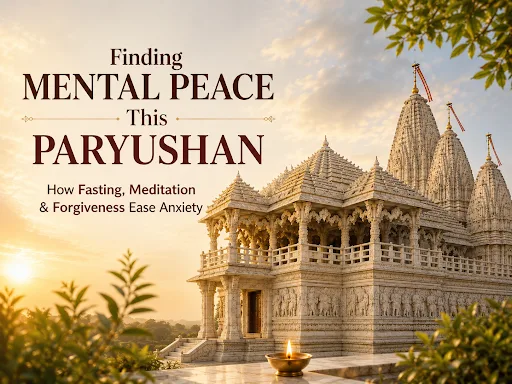
Modern life often leaves the mind carrying a constant stream of responsibilities, expectations and unfinished thoughts. Finding moments of calm can feel difficult when the mind remains occupied long after the day has ended. Paryushan offers a meaningful opportunity to pause, turn inward and reconnect with a quieter state of being. Rooted in Jain philosophy, the festival emphasises introspection, self-discipline, meditation and forgiveness, creating a period dedicated to inner purification and spiritual awareness.
For those looking for mental peace, Paryushan can provide a framework for slowing down and becoming more conscious of one's thoughts, emotions and actions. Its practices can also encourage habits that support emotional balance, although they should not be considered a substitute for professional mental health care.
Understanding the Role of Fasting During Paryushan
Fasting is one of the recognised practices associated with Paryushan. Paryushan fasting can take different forms, depending on an individual's religious practice, physical capacity and guidance from their spiritual tradition. At its heart, fasting is connected with restraint, discipline and reducing attachment to physical desires.
The practice can encourage people to become more conscious of impulses rather than responding to them automatically. This awareness can extend beyond food to other habits, encouraging greater control over reactions, consumption and distractions.
Fasting should, however, be undertaken responsibly. It may not be appropriate for everyone, particularly people with certain health conditions, those taking medication, children or pregnant individuals. Spiritual discipline should always be balanced with individual health needs and appropriate medical advice.
How Meditation Can Create Mental Space
When the mind is anxious, thoughts can become repetitive and difficult to switch off. Meditation provides a simple way to pause and observe those thoughts without immediately reacting to them.
A few minutes of quiet meditation can involve focusing on the breath, noticing bodily sensations or simply observing thoughts as they arise and pass. Regular practice can encourage greater present-moment awareness, helping an individual recognise when the mind is becoming caught in worry.
For those exploring meditation for anxiety, a simple practice can be a useful starting point. Sit comfortably, take slow and steady breaths, and focus your attention on each inhalation and exhalation. When your attention wanders, gently bring it back to the breath. The aim is not to force the mind to become completely empty, but to develop a more observant relationship with one's thoughts.
The Healing Perspective of Forgiveness
Paryushan places particular importance on forgiveness and introspection. Anger, resentment and guilt can occupy considerable mental space when they remain unresolved. Reflecting on past actions and consciously seeking forgiveness can provide an opportunity to acknowledge mistakes and release some of that emotional burden.
The practice of Micchami Dukkadam, associated particularly with Samvatsari, embodies this spirit. It involves seeking forgiveness for harm caused knowingly or unknowingly through one's thoughts, words or actions, while extending forgiveness to others as well.
Forgiveness does not require ignoring what happened or dismissing genuine hurt. It can instead be understood as a conscious decision to stop allowing resentment to dominate one's inner life.
Paryushan and the Journey Within
For those looking to experience Paryushan through a deeper spiritual lens, Shrimad Rajchandra Mission Dharampur (SRMD) is a spiritual organisation inspired by the teachings of Shrimad Rajchandraji and guided by Pujya Gurudevshri Rakeshji, with an emphasis on self-realisation, meditation, introspection and selfless service. Its Paryushan Mahaparv 2026 will take place in Mumbai from 8 to 15 September, bringing together spiritual discourses, Snatra Puja, meditation, devotional activities and cultural programmes.
The observance provides an opportunity to step back from external distractions and devote time to contemplation, spiritual learning and personal transformation.
Simple Mental Stability Tips to Practise During Paryushan
The principles of Paryushan can also inspire everyday habits that support emotional wellbeing. Some simple mental stability tips include:
Start the morning with a few minutes of silence or meditation.
Take intentional breaks from social media and unnecessary screen time.
Pause before reacting when experiencing anger or frustration.
Spend time reflecting on actions, habits and relationships.
Practise gratitude for people and experiences in your life.
Identify resentment you may be carrying and consider how you can let it go.
Set aside time for spiritual reading, prayer or contemplation.
These mental health tips are small practices that can encourage greater self-awareness and balance. They are not substitutes for professional care. If anxiety is persistent, overwhelming or interfering with daily life, seeking help from a qualified mental-health professional is important.
Finding Calm Through Conscious Living
Paryushan creates a natural pause in the rhythm of everyday life. Through fasting, meditation, introspection and forgiveness, its practices encourage people to become more conscious of what they consume, think and carry emotionally.
The deeper message is not about achieving complete freedom from difficult thoughts. It is about learning to observe them, understand them and respond with greater awareness. For many, that shift can be the beginning of mental peace.
As Paryushan approaches, taking even a few moments each day to become still, reflect honestly and practise forgiveness can make the observance a meaningful journey towards greater inner calm.
0 comments
Log in to leave a comment.
Be the first to comment.