
Botox for Tech Neck: A Modern Guide to Neck Lines


Spending hours hunched over screens can lead to a common issue known as “tech neck,” causing neck discomfort, stiffness, and visible wrinkles.
While tech neck is often associated with device use and posture, visible neck changes may also involve muscle activity, natural aging, and changes in skin elasticity.
People researching Botox & dermal fillers services often want to understand whether Botox can help improve the appearance of neck lines, how the treatment works, and whether it is appropriate for their specific concerns.
In this guide, you’ll learn how Botox for tech neck may help address certain neck concerns, the potential benefits it offers, what you can expect from the treatment, and whether it may be a suitable option for you.
What Is Tech Neck and Why Does It Occur?
Tech neck refers to visible signs of aging and discomfort in the neck area that may develop from prolonged use of digital devices, repeated positioning, muscle activity, and changes in the skin over time.
It may occur because of the following factors:
Constantly looking down at screens
Poor posture while using devices
Extended screen time without breaks
Strained neck muscles due to repetitive movements
Compression or repeated folding of neck skin
Although device use is commonly associated with tech neck, other factors such as genetics, sun exposure, natural aging, and reduced skin elasticity may also contribute to visible neck lines.
How Muscle Activity Contributes to Neck Lines

The platysma is a thin, broad muscle located in the neck. Repeated contractions of this muscle may contribute to visible vertical bands, horizontal lines, and changes in the appearance of the neck for some individuals.
Because Botox temporarily reduces targeted muscle activity, it may be helpful for certain concerns related to dynamic wrinkles and muscle movement.
However, Botox does not address every cause of neck aging. Concerns caused primarily by loose skin, significant skin laxity, or volume loss may require discussion of other treatment options.
Evaluating the underlying cause of neck changes helps determine whether Botox or another aesthetic treatment may be appropriate.
How to Treat Tech Neck Wrinkles With Botox
Tech neck does not just cause physical discomfort; it can also impact your appearance.
The constant strain and repeated movement of neck muscles may contribute to the formation of horizontal lines and wrinkles, which can become more noticeable over time.
These visible changes may be related to muscle movement, skin folding, collagen changes, and natural aging processes.
In addition to wrinkles, prolonged forward head positioning may affect posture and overall neck appearance.
Addressing tech neck concerns often involves understanding whether muscle activity, skin texture, or volume changes are contributing to the appearance of the neck.
Botox for Tech Neck – How It Works
Botox works by temporarily relaxing the muscles that are overactive due to tech neck. The primary cause of discomfort and visible lines in the neck is muscle tension. When Botox is injected into the targeted areas, it blocks nerve signals, preventing the muscles from contracting too much. This results in less strain and fewer wrinkles.
Can Botox Treat Tech Neck?
Botox may help improve certain types of neck lines caused by muscle activity. By temporarily relaxing targeted muscles, Botox may soften the appearance of dynamic wrinkles and visible muscle bands in appropriate candidates.
Botox works by temporarily relaxing overactive muscles. When injected into targeted areas, it blocks nerve signals that cause muscles to contract, which may reduce certain movement-related wrinkles.
For those considering Botox injection treatment, a provider evaluates the neck area to understand whether muscle activity is contributing to visible lines or bands.
The treatment approach is customized based on individual anatomy, skin condition, and aesthetic goals.
The procedure is minimally invasive and typically involves a series of carefully placed injections.
Results vary between individuals and depend on factors such as treatment area, muscle activity, and individual response.
Benefits of Botox for Tech Neck
Why should you consider Botox for a tech neck? This section will highlight the potential benefits, from improving the appearance of neck lines to addressing concerns related to muscle activity.
Botox may be considered for individuals whose neck concerns are related to muscle movement. The benefits and results vary depending on individual anatomy, treatment goals, and the evaluation performed by a qualified provider.
Potential Relief From Muscle-Related Tension
Botox may help reduce the appearance of certain neck concerns associated with overactive muscle movement. Some individuals may notice improvement in muscle-related tension after treatment just like lip fillers treatment, although results vary from person to person.
The injections target specific muscles, which may help create a more relaxed appearance in areas affected by repeated muscle contractions.
Botox is not designed to treat every type of neck discomfort, and a provider can determine whether muscle activity is contributing to an individual’s concerns.
Cosmetic Improvement
In addition to addressing muscle-related concerns, Botox may help improve the appearance of certain wrinkles caused by repeated muscle contractions.
By temporarily reducing targeted muscle movement, Botox may soften the appearance of dynamic lines and create a smoother-looking neck appearance for appropriate candidates.
However, Botox does not directly tighten loose skin or replace treatments intended to improve skin texture, elasticity, or volume loss.
Non-Surgical and Minimal Downtime
Unlike invasive procedures, Botox injections are non-surgical, involve minimal discomfort, and typically require little recovery time.
This makes Botox a consideration for individuals seeking a non-surgical approach to address certain muscle-related neck lines.
For individuals researching Botox treatment center options, it is important to choose a qualified provider who understands facial and neck anatomy.
Long-Lasting Results
Botox provides results that may last several months, although the duration varies between individuals.
Factors such as muscle activity, metabolism, treatment area, and individual response may influence how long results are maintained.
Regular treatments may help some individuals maintain their desired appearance based on provider recommendations.
May Help Reduce the Appearance of Certain Dynamic Lines
Botox works by temporarily reducing muscle contractions that contribute to some dynamic wrinkles.
Because dynamic wrinkles are caused by repeated movement, reducing muscle activity may help soften their appearance over time.
Botox does not prevent all future signs of aging, and treatment outcomes depend on individual factors.
Who Is a Good Candidate for Botox for Tech Neck?
Botox may be appropriate for adults who are concerned about visible neck lines, platysmal bands, or wrinkles related to muscle movement. A consultation helps determine whether muscle activity is the primary factor contributing to the concern.
Potential candidates may include individuals who:
Notice visible horizontal neck lines or vertical muscle bands
Have concerns related to repeated muscle movement
Prefer a non-surgical treatment option
Have realistic expectations about possible outcomes
Want to explore options for improving the appearance of the neck area
Individuals with significant skin laxity, advanced volume loss, or concerns unrelated to muscle activity may benefit from discussing alternative treatments with a qualified provider.
Are There Any Risks or Side Effects of Botox for Tech Neck?
While Botox is generally considered safe when performed by a qualified medical professional, it is important to understand potential risks and side effects.
Possible side effects are generally temporary but may vary depending on the individual and treatment area.
Possible risks and side effects include:
Mild bruising or swelling at the injection site
Headache
Temporary muscle weakness
Redness or tenderness
Asymmetry
Allergic reactions (rare)
Because the neck contains important anatomical structures, treatment should be performed by an experienced provider who understands appropriate injection techniques.
Are There Any Other Aesthetic Treatments for Tech Neck?
In addition to Botox, other aesthetic treatments may help address different concerns associated with the appearance of the neck.
The most appropriate treatment depends on whether the primary concern involves muscle activity, skin texture, volume loss, or skin laxity.
Understanding the difference between these concerns helps determine which treatment approach may provide the most appropriate support.
Dermal Fillers
Dermal fillers are used to add volume beneath the skin and may help improve areas affected by volume loss.
Unlike Botox, which primarily affects muscle movement, dermal fillers focus on restoring volume in selected areas.
For individuals exploring dermal fillers treatment, a consultation can help determine whether volume restoration is appropriate for their concerns.
Laser Skin Resurfacing
Laser treatments may improve skin texture and address certain signs of sun damage or uneven skin appearance.
These treatments work differently from Botox because they focus primarily on skin quality rather than muscle activity.
Radiofrequency Therapy
Radiofrequency treatments use controlled energy to target deeper layers of the skin.
Depending on the technology used and individual goals, these treatments may be considered when concerns involve skin firmness or texture.
Microneedling
Microneedling involves creating controlled micro-injuries in the skin to support natural skin renewal processes.
This process may improve skin texture and elasticity over time.
Microneedling is different from Botox because it targets skin quality rather than muscle contraction.
Choosing a Treatment Based on Your Neck Concern
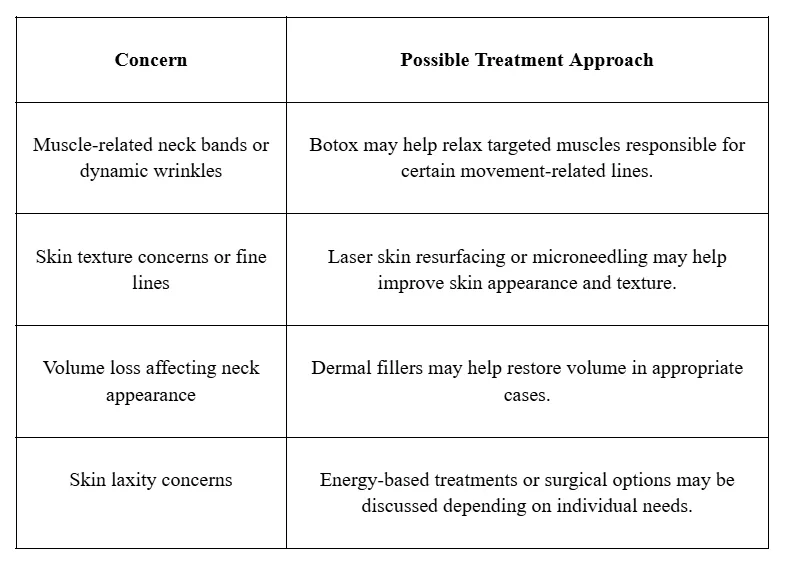
The right neck line treatment depends on the specific concern being addressed, such as wrinkles, texture changes, volume loss, or skin laxity. A qualified provider can evaluate your skin, anatomy, and goals to recommend an appropriate treatment approach.
The table below outlines common neck concerns and potential treatment options that may be considered based on individual needs.
Botox for Tech Neck: Treatment Process and Recovery
Understanding the treatment process can help patients know what to expect before, during, and after Botox injections.
Consultation and Treatment Planning
Before treatment, a provider evaluates the neck area to understand the factors contributing to visible lines or wrinkles.
During a consultation, the provider may assess:
The appearance and location of neck lines
Muscle activity contributing to visible wrinkles or bands
Skin quality and elasticity
Individual aesthetic goals
Whether Botox or another treatment approach may be appropriate
Because each person’s anatomy and skin condition are different, treatment plans should be customized rather than based on a standard approach.
What Happens During Botox Treatment?
Botox treatment involves carefully placed injections into targeted muscles identified during the consultation.
The procedure typically includes:
Cleaning the treatment area
Identifying appropriate injection points
Administering small injections into targeted muscles
Providing aftercare instructions
The appointment is generally brief, and most patients can return to regular activities shortly afterward based on their provider’s recommendations.
Results develop gradually as the targeted muscles become less active. The timeline and outcome may vary depending on individual response.
Botox for Tech Neck - Aftercare and Recovery
After your Botox treatment, it is important to follow the aftercare instructions provided by your healthcare professional.
General recommendations may include:
Avoiding rubbing or applying pressure to treated areas immediately after treatment
Following activity recommendations provided by your provider
Monitoring for temporary redness, swelling, or bruising
Mild swelling or bruising may occur but typically improves over time.
Following recommended aftercare instructions may help support the treatment process and reduce the chance of unnecessary irritation to the treated area.
Tech neck can involve several factors, including repetitive movement, muscle activity, changes in skin elasticity, and natural aging.
Botox may be an option for individuals looking to improve certain muscle-related neck lines and wrinkles without surgery.
A personalized consultation can help determine whether Botox, skin resurfacing treatments, dermal fillers, or other aesthetic approaches may be appropriate based on individual concerns.
If you are researching neck wrinkle treatment without surgery, understanding the cause of your neck concerns is an important first step in determining which options may be appropriate.
Key Takeaways
1. Tech Neck May Involve Muscle Activity, Skin Changes, and Visible Neck Lines.
2. Botox May Help Improve Certain Wrinkles and Bands Related to Muscle Movement.
3. Botox Does Not Address Every Cause of Neck Aging, Including Significant Loose Skin.
4. Treatment Plans Should Be Personalized Based on Anatomy, Skin Condition, and Aesthetic Goals.
5. Other Treatments May Be Considered Depending on Whether Concerns Involve Texture, Volume, or Skin Firmness.
Frequently Asked Questions
1. Can Botox Help Reduce Neck Lines?
Botox may help improve certain neck lines caused by repeated muscle movement, including some dynamic wrinkles and visible muscle bands. A provider can determine whether muscle activity is contributing to the appearance of neck lines during a consultation.
Botox works by temporarily reducing targeted muscle contractions that contribute to certain movement-related wrinkles.
However, neck lines caused primarily by skin laxity, texture changes, or volume loss may require different treatment considerations.
2. Does Botox Tighten Loose Neck Skin?
No. Botox does not directly tighten loose skin. It works by temporarily reducing muscle activity and may be more suitable for wrinkles or lines associated with muscle movement.
Individuals with concerns related to loose skin or reduced firmness may benefit from discussing other treatment options based on their specific needs.
3. How Long Does Botox for Tech Neck Last?
The effects of Botox vary from person to person, but results commonly last several months depending on factors such as muscle activity, treatment area, and individual response.
Regular follow-up appointments may help maintain results based on provider recommendations.
4. Does Botox Work for Horizontal Neck Lines?
Botox may help soften some horizontal neck lines when repeated muscle movement contributes to their appearance.
However, horizontal lines may also be influenced by skin quality and natural aging changes, so treatment recommendations depend on the underlying cause.
4. Can Botox Replace Neck Surgery?
Botox is a non-surgical treatment option that may improve certain muscle-related neck concerns, but it does not replace surgical procedures designed to address significant skin laxity and structural changes.A consultation can help determine which treatment approach best aligns with an individual goals.
0 comments
Log in to leave a comment.
Be the first to comment.