
A Practical Framework for Evaluating Belmont WA as a Residential Investment Destination
Discover how to evaluate Belmont WA as a residential property investment destination. This guide explores local economic drivers, rental yields, tax depreciation benefits, new versus established properties, and essential due diligence checks to help investors make informed decisi

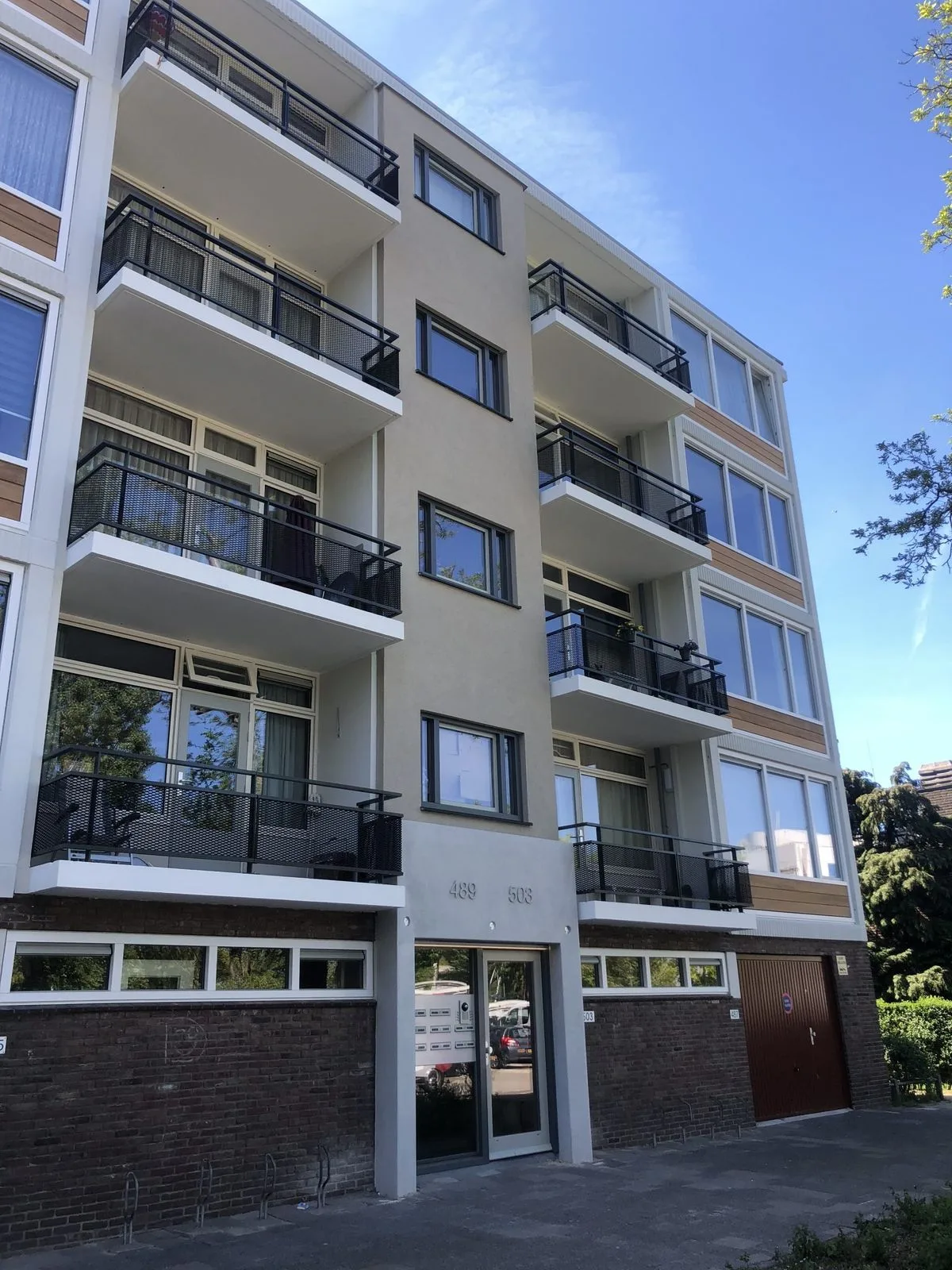
Property investment decisions made without a structured framework tend to produce inconsistent outcomes. Suburb selection, in particular, benefits from a systematic approach that separates emotional appeal from verified fundamentals. Belmont, in Perth's inner-east metropolitan corridor, has attracted increasing investor attention over recent years and the underlying data supports that interest.
This guide works through the core analytical pillars that experienced property investors use when assessing a suburb, and applies them specifically to Belmont and the surrounding inner-east Perth corridor.
Understanding Belmont's Economic Fundamentals
Investment decisions grounded in economic fundamentals tend to hold up more reliably over time than those driven by short-term sentiment. Belmont's economy rests on several structural pillars that distinguish it from many comparable metropolitan suburbs.
The Airport Employment Corridor
Perth Airport, which sits on the eastern boundary of Belmont, is one of Western Australia's largest employment precincts. The airport services domestic and international routes and supports a significant surrounding ecosystem of logistics, hospitality, aviation maintenance, and corporate services employment. Workers in these sectors require housing within a commutable distance, and Belmont's proximity a five-minute drive from the major terminals positions it directly within that demand catchment.
For investors, employment proximity matters because it sustains rental demand independently of broader market cycles. Even during economic slowdowns, essential transport infrastructure continues operating, which means the workforce it supports continues to seek nearby housing.
CBD and Commercial Corridor Access
Belmont sits approximately seven kilometres from the Perth CBD. For residents who commute to the city by car or public transport, this proximity means commute times typically remain under twenty minutes in most traffic conditions. Access via the Great Eastern Highway and the Roe Highway connection allows residents to reach the CBD without navigating inner-city bottlenecks.
The Belmont commercial precinct on Abernethy Road also provides significant local employment in retail, healthcare, and business services. This dual employment base local and CBD gives Belmont's rental market a resilience that purely residential dormitory suburbs often lack.
Optus Stadium and Entertainment Precinct
The Optus Stadium precinct, located adjacent to the Burswood Peninsula just west of Belmont, has materially elevated the lifestyle profile of the inner-east corridor. Since the stadium opened, the surrounding area has attracted restaurant, bar, and entertainment investment that has improved the perceived desirability of nearby suburbs. Belmont residents enjoy pedestrian and cycling access to this precinct via the Swan River foreshore.
METRONET and Connectivity Investment
The ongoing expansion of Perth's METRONET rail network includes station upgrades and new connections that improve access across the metropolitan area. Belmont's road connections to the wider METRONET network mean that future infrastructure investment in adjacent transit nodes will benefit residents who depend on public transport to reach employment centres.
Rental Yield Dynamics: Gross vs Net
Rental yield is frequently quoted in investment discussions, but the distinction between gross and net yield is important for accurate return modelling.
Gross rental yield is calculated as annual rental income divided by the property's purchase price, expressed as a percentage. It is a useful starting benchmark for comparing investment properties across different suburbs and price points. In Perth's inner-east suburbs, including Belmont, gross rental yields have been recorded above 6% in recent benchmark assessments. This compares favourably with comparable properties in Sydney and Melbourne, where compressed yields have driven East Coast investors to consider alternate markets.
Net rental yield adjusts the gross figure by deducting the costs of property ownership: property management fees (typically 8% to 10% of gross rent plus GST), council rates, water rates, insurance, maintenance, strata levies where applicable, and vacancy costs. The net figure is what the investor actually receives after covering the costs of holding the asset.
For a new, fully completed property in Belmont, the maintenance cost component is typically lower in early years than for an older established home. New properties require less immediate capital expenditure on maintenance, which helps protect the net yield position during the period when investors are most sensitive to cash flow.
The exploration of specific investment properties in Belmont available through developers operating in the suburb provides a practical basis for comparing gross yield projections against verified rental appraisals from local property managers.
The Role of Depreciation in Maximising Investment Returns
One of the most significant financial advantages of purchasing a brand-new investment property is the access to Australian Taxation Office (ATO) depreciation deductions. Many investors, particularly those entering the property market for the first time, underestimate how substantially depreciation benefits affect the after-tax cash flow of a new property investment.
Division 40: Plant and Equipment Depreciation
Division 40 depreciation applies to the physical plant and equipment within a residential property: kitchen appliances, air conditioning systems, carpet and floor coverings, hot water systems, and similar items. These assets depreciate at varying rates depending on their effective life as determined by the ATO.
For a brand-new property, the full cost of all new plant and equipment can be claimed as a depreciating asset from the date of settlement. An older established property, by contrast, may have limited plant and equipment depreciation available if the assets are already partially or fully depreciated.
Division 43: Capital Works Depreciation
Division 43 applies to the structural components of the building itself: the concrete, brickwork, structural timber, roofing, and similar capital works. The ATO allows a deduction of 2.5% of the construction cost per year for 40 years on residential properties constructed after 1987.
For a new property, the full construction cost qualifies for Division 43 deductions. For an older established property, the allowable capital works deduction diminishes as the building ages. A property constructed in the 1970s, for example, may have no remaining Division 43 deduction available.
Combined Impact on Cash Flow
The combined benefit of Division 40 and Division 43 depreciation on a new investment property in Belmont can be material. While the specific figures depend on the construction cost and the plant and equipment schedule, investors in new properties typically access deductions that meaningfully reduce taxable income in early ownership years. A quantity surveyor's depreciation schedule, commissioned after settlement, will calculate the precise deductions available.
New vs Established Property: What Matters for Belmont Investors
The choice between a new and an established property in Belmont is not purely a matter of price. Each carries a distinct risk and return profile.
Established properties in Belmont are predominantly brick-and-tile homes built between the 1960s and 1990s. They typically occupy larger land areas than contemporary townhouse developments, which creates subdivision potential in some cases. However, they also require ongoing maintenance investment: roofing, plumbing, electrical systems, and kitchen and bathroom updates all become inevitable costs as these homes age. These costs reduce net yield and create irregular cash flow demands.
New townhouse developments deliver contemporary specifications with new wiring, modern plumbing, insulation that meets current energy efficiency codes, and appliances that carry manufacturer warranties. The maintenance burden in the first decade is substantially lower. For investors who are managing a property portfolio remotely from interstate or overseas, lower maintenance requirements reduce the operational complexity of asset management.
properties for sale in perth, a Perth-based integrated residential developer, structures its Belmont and Rivervale projects as fully fixed-price, 100% turnkey deliveries. This structure removes the post-handover cost uncertainty that often complicates established property acquisitions and allows investors to model returns with a higher degree of confidence.
Evaluating Belmont Investment Properties: A Practical Checklist
Before committing to any investment property in Belmont, apply the following assessment framework:
Rental appraisal: Commission an independent rental appraisal from a local property manager before signing. Market rental ranges vary street by street, and a subjective projection from a developer's sales team should be cross-referenced against independent data.
Depreciation schedule: For any new property, obtain a quantity surveyor's depreciation schedule promptly after settlement to ensure all eligible deductions are captured from the first tax return.
Strata structure: Confirm the title type (Survey-Strata, Green Title, or Strata). Understand the applicable strata levy structure and what it covers. Small, well-managed boutique developments typically carry lower levies than large apartment complexes.
Vacancy risk assessment: Review the historical vacancy rates for comparable properties in the immediate vicinity. Properties within walking distance of employment precincts and transport infrastructure tend to achieve faster re-tenanting after vacancy.
Developer financial standing: Satisfy yourself that the developer has the financial capacity to complete the project if purchasing off-the-plan. A developer with a completed portfolio of delivered projects in the same market provides a stronger comfort level than one with limited track record.
0 comments
Log in to leave a comment.
Be the first to comment.