
A Complete Step-by-Step Guide to Real Estate Tokenization

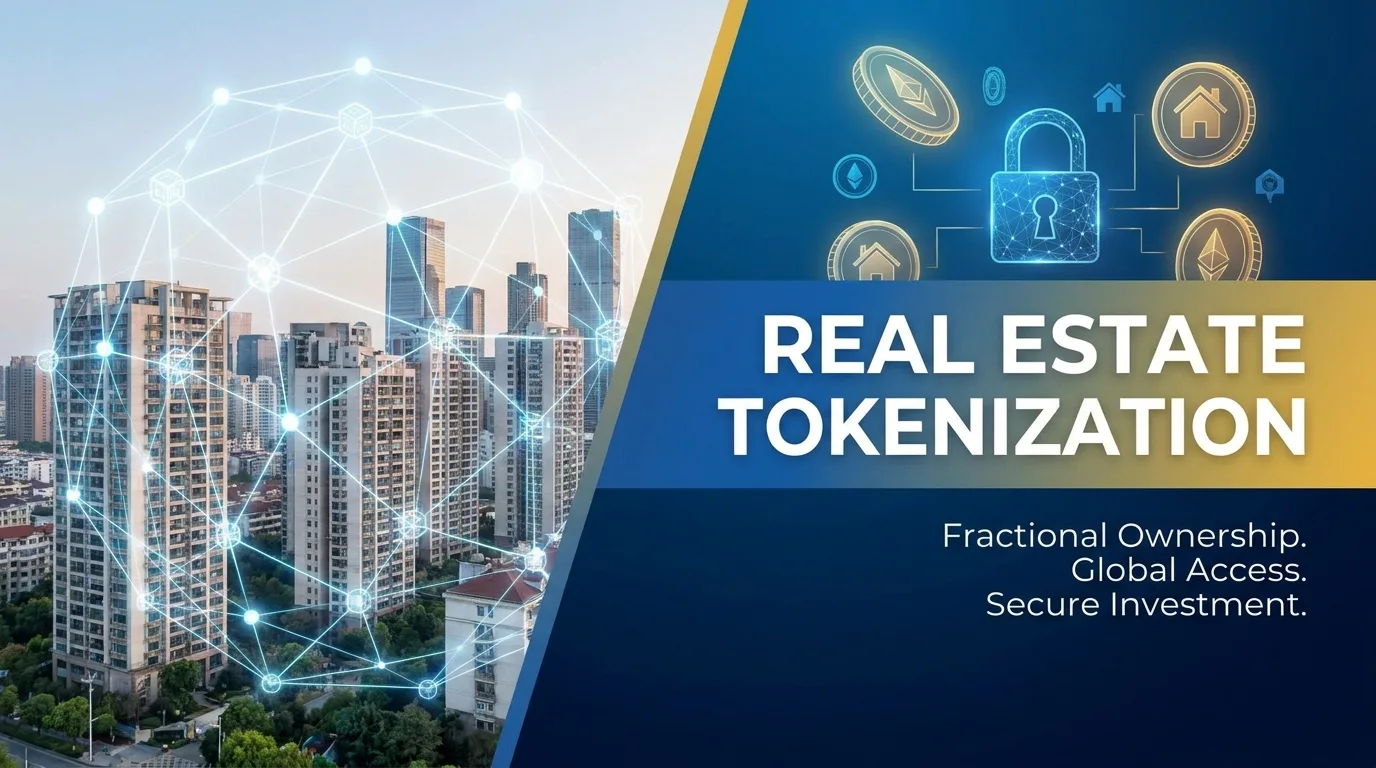
Real estate has traditionally been one of the world’s most valuable but least liquid asset classes. Buying, selling, and investing in property usually involves high capital requirements, lengthy paperwork, intermediaries, location-based restrictions, and slow settlement cycles. Real estate tokenization changes this model by converting property-related rights into blockchain-based digital tokens that can represent ownership, revenue share, debt participation, or other legally defined economic interests. Instead of one investor needing to buy an entire apartment building, office tower, resort, or land parcel, tokenization can divide the asset into smaller digital units that approved investors can hold, transfer, or trade under compliant rules.
The idea has moved beyond theory. Deloitte predicts that tokenized real estate could grow from less than US$0.3 trillion in 2024 to US$4 trillion by 2035, reflecting a projected compound annual growth rate of 27%. Market researchers also expect strong growth in the broader real estate tokenization sector, with one 2026 estimate placing the market at US$3.73 billion in 2025 and projecting it could reach US$23.99 billion by 2035. These numbers show why property owners, funds, developers, family offices, and fintech entrepreneurs are exploring tokenization as a new way to structure capital, improve investor access, and modernize real estate transactions.
Why Businesses Need a Real Estate Tokenization Company
A successful tokenized property project is not simply a matter of creating tokens on a blockchain. It requires asset due diligence, legal structuring, compliance design, investor onboarding, smart contract development, custody planning, secondary-market strategy, and ongoing reporting. This is why many property businesses prefer to work with a specialized Real Estate Tokenization company rather than treating tokenization as a basic software task. The right partner helps translate a physical asset into a legally enforceable digital investment product.
Professional Real Estate Tokenization Services typically include feasibility analysis, tokenomics planning, blockchain selection, investor dashboard development, KYC/AML integration, smart contract auditing, wallet setup, payment gateway integration, and post-launch maintenance. These services matter because real estate is an off-chain asset: ownership records, title documents, rental agreements, valuations, insurance, and tax obligations exist in the legal world, while tokens exist on-chain. The purpose of real estate tokenization development is to connect these two worlds in a way that is secure, transparent, compliant, and usable for investors.
Step 1: Define the Asset and Investment Structure
The first step in real estate tokenization is deciding exactly what is being tokenized. A token can represent a fractional equity interest in a property-owning entity, a share of rental income, a debt instrument backed by property, membership rights in a fund, or access to a specific real estate project. This decision shapes the entire project because token holders need to know what rights they are receiving.
For example, tokenizing a luxury apartment building may involve creating a special purpose vehicle that owns the property. Investors then buy tokens representing interests in that vehicle rather than directly owning a piece of the building deed. In another model, a developer may issue tokens as debt instruments that entitle holders to fixed returns from a property development project. A hospitality asset such as a resort could tokenize revenue participation, allowing investors to receive a share of operating income. Each model has different implications for securities law, taxation, investor rights, governance, and liquidity.
This stage also requires clear asset valuation. Professional appraisals, title verification, rental history, projected income, occupancy rates, debt obligations, and maintenance costs must be examined. Tokenization can make ownership more accessible, but it does not remove the need for traditional real estate discipline. A poorly valued property remains risky even if it is represented by advanced blockchain technology.
Step 2: Build the Legal and Regulatory Framework
Legal structuring is the backbone of real estate tokenization. In the United States, tokenized real estate interests are often treated as securities when investors contribute money to a common enterprise and expect profits from the efforts of managers or sponsors. The SEC’s digital asset framework explains that offers and sales of digital assets must be registered or qualify for an exemption when securities laws apply. The SEC has also described tokenization as the creation of a digital representation of a tangible or intangible asset using distributed ledger technology.
In practice, this means token issuers often use exemptions such as Regulation D, Regulation S, or Regulation A, depending on the target investor base and jurisdiction. Accredited investor offerings may be easier to structure, while retail offerings require more disclosure and regulatory preparation. International projects must also account for local securities laws, property laws, transfer restrictions, tax rules, and investor protection requirements.
A legally sound tokenized real estate project should define the following clearly: who owns the underlying property, what rights token holders receive, how income is distributed, whether tokens carry voting rights, how transfers are restricted, what happens if the property is sold, and how disputes are resolved. A 2026 academic taxonomy of RWA tokenization found that many systems still rely on hybrid structures, where blockchain tokens manage transfers and workflows while core legal guarantees remain anchored in off-chain legal agreements, custodians, compliance processes, and verification mechanisms. This is especially true for real estate, where land registries and courts remain central to enforceable ownership.
Step 3: Choose the Token Model and Blockchain Infrastructure
Once the legal structure is clear, the next step is selecting the token standard and blockchain network. Many tokenized assets use Ethereum-compatible standards because they support smart contracts, wallet infrastructure, and integration with decentralized applications. However, private or permissioned blockchains may be preferred when the project requires stricter investor controls, institutional privacy, or regulated transfer environments.
For real estate securities, unrestricted token transfers can create legal problems. If tokens are sold only to approved investors, the smart contract must prevent transfers to non-whitelisted wallets. This is where permissioned token standards and compliance layers become important. The system can be designed so that only verified investors who complete KYC and meet eligibility criteria can hold or receive tokens. Smart contracts can also automate distribution rules, lock-up periods, redemption mechanics, governance voting, and transaction records.
The choice of blockchain should be practical rather than trendy. Public blockchains offer transparency and interoperability, while permissioned networks offer control and regulatory comfort. A commercial real estate fund may prioritize compliance and investor reporting, while a retail-facing fractional property platform may prioritize user experience, low fees, and wallet simplicity. The best infrastructure is the one that supports the legal, financial, and operational needs of the project.
Step 4: Create Smart Contracts and Compliance Controls
Smart contracts are the programmable engine of real estate tokenization. They define how tokens are minted, transferred, burned, redeemed, and distributed. They can automate processes that traditionally require administrative work, such as calculating investor payouts or enforcing transfer restrictions. However, smart contracts must be written carefully because code errors can create financial and legal exposure.
A typical real estate tokenization smart contract may include functions for token issuance, investor whitelisting, dividend distribution, transfer approval, ownership recording, and governance voting. If rental income is distributed quarterly, the system can calculate each investor’s share based on token holdings. If a property is sold, the smart contract can support redemption workflows so investors receive their proportional proceeds.
Compliance controls must be built directly into the token lifecycle. KYC and AML checks verify investor identity and reduce financial crime risk. Accreditation checks may be required for private securities offerings. Transfer restrictions help prevent tokens from moving into unauthorized wallets. Reporting dashboards help issuers provide investors with updates on property performance, rental income, expenses, valuation changes, and governance decisions.
Security audits are essential at this stage. Real estate tokenization projects involve valuable assets, sensitive investor data, and payment flows. A smart contract vulnerability, poor private key management process, or weak admin control can damage trust and create major losses. A professional audit reviews the code, tests edge cases, checks access permissions, and validates that the contract behaves as intended.
Step 5: Digitize Documents and Connect Off-Chain Data
Real estate tokenization depends heavily on trustworthy off-chain information. Investors need confidence that the property exists, title is valid, income reports are accurate, and asset performance is updated. Tokenization does not magically move a building onto the blockchain; it creates a digital layer over a real asset. Therefore, supporting documents must be organized and linked to the tokenized structure.
Important documents may include title deeds, appraisal reports, lease agreements, property insurance, tax records, corporate formation documents, offering memoranda, audited financials, and investor agreements. Some documents may be stored off-chain for privacy and legal reasons, while cryptographic hashes can be recorded on-chain to prove that documents have not been altered.
Oracles may also be used to bring real-world data into blockchain systems. For instance, rental income, occupancy data, property valuations, or interest rate changes can feed into investor dashboards or smart contract workflows. However, oracle design must be handled carefully because unreliable data can undermine the entire system. Recent RWA research highlights the friction between deterministic on-chain code and uncertain off-chain reality, especially around legal rights, valuation, and jurisdictional interoperability.
Step 6: Launch the Investor Platform
After the legal, technical, and asset documentation layers are complete, the tokenized real estate project needs an investor-facing platform. This is where users register, complete verification, review offering details, connect wallets, purchase tokens, track holdings, receive updates, and manage distributions.
A strong platform should make blockchain invisible where possible. Many investors are interested in property returns, not technical complexity. The interface should explain the investment structure, projected returns, risks, fees, transfer rules, lock-up periods, tax considerations, and exit options in plain language. It should also include dashboards for property performance, income distributions, ownership records, and announcements.
Payment integration is another important consideration. Some platforms support fiat payments, stablecoins, or both. Stablecoin rails can offer faster settlement and programmable transfers, while fiat support may be necessary for mainstream investors. In either case, the payment flow must comply with financial regulations and investor protection standards.
Step 7: Enable Secondary Trading and Liquidity
One of the biggest promises of real estate tokenization is improved liquidity. Traditional real estate transactions can take weeks or months, while tokens can theoretically transfer much faster. Fractional ownership can also expand the investor base by lowering minimum investment amounts. However, liquidity should not be overstated. A token is only liquid if there are compliant buyers, sellers, market infrastructure, and sufficient demand.
Research on RWA liquidity warns that many tokenized assets still experience low trading volumes, long holding periods, limited investor participation, regulatory gating, and valuation opacity. This is a crucial point for real estate tokenization. Creating tokens does not automatically create a deep market. Issuers must plan liquidity through regulated alternative trading systems, approved marketplaces, buyback mechanisms, redemption windows, or institutional distribution networks.
Secondary trading also has to respect securities restrictions. If tokens are sold under a private placement exemption, they may be subject to lock-up periods and resale limits. The platform must ensure that only eligible investors can buy or receive the tokens. Good liquidity design balances accessibility with compliance.
Step 8: Manage Operations After Token Launch
Tokenization does not end after issuance. Real estate is an active asset class that requires ongoing management. Properties must be maintained, tenants must be managed, taxes must be paid, insurance must be renewed, and financial reports must be prepared. Token holders expect transparency, but they also expect professional asset management.
Post-launch operations typically include rental income collection, distribution processing, investor reporting, compliance monitoring, governance voting, property valuation updates, secondary-market support, and customer service. If the property underperforms, token holders need honest reporting. If the property is refinanced or sold, investors need clear explanations of how proceeds will be handled.
Governance is especially important. Some tokenized projects give investors voting rights on major decisions such as selling the property, approving renovations, changing property managers, or refinancing debt. Other structures keep control with the sponsor and provide token holders only economic rights. Neither model is automatically better, but the governance rules must be disclosed clearly from the beginning.
Benefits of Real Estate Tokenization
Real estate tokenization offers several meaningful advantages when implemented correctly. Fractional ownership allows investors to participate in assets that may otherwise require large capital commitments. Digital settlement can reduce paperwork and improve transaction speed. Blockchain records can improve transparency by creating a verifiable history of token ownership and transfers. Smart contracts can automate distributions and reduce manual administration.
For property owners and developers, tokenization can create new fundraising channels. Instead of relying only on banks, institutional investors, or private equity groups, sponsors may be able to reach a broader base of qualified investors. For investors, tokenization can provide access to diversified property exposure across geographies, asset types, and income profiles. A portfolio could include fractions of residential rentals, commercial buildings, logistics warehouses, hospitality assets, and development projects.
The strongest use cases are likely to emerge where tokenization solves a real market problem: high minimum investment sizes, fragmented ownership records, slow settlement, limited investor reach, or inefficient income distribution. Tokenization should not be used merely for branding. It works best when it improves the structure, accessibility, transparency, or efficiency of a real estate investment.
Risks and Challenges to Consider
Despite its promise, real estate tokenization carries significant risks. Regulatory uncertainty remains a major challenge, especially for cross-border offerings. Property markets are also affected by interest rates, vacancy levels, local economic conditions, maintenance costs, zoning rules, and tenant quality. Tokenization does not protect investors from these traditional real estate risks.
There are also technology risks. Smart contract bugs, cyberattacks, wallet loss, poor custody arrangements, and platform failures can harm investors. Liquidity risk is another major issue. Investors may assume they can sell tokens easily, but secondary markets may be thin or restricted. Valuation risk also matters because real estate prices are not updated continuously like publicly traded stocks.
The best projects address these challenges through transparent disclosures, legal compliance, strong asset underwriting, audited smart contracts, reliable custodial practices, and realistic liquidity planning. Investors should examine the underlying property as carefully as they would in any real estate deal.
FAQs
1. What is real estate tokenization?
Real estate tokenization is the process of converting property-related ownership or economic rights into blockchain-based digital tokens. These tokens may represent equity, debt, revenue share, or other legally defined interests connected to a real estate asset.
2. Is tokenized real estate legal?
Yes, but it must be structured properly. In many jurisdictions, tokenized real estate interests may be treated as securities, which means issuers need registration or a valid exemption, along with KYC, AML, disclosure, and transfer-control processes.
3. Can small investors participate in real estate tokenization?
Tokenization can lower investment minimums through fractional ownership, but eligibility depends on the offering structure and local regulations. Some offerings may be limited to accredited or qualified investors, while others may be designed for broader participation.
4. Does tokenization guarantee liquidity?
No. Tokenization can make transfers more efficient, but liquidity depends on market demand, compliant trading venues, investor eligibility, lock-up periods, and secondary-market infrastructure.
5. What types of properties can be tokenized?
Residential buildings, commercial offices, warehouses, resorts, hotels, rental portfolios, land parcels, and real estate funds can potentially be tokenized, provided the asset has a clear legal structure, valuation, and investor rights framework.
Conclusion
Real estate tokenization is transforming how property ownership, fundraising, and investment access can be structured in the digital economy. By combining legal frameworks, asset-backed tokens, smart contracts, compliance systems, and investor platforms, it creates a more flexible model for participating in one of the world’s most important asset classes. However, success depends on professional execution, strong compliance, secure technology, and credible asset management. For businesses looking to build a reliable and scalable tokenized real estate platform, Blockchain App Factory provides the best services by offering end-to-end support across strategy, development, compliance integration, smart contracts, and launch execution.
0 comments
Log in to leave a comment.
Be the first to comment.